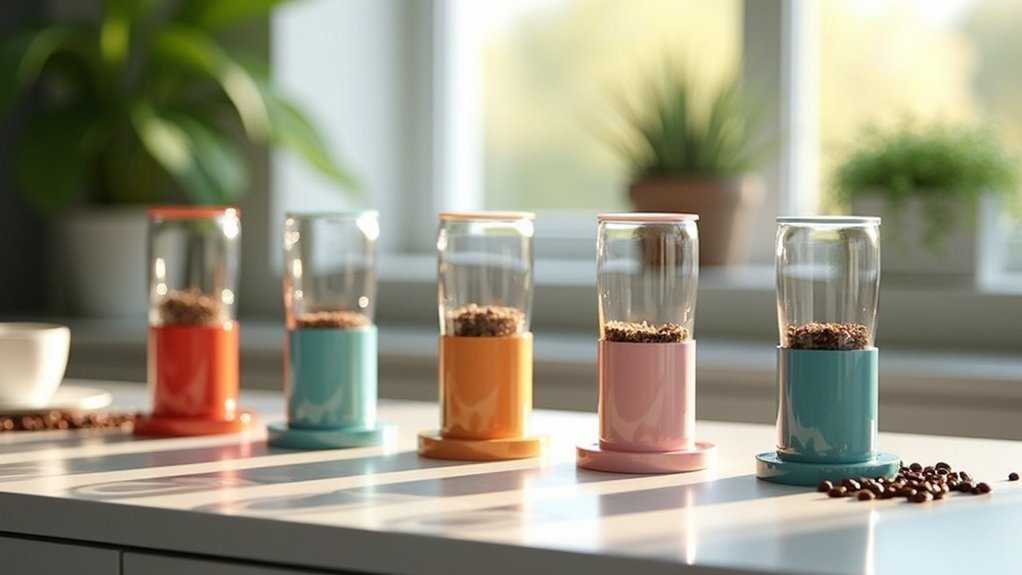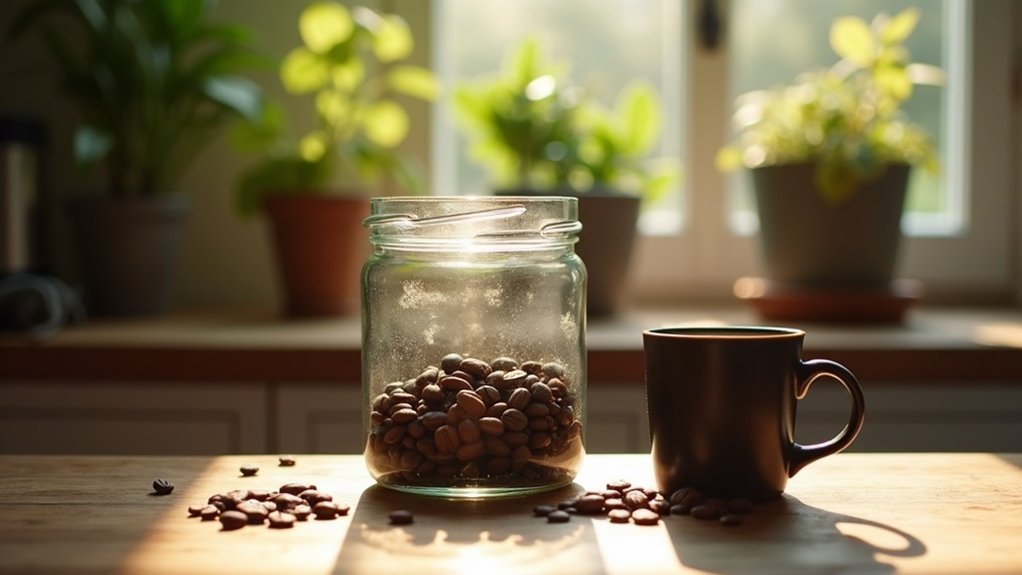
After you open the coffee bag, transfer the beans into an airtight container. This keeps air, light, and moisture at bay, preserving freshness. Store the container in a cool, dark cabinet away from temperature fluctuations. Avoid the fridge or freezer, as they can introduce moisture. Check the aroma and surface for oiliness to guarantee quality. Protecting your coffee with proper storage methods helps maintain its flavor, and there’s more to discover about optimizing your coffee experience. Remember, the way you store your coffee can significantly impact its overall taste and enjoyment.
Key Takeaways
- Store coffee in an airtight container to minimize air exposure and preserve freshness after opening the bag.
- Keep the container in a cool, dark, and dry area such as a kitchen cabinet.
- Avoid using the refrigerator or freezer, as they introduce moisture and temperature fluctuations that can degrade the quality of your coffee.
- Regularly check the storage area for humidity and strong odors that could affect the flavor of your coffee.
- Seal the container tightly after each use to prevent oxidation and maintain the rich taste of your coffee.
Best Practices for Storing Coffee Beans
When it comes to storing coffee beans, understanding the right conditions is crucial for maintaining their freshness and flavor.
To store coffee effectively, use airtight containers to prevent exposure to light, air, and moisture. Keep your coffee in a cool, dark, and dry area, like a kitchen cabinet, away from heat sources.
If you decide to keep coffee in its original bag, ensure that it has an airtight closure and remove excess air.
Remember, coffee beans can last up to a month post-roasting if stored properly, while ground coffee remains fresh for only about two weeks.
Regularly check for staleness to enjoy the best coffee experience.
The Importance of Using an Airtight Container
Using an airtight container is essential for preserving the freshness of your coffee after opening, as it greatly reduces exposure to air, light, and moisture. By sealing your beans in such a container, you slow the oxidation process, preventing stale flavors from developing.
An opaque container also shields your coffee from light, which can degrade quality over time. Additionally, an airtight container limits moisture absorption, which is vital for maintaining flavor.
Ideally, store your coffee in a cool, dark place to ensure it retains its aromatic profile for two to three weeks, maximizing both freshness and flavor.
Ideal Storage Locations for Coffee
To keep your coffee fresh, store it in a cool, dark space like a kitchen cabinet.
An airtight container is essential to shield your coffee from air and light, which can compromise its flavor.
Avoid the refrigerator or freezer, as they introduce moisture and temperature shifts that can accelerate aging.
For the best taste, always choose a storage location specifically designed for coffee preservation.
Cool, Dark Spaces
Storing coffee in a cool, dark space is essential for preserving its flavor and aroma.
Choose a kitchen cabinet away from warm appliances like ovens or stoves to minimize heat exposure. Dark spaces prevent light from degrading your coffee’s quality.
While keeping it in its original packaging is fine, transferring it to an opaque, airtight container offers better protection from air and light.
Avoid storing coffee in the refrigerator or freezer, as these can introduce moisture and speed up aging.
Regularly check your storage area for humidity and odors to ensure your coffee maintains its ideal freshness.
Airtight Containers Only
While you might be tempted to use any container for your coffee, opting for an airtight one is essential for preserving its rich flavor and aroma. An airtight container minimizes air exposure, preventing oxidation that leads to staleness. For best storage, choose opaque materials to keep fresh coffee away from light. Metal or ceramic containers are ideal, as they maintain freshness without absorbing coffee’s aroma. Avoid plastic, which can allow air and moisture in. Here’s a quick comparison of storage options:
| Container Type | Pros |
|---|---|
| Opaque Metal | Protects from light |
| Ceramic | Maintains aroma |
| Plastic | Generally not recommended |
| Glass | Attractive but not ideal |
| Vacuum-Sealed | Best for long-term storage |
Avoiding Common Storage Mistakes
To keep your coffee fresh, it’s essential to protect it from light and air.
Always seal the container tightly after each use, ensuring minimal exposure to oxidation.
By avoiding these common storage mistakes, you can greatly enhance the longevity and flavor of your coffee.
Keep Away From Light
Light exposure is one of the most significant factors that can compromise your coffee’s flavor and aroma. To keep your coffee fresh, store it in an opaque, airtight container. Here’s a quick reference:
| Factor | Effect on Coffee | Storage Solution |
|---|---|---|
| Sunlight | Accelerates aging, degrades flavor | Dark cupboard |
| Fluorescent Light | Alters chemical composition | Opaque container |
| Temperature Fluctuations | Dulls aroma | Cool, dry environment |
| Humidity | Promotes staleness | Airtight seal |
| Air Exposure | Loses freshness | Transfer immediately |
Avoid light to maintain your coffee’s rich character.
Seal Properly After Use
Storing coffee properly after opening is just as important as keeping it away from light. To ensure your coffee remains fresh, remember to seal it properly after each use.
Here are some key tips:
- Transfer coffee to an airtight container to minimize exposure to air.
- If using the original bag, squeeze out excess air before resealing it.
- Store the sealed coffee in a cool, dark place, such as a kitchen cabinet.
- Avoid leaving the bag open or refrigerating coffee, as this can introduce moisture.
By following these steps, you’ll help maintain your coffee’s flavor and aroma for longer periods.
Enjoy your coffee experience to the fullest!
How to Check for Freshness in Coffee
When evaluating the freshness of your coffee, you’ll want to rely on a few key indicators that reveal its quality.
First, consider the aroma; fresh coffee should have a strong, pleasant scent, while a faded smell may indicate staleness.
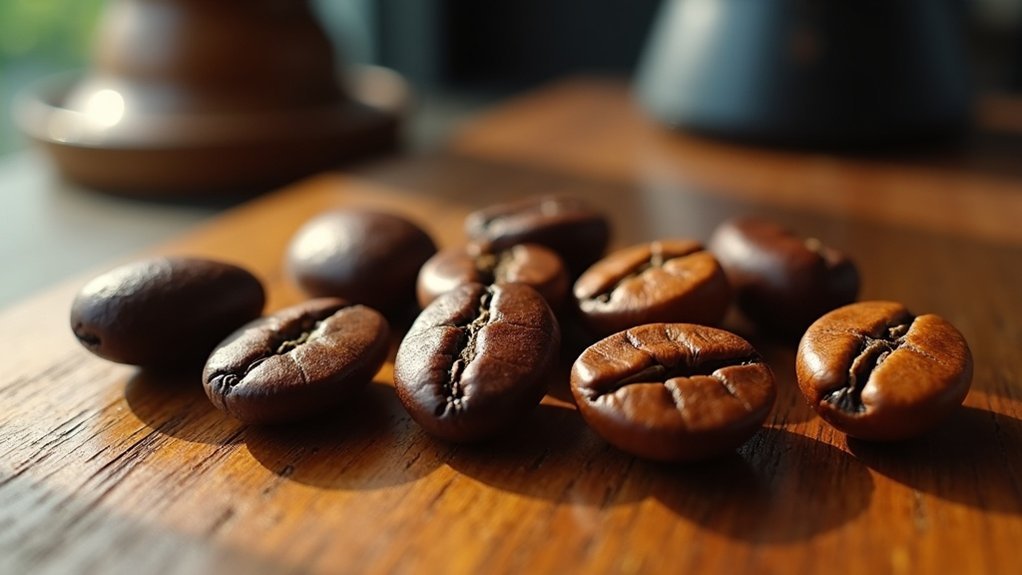
Next, check for an oily surface; excessive oil on beans or ground coffee suggests it’s past its prime.
Taste a small amount—stale coffee often tastes flat or bitter.
Finally, look for the roast date on the packaging; coffee is best enjoyed within two to three weeks of roasting, and ground coffee loses its freshness within days, so act quickly to ensure a delightful coffee experience.
The Impact of Light, Heat, and Moisture
To maintain the rich flavor of your coffee, it’s essential to consider how light, heat, and moisture impact its quality. Here’s what you need to know:
- Light: Exposure to light can cause your coffee beans to age and degrade their flavor over time.
- Heat: Keeping your coffee in a cool environment is crucial to prevent staling; be sure to avoid placing it near ovens or stoves.
- Moisture: Excess moisture can lead to mold growth and a significant loss of flavor, making dry storage essential for preserving your coffee.
- Storage Solution: Use an opaque, airtight container to protect your coffee from light, heat, and moisture, ensuring its freshness for longer.
Tips for Maintaining Coffee Quality Over Time
To preserve the quality of your coffee after opening, proper storage techniques are essential.
Transfer your coffee to an airtight, opaque container to minimize exposure to light and air, which can degrade its flavor. Store this container in a cool, dark, dry place, such as a kitchen cabinet, away from heat sources.
Transfer your coffee to an airtight, opaque container and store it in a cool, dark place for optimal freshness.
For the best flavor, aim to consume opened coffee within two to three weeks, as it starts to lose its nuanced taste shortly after opening.
Regularly check for signs of staleness, like a faded aroma or oily surface, to ensure you enjoy your coffee at its peak freshness.