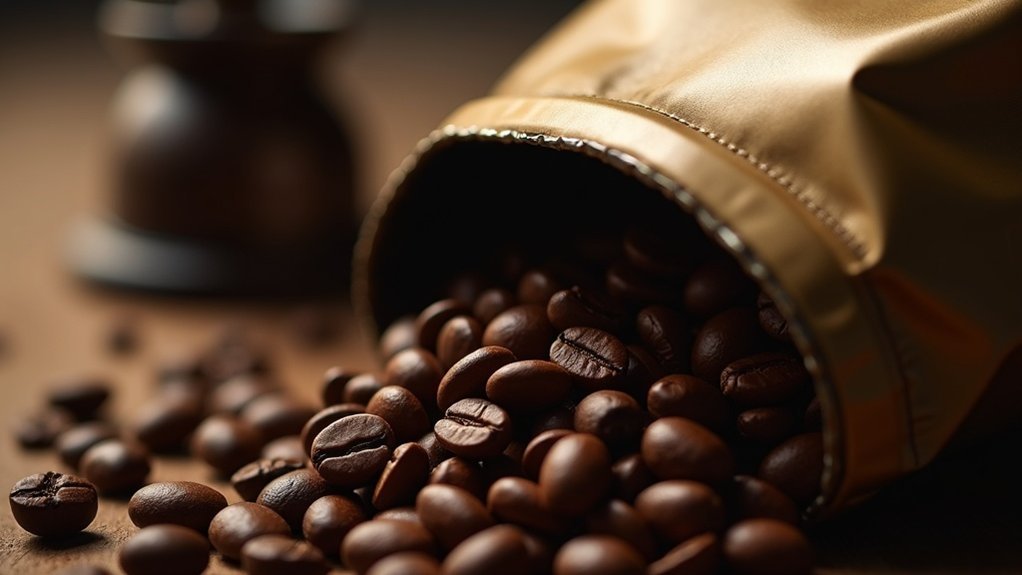
Vacuum-sealed whole coffee beans typically have a shelf life of about six to nine months. If kept unopened, these packages can retain their delightful flavor for up to a year following the roast date. For the best taste experience, it’s recommended to consume opened beans within six months. Keep in mind that factors such as exposure to light, heat, and moisture can accelerate flavor loss. To ensure your coffee remains fresh and flavorful, proper storage is crucial. There’s a wealth of information available on how to maintain the best taste of your coffee over time.
Key Takeaways
- Vacuum-sealed coffee beans typically maintain their flavor for six to nine months before experiencing noticeable deterioration.
- If left unopened, these beans can retain their delightful taste for up to one year from the roast date.
- After sealing, significant flavor loss can occur within two weeks, with a more pronounced decline by the six-week mark.
- Once opened, it’s best to enjoy the beans within six months to ensure optimal taste and freshness.
- For those looking to extend shelf life, freezing vacuum-packed beans can preserve their quality for up to two years.
Understanding the Shelf Life of Vacuum-Sealed Coffee Beans
When you vacuum-seal coffee beans, you’re taking an important step to preserve their freshness and flavor.
Vacuum-sealed beans can last around six to nine months, with significant flavor loss beginning just two weeks after sealing. While unopened, these beans remain flavorful for up to a year from the roast date, but their freshness declines over time due to the oxidation process.
Vacuum-sealed beans maintain flavor for six to nine months, with freshness diminishing after two weeks.
If you open the vacuum seal, aim to consume them within six months for peak taste. Storing vacuum-sealed beans in a cool, dark place enhances their shelf life, and freezing them can extend it to about two years after opening.
Enjoy your coffee at its best by following these storage tips!
Factors Affecting Coffee Bean Freshness
When it comes to preserving the freshness of your coffee beans, the storage environment and roast date are essential factors.
Keeping your vacuum-sealed beans in a cool, dark, and dry place greatly slows down flavor deterioration.
Additionally, using beans roasted within a few weeks enhances your coffee experience, as older beans won’t deliver the same vibrant flavors.
Enjoy brewing the best cup of coffee by paying attention to these key elements!
Storage Environment Conditions
The storage environment plays a critical role in preserving the freshness of your coffee. To ensure your coffee beans last longer, store them in a cool, dark, and dry place, away from heat, light, and moisture.
These factors can accelerate staleness and spoilage. Once you open a bag of coffee beans, transfer them to an airtight container to minimize oxidation and maintain their rich flavor.
For extended freshness, consider freezing vacuum-packed beans, which can prolong their shelf life to two years by greatly slowing oxidation.
Regularly check for signs of staleness, such as a lack of aroma or dull texture, to guarantee your coffee remains at peak quality.
Enjoy the best coffee experience by taking care of your beans!
Roast Date Impact
While numerous factors affect the freshness of coffee beans, the roast date is arguably the most crucial. Freshly roasted coffee beans provide an exhilarating aroma and rich flavor that coffee enthusiasts cherish. However, as time passes, even the finest beans start to lose their vibrant qualities shortly after roasting. For the best experience, it’s recommended to enjoy your coffee within 1-2 weeks post-roasting. The table below demonstrates how various roast dates influence flavor longevity:
| Roast Date | Flavor Retention |
|---|---|
| 0-2 Weeks | Peak Flavor |
| 2-4 Weeks | Good Flavor |
| 4-6 Weeks | Noticeable Decline |
| 6+ Weeks | Significant Loss |
| 3 Months+ | Deteriorated Flavor |
While proper packaging can assist in preserving freshness, nothing beats the vibrancy of freshly roasted coffee.
Best Practices for Storing Vacuum-Sealed Coffee
To keep your vacuum-sealed coffee beans fresh, you need to create ideal storage conditions.
Always make sure that you seal your bags tightly, squeezing out excess air, as this dramatically slows down oxidation.
If you plan to store them for an extended period, freezing is a smart strategy that can help maintain their flavor for up to two years.
Optimal Storage Conditions
When storing vacuum-sealed coffee, it’s crucial to keep it in a cool, dark, and dry environment to preserve its rich flavor. Ideal storage conditions help minimize exposure to heat, light, and moisture, which can lead to flavor degradation.
Here are some best practices for storing your coffee beans:
- Transfer opened coffee to an airtight container for optimal freshness.
- Aim to consume opened beans within six months to enjoy their full flavor potential.
- Before resealing vacuum-sealed bags, remember to squeeze out any excess air to maintain freshness.
- If you’re looking to extend shelf life, consider freezing vacuum-sealed beans, which can last up to two years.
- Regularly check for signs of staleness, such as a diminished aroma or a dull texture, before brewing to ensure a delightful coffee experience.
Importance of Sealing
Sealing vacuum-sealed coffee properly is essential for preserving its flavor and aroma, as exposure to air can lead to rapid deterioration.
To maximize freshness, store vacuum-sealed bags in a cool, dark place, away from light, moisture, and heat. When you open the bag, squeeze out excess air before resealing to further protect the beans.
After opening, consume whole beans within six months, and consider using an airtight container for optimal quality.
Following these best practices can greatly extend the shelf life of your coffee, ensuring you enjoy its delightful richness for as long as possible.
Freezing for Longevity
Freezing coffee beans can dramatically extend their shelf life, making it a smart choice for coffee enthusiasts. When you freeze vacuum-packed coffee beans, they can last 6 to 9 months past their shelf life, staying fresh for up to 2 years after opening.
To maximize freshness, consider these best practices:
- Ensure beans are vacuum-sealed tightly, free of air.
- Divide beans into smaller portions before freezing to prevent waste.
- Store in a cool, dark place in the freezer to maintain quality.
- Avoid repeated exposure to air during thawing to preserve flavor.
- Enjoy your frozen beans, which maintain quality longer than ground coffee, ensuring you always have fresh coffee on hand.
Signs That Coffee Beans Have Gone Stale
How can you tell if your coffee beans have lost their freshness? A primary sign is a lack of aroma; when volatile compounds degrade, beans lose their fragrant scent, which is essential for a great coffee experience.
You might also notice a dull texture or subtle sheen, indicating a loss of oils that are crucial for vibrant flavor. If your coffee grounds appear grainy or dry, it’s a strong signal that the beans are stale; fresh beans should feel smooth and oily.
Taste differences can emerge just three days post-roasting, and within 30 days, the decline in aroma and flavor becomes even more pronounced, leading to a disappointing cup of coffee.
Comparing Whole Beans and Ground Coffee Shelf Life
When you’re deciding between whole beans and ground coffee, it’s essential to understand their differing shelf lives and how that affects flavor.
Whole coffee beans, when vacuum sealed, can last 6-9 months, while ground coffee typically lasts only 3-5 months.
- Flavor deterioration starts after two weeks for whole beans.
- Grinding accelerates oxidation, causing faster staleness.
- Unopened whole beans are viable for up to one year.
- Freezing whole beans can extend their life to two years.
- Ground coffee remains viable for only 1-2 years when frozen.
Choosing whole beans allows for a fresher, longer-lasting coffee experience, ensuring that you enjoy the rich flavors that coffee lovers cherish.
Tips for Extending the Longevity of Coffee
To maximize the freshness and longevity of your vacuum-sealed coffee beans, prioritize proper storage techniques.
Store your beans in a cool, dark, and dry place to minimize heat and light exposure, which can accelerate staleness.
Store your coffee beans in a cool, dark, and dry location to prevent staleness from heat and light.
For even longer preservation, consider freezing your vacuum-sealed bag—this can keep your coffee fresh for up to two years after opening.
Always use an airtight container for opened beans, squeezing out excess air to reduce oxidation.
Lastly, buy smaller quantities to ensure you consume your coffee while it’s still fresh, ideally within six months of opening.
The Impact of Aging on Coffee Flavor and Aroma
Storing vacuum-sealed coffee beans properly is important, but understanding how aging affects their flavor and aroma is equally significant for coffee enthusiasts.
As coffee beans age, they begin to lose their flavor due to oxidation, diminishing their aroma and intensity. Here are some key points to take into account:
- Whole roasted beans start losing flavor shortly after roasting.
- Noticeable deterioration can occur within two weeks, even in vacuum-sealed packaging.
- The ideal flavor is experienced within the first few weeks after sealing.
- Aging coffee beans can lead to staleness indicators, affecting the overall coffee experience.
- Fresh beans provide the richest taste experience, making their consumption timing vital.
Choosing when to enjoy your coffee is crucial for savoring its full potential and enhancing your coffee journey.