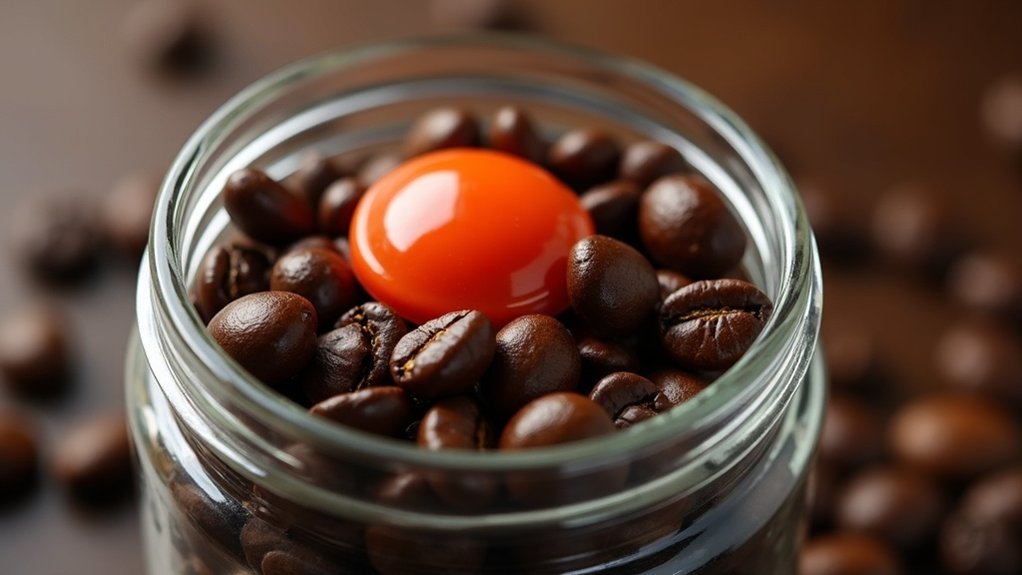
Oxygen absorbers can be useful in coffee storage by reducing oxygen levels, which helps maintain freshness. However, they may also alter flavor and aroma, sometimes resulting in a less enjoyable cup due to chemical reactions and moisture issues. It’s essential to use them in airtight containers and monitor your coffee’s quality. If you’re curious about the best storage practices and alternative methods for preserving your coffee’s rich flavors, there are more insights available on our website dedicated to all things coffee.
Key Takeaways
- Oxygen absorbers can effectively reduce oxygen levels in sealed coffee storage, potentially extending the freshness and flavor retention of your favorite brews.
- However, it’s important to note that they may alter the coffee’s flavor profile and lead to the loss of volatile aromas, which are essential for a great coffee experience.
- Additionally, moisture exposure from the absorbers can promote oxidation, risking the integrity and freshness of your coffee.
- To maximize the benefits of oxygen absorbers, combining them with airtight containers can enhance their effectiveness in preserving the quality of your coffee.
- Despite these advantages, some coffee enthusiasts remain skeptical about the overall benefits of using oxygen absorbers for coffee storage.
Importance of Freshness in Coffee
While you might enjoy a cup of coffee at any time, the importance of freshness can’t be overstated. Freshness directly impacts the taste and aroma of your brew; stale beans lead to a significant loss of flavor.
Exposure to oxygen accelerates degradation, causing oxidation that diminishes those delightful volatile aromas and sweetness that make coffee so enjoyable.
To maintain peak freshness, it’s crucial to use effective storage methods—store your coffee in an airtight container, away from light, heat, and moisture. Following these storage tips can significantly extend your coffee’s shelf life by reducing the oxygen levels that contribute to staleness.
Ultimately, preserving freshness enhances your overall coffee experience and ensures you can savor its unique flavor profile every time you brew a cup.
How Oxygen Absorbers Work
Oxygen absorbers play a crucial role in preserving the freshness of coffee by effectively reducing oxygen levels in sealed environments. They utilize iron powder to chemically react with oxygen, achieving levels as low as 0.01%.
Here’s how they function:
- Their absorption capacity is influenced by the amount of reduced iron present in the bag.
- To maximize effectiveness, it’s important to seal containers promptly, as they typically take several hours to reach full absorption.
- Proper storage is vital, as exposure to moisture can diminish their efficiency, ensuring your coffee stays fresh for longer.
Potential Drawbacks of Oxygen Absorbers
While oxygen absorbers can enhance coffee storage, they also present several potential drawbacks.
You might experience flavor alteration due to harsh chemical reactions that can change the coffee’s taste profile.
Additionally, moisture from these absorbers could lead to mold growth, compromising the quality of your coffee.
There are also concerns about iron particles escaping from sachets, which raises safety issues that warrant careful consideration for those who prioritize the integrity of their coffee experience.
Flavor Alteration Concerns
While oxygen absorbers are designed to extend the freshness of coffee, they can unintentionally alter its flavor profile, raising significant concerns among coffee enthusiasts.
The potential flavor alterations include:
- A harsh, metallic taste that may arise from chemical reactions with coffee volatiles.
- A loss of volatile aromas and sweetness due to lipid oxidation.
- The risk of iron particles escaping from sachets, which can lead to safety and taste issues.
These factors indicate that although oxygen absorbers aim to preserve coffee, they may inadvertently create an unpleasant taste.
As a result, many coffee lovers remain skeptical about their effectiveness, prompting a reevaluation of their use in coffee storage.
Moisture Interaction Risks
Flavor alterations aren’t the only concern when using oxygen absorbers in coffee storage; moisture interaction poses significant risks as well.
These absorbers can contain moisture themselves, which may lead to spoilage and mold growth in your beloved coffee. High moisture levels can severely affect your coffee’s flavor profile, introducing harsh or metallic tastes that detract from the rich, aromatic experience you seek.
Additionally, when moisture causes oxygen absorbers to clump, their effectiveness in reducing oxygen levels diminishes, allowing oxidation to take hold. This ineffectiveness can further compromise your coffee’s aroma and sweetness, leading to a less enjoyable brew.
Managing moisture is essential to preserving your coffee’s quality and avoiding unwanted spoilage that can ruin your perfect cup.
Safety of Iron Particles
When considering the use of oxygen absorbers for coffee storage, it’s essential to evaluate the safety of any iron particles they may contain.
These oxygen-absorbing pads often include iron mono-oxide, which can chemically interact with the delicate volatiles in coffee. This interaction may result in:
- Undesirable flavor changes leading to a metallic taste in your coffee.
- Concerns regarding the possibility of iron particles escaping from the sachets, which raises safety questions.
- Potential degradation of coffee quality if the absorbers become clumpy or moisture-laden.
Given the limited research on the effects of iron in food storage, it’s vital to exercise caution when using oxygen absorbers to ensure the integrity and flavor of your coffee are preserved.
Alternative Storage Methods
While oxygen absorbers are a popular choice for preserving coffee, several alternative storage methods can greatly enhance its shelf life and maintain flavor integrity.
Vacuum sealing your coffee creates an airtight environment, minimizing exposure to oxygen, light, and high moisture. Flushing containers with inert gases like CO₂ or nitrogen can further reduce oxygen levels, improving preservation.
You might also consider opaque zip-lock bags with one-way valves, which allow gas release while blocking oxygen. For long-term storage, freezing vacuum-sealed bags effectively limits oxygen exposure.
Airtight glass jars with oxygen absorbers or silica gel packets can also protect your coffee, but be sure to monitor for any flavor changes.
Best Practices for Using Oxygen Absorbers
Employing oxygen absorbers can greatly enhance coffee preservation when paired with proper storage techniques.
Using oxygen absorbers alongside proper storage methods significantly improves coffee preservation.
To maximize their effectiveness, consider these best practices:
- Use oxygen absorbers in airtight containers, like vacuum-sealed bags or jars, to minimize air exposure to your coffee.
- Ensure that absorbers are dry and free from clumping before use; moisture can decrease their efficacy and compromise your coffee’s freshness.
- After opening, store any unused absorbers in a sealed zip-lock bag to maintain their performance and keep your coffee tasting its best.
Community Insights and Experiences
When it comes to storing coffee, you’ve likely encountered varied opinions on oxygen absorbers.
Some coffee enthusiasts report that these absorbers can introduce unwanted flavors, while others prefer alternative methods like vacuum sealing to preserve the freshness and flavor of their beans.
Your experiences and insights can help shape a more informed discussion on effective coffee storage techniques and flavor preservation.
Personal Storage Methods
As coffee enthusiasts share their personal storage methods, it becomes clear that the right approach can greatly impact flavor and freshness.
To effectively protect your coffee beans for the long term, consider these strategies:
- Use opaque, hermetic zip-lock bags with one-way valves to shield against humidity and light, ensuring that your coffee maintains its rich aroma.
- Vacuum seal your coffee in a sealed bag after opening the original packaging to preserve its quality and prevent oxidation.
- Experiment with flushing air or using inert gases to extend shelf life, allowing you to enjoy your favorite brew for longer periods.
Each method offers unique benefits, and finding what works best for you can guarantee your coffee stays fresh and flavorful, enhancing your daily coffee experience.
Flavor Impact Observations
While many coffee enthusiasts advocate for various storage techniques, the use of oxygen absorbers has sparked considerable debate regarding their flavor impact on coffee.
Community insights reveal that these absorbers often lead to a harsh, metallic taste, negatively affecting the overall flavor quality of the brew. Users report a loss of volatile aromas and sweetness, which compromises the sensory experience that coffee lovers cherish.
Additionally, concerns about moisture in some absorbers further jeopardize coffee integrity, as it can promote oxidation, leading to stale flavors.
Moreover, chemical reactions between coffee volatiles and iron compounds may initiate lipid oxidation, exacerbating flavor issues that can detract from the enjoyment of a well-crafted cup of coffee.
Variability in absorber effectiveness, such as clumping, indicates potential flavor compromise, warranting caution in their use for those dedicated to preserving the rich and nuanced flavors of coffee.