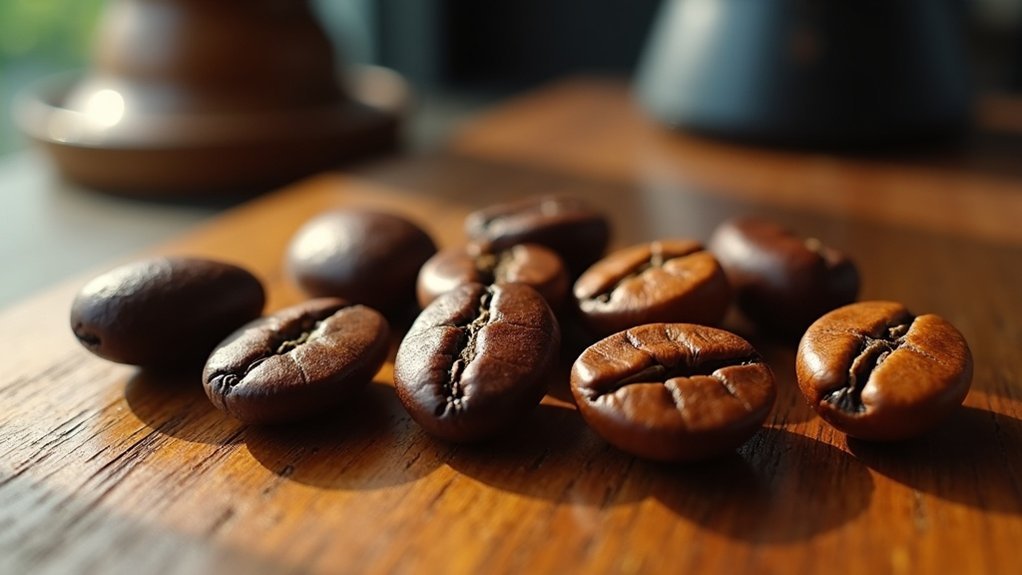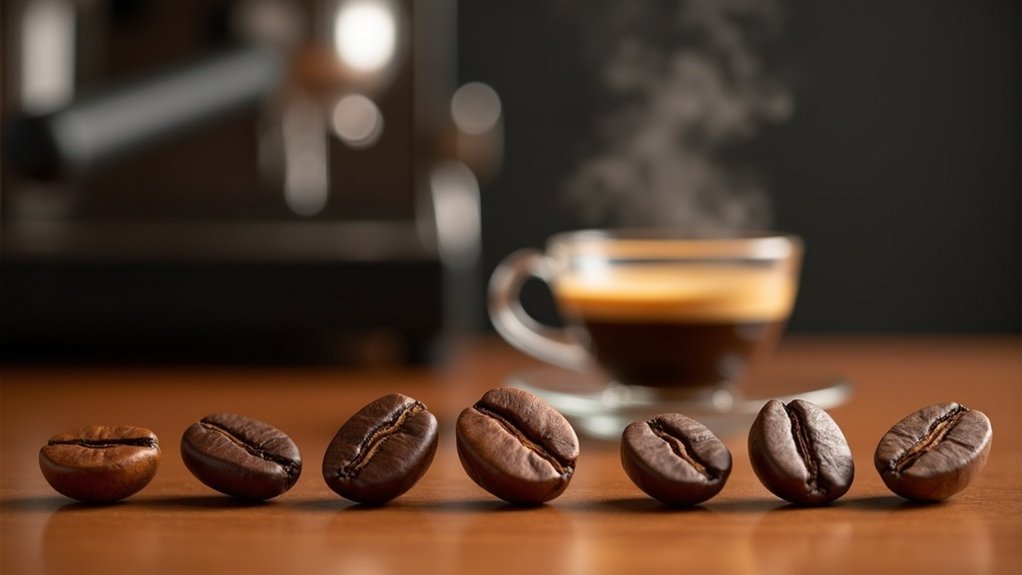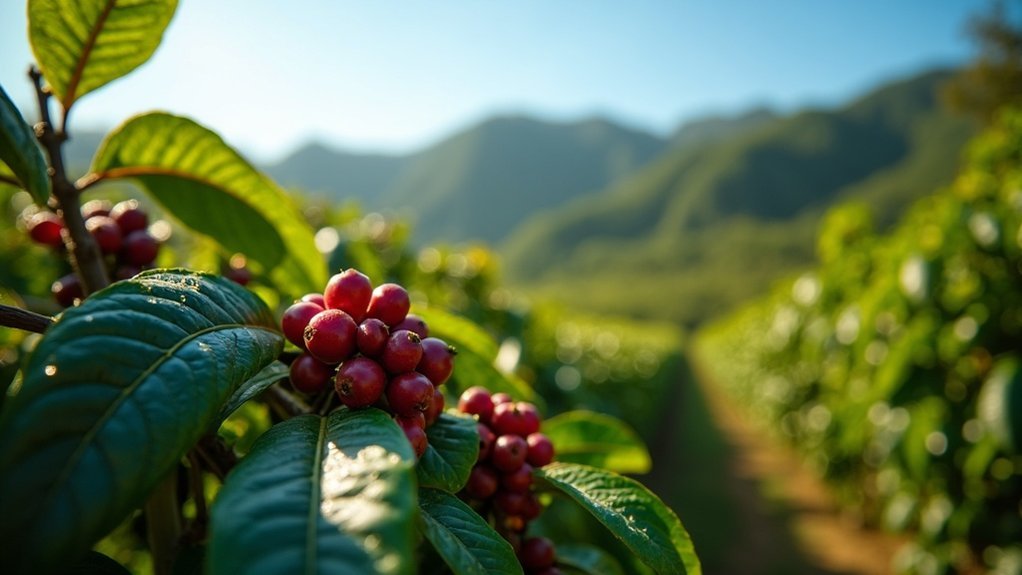
Catuai coffee is a hybrid varietal created from crossing Mundo Novo and Caturra. Primarily grown in Brazil and Central America, it’s prized for its high yield and disease resistance, making it a favorite among coffee producers. Catuai produces both red and yellow cherries, offering diverse flavor profiles—from deep chocolate and caramel notes in Red Catuai to bright citrus and honey in Yellow Catuai. Its cultivation plays a significant role in the coffee industry, and exploring its subtleties can lead you to fascinating insights about this unique varietal.
Key Takeaways
- Catuai is a hybrid coffee varietal developed in Brazil by combining Mundo Novo and Caturra. It is celebrated for its high yield and compact growth, making it a favorite among coffee farmers.
- This varietal produces both red and yellow cherries, each offering distinct flavor profiles that can include chocolate, caramel, citrus zest, and honey.
- The Red Catuai is known for its rich flavors of milk chocolate and roasted almonds, while the Yellow Catuai tends to present brighter, more citrusy notes.
- Catuai is widely cultivated not only in Brazil but also throughout Central America, contributing significantly to their overall coffee production.
- The varietal is often chosen for its disease resistance and adaptability, which leads to higher yields and improved efficiency during harvests.
What Is Catuai Coffee?
Catuai coffee is a remarkable hybrid variety derived from the crossing of Mundo Novo and Caturra, developed in the 1940s. This Arabica coffee variety is celebrated for its high yield and compact growth habit, thriving particularly in Brazil’s high-altitude regions.
Catuai produces both red and yellow cherries, contributing to its diverse flavor profile, which includes notes of chocolate, caramel, and honey. Beans often score above 85 on the Specialty Coffee Association scale, indicating quality.
However, Catuai is susceptible to diseases like coffee leaf rust, prompting ongoing breeding programs focused on enhancing disease resistance while preserving its yield and flavor integrity.
The Meaning Behind Catuai
| Characteristic | Details | Importance |
|---|---|---|
| Type | Hybrid Coffee | High Yield |
| Growth Habit | Compact | Easier Harvesting |
| Flavor Profile | Sweet and Bright | Excellent Cup Quality |
Catuai Coffee Varietals
What makes Catuai coffee varietals stand out in the competitive coffee market?
Catuai coffee varieties, including Red Catuai and Yellow Catuai, showcase distinct characteristics that appeal to coffee enthusiasts. The Red Catuai produces deep red cherries with flavor profiles of milk chocolate, roasted almonds, and caramelized sugar, while Yellow Catuai yields bright yellow cherries, offering citrus zest, raw honey, and sweetgrass notes.
Particularly, varietals like IAC Catuaí SH3 excel in high yields and disease resistance, making them a favorite among producers. Their Bourbon-Typica lineage enhances flavor complexity, making them ideal for specialty coffee offerings.
Catuai 99, for instance, scored an impressive 87.38 points in the 2023 Brazil Cup of Excellence, underscoring their remarkable quality and desirability in the coffee market.
Flavor Profiles of Catuai Coffee
When exploring the flavor profiles of Catuai coffee, you’ll notice distinct characteristics influenced by the bean’s varietal and growing conditions.
Each type, from Red to Yellow Catuai, presents unique tasting notes, while regional factors and processing methods further shape the final cup.
Understanding these elements allows you to appreciate the complexity and quality inherent in Catuai coffees, making it a delightful choice for coffee enthusiasts.
Flavor Characteristics Overview
Catuai coffee varietals offer a captivating range of flavor profiles that appeal to coffee enthusiasts.
Red Catuai typically features notes of milk chocolate, roasted almonds, and caramelized sugar, creating a rich and indulgent experience.
In contrast, Yellow Catuai surprises with bright citrus zest, raw honey, and sweetgrass, enhanced by a lively acidity.
The IAC Catuaí SH3 is highly regarded for its well-balanced chocolate and caramel notes, making it a favorite among those in search of premium flavors.
Moreover, Catuai 99 is recognized for its consistent yields and adaptability to diverse growing conditions, often achieving high scores in specialty coffee competitions.
It’s important to note that these flavor characteristics can significantly evolve depending on cultivation techniques and processing methods, showcasing the artistry behind coffee production.
Region-Specific Flavor Notes
While exploring the diverse flavor profiles of Catuai coffee, you’ll discover that regional influences play a significant role in shaping its unique characteristics.
Red Catuai typically presents flavor notes of milk chocolate, roasted almonds, and caramelized sugar, resulting in a medium body profile that’s rich and comforting.
In contrast, Yellow Catuai showcases bright citric acidity with hints of citrus zest, raw honey, and sweetgrass, offering a lively and refreshing taste experience.
The IAC Catuaí SH3 achieves a harmonious balance of chocolate and caramel notes, making it a delightful choice for coffee enthusiasts.
Catuai 99 is particularly renowned for its consistent yields and high-quality flavors, often standing out in specialty coffee circles.
Specialty coffees frequently score above 85 on the Specialty Coffee Association scale, with Catuai 99 making a remarkable mark by securing 9th place in the Brazil Cup of Excellence, emphasizing its exceptional quality and appeal.
Processing Method Impact
The regional flavor profiles of Catuai coffee are significantly influenced by the processing methods used.
In Brazil, traditional and natural techniques enhance the body and flavor, resulting in a strong bitterness and low acidity. This leads to tasting notes of chocolate, caramel, and spices.
In contrast, Central America’s post-harvest processing frequently involves natural drying on beds, which promotes delicate flavors and complex coffee profiles.
Red Catuai beans, shaped by environmental factors, produce richer complexities compared to Yellow Catuai.
For optimal enjoyment, light to medium roasting is recommended, especially for washed methods, to preserve the nuanced, clean tasting notes while showcasing the coffee’s inherent qualities.
Selecting Quality Catuai Coffee Beans
When selecting quality Catuai coffee beans, it’s essential to focus on their origin and traceability to ensure you’re sourcing from reputable regions like Brazil or Central America.
Pay attention to the roast level; lighter roasts better preserve the varietal’s delicate flavors, while darker roasts emphasize richer notes.
Furthermore, consider the processing method—washed or natural—as this significantly impacts the overall taste profile of your brew, enhancing your coffee experience.
Origin and Traceability
To ensure you’re selecting high-quality Catuai coffee beans, it’s essential to check their origin and traceability.
Focus on these key aspects:
- Origin: Verify that the beans are sourced from Brazil or Central America, especially Guatemala and Honduras.
- High-altitude: Seek beans cultivated in elevated regions, which can enhance flavor profiles.
- Freshness: Opt for roasted beans purchased within two weeks for the best taste experience.
- Processing method: Consider whether washed or natural processing suits your flavor preferences.
- Quality score: Look for beans that score 85 or higher on the Specialty Coffee Association scale to ensure quality.
Roast Level Selection
Choosing the right roast level for Catuai coffee beans is crucial for enhancing your coffee experience, as different roasts bring out unique flavor profiles.
For a delightful tasting experience, opt for a light to medium roast to maintain the delicate flavors that Catuai coffee is known for. If you’re in the mood for something bolder, darker roasts will highlight rich chocolate and caramel undertones.
Always prioritize freshness; beans roasted within the last two weeks provide the best flavor. Additionally, consider the processing method: washed processing delivers a cleaner taste, while natural processing adds body and complexity.
To ensure you’re enjoying a high-quality cup, look for Catuai coffee that scores 85 or higher on the Specialty Coffee Association scale, guaranteeing superior flavor and overall quality.
Processing Methods Consideration
The processing method you select for Catuai coffee beans greatly influences the flavor profile you’ll experience in your cup.
Understanding the nuances between processing techniques can enhance your coffee journey.
- Washed processing yields cleaner, brighter notes.
- Natural processing adds body and complexity.
- Quality control during post-harvest affects cup scores.
- Light to medium roasts preserve delicate flavors.
- Align processing choice with personal flavor preferences.
Remember, the choice of processing method is crucial in shaping your coffee experience.
Enjoy exploring different techniques to find your perfect brew!
Catuai Coffee vs. Other Varieties
While Catuai coffee is celebrated for its high yield and adaptability, it often contrasts sharply with other varieties such as Bourbon and Typica. These latter varieties are known for their complex flavor profiles but face considerable challenges due to their susceptibility to diseases. In particular, Catuai’s enhanced disease resistance makes it a reliable option, especially in regions that are prone to issues like coffee leaf rust.
| Variety | Yield | Flavor Profile |
|---|---|---|
| Catuai | High | Consistently sweet |
| Bourbon | Moderate | Complex and rich |
| Typica | Moderate | Fruity and floral |
In Central America, Catuai demonstrates varied productivity and thrives particularly well in Brazil, making it a popular choice among coffee growers looking for both quality and resilience.
Current Cultivation and Impact of Catuai
As Catuai coffee continues to thrive in various regions, its cultivation has reshaped the landscape of coffee production, particularly in Brazil and Central America.
This varietal’s compact growth allows for high-density planting, improving harvest efficiency and enabling effective disease treatments. However, Catuai is susceptible to coffee leaf rust and coffee berry disease, necessitating ongoing breeding for resistance.
Its impact on coffee production is significant in regions like Honduras and Guatemala. Key aspects include:
- Nearly half of Brazil’s Arabica production is attributed to Catuai.
- It accounts for 90% of Costa Rica’s coffee production.
- Catuai is often cultivated using full-sun practices.
- It thrives at ideal altitudes for Arabica coffee.
- Continuous breeding efforts are in place to enhance disease resistance.
This highlights the importance of Catuai in the global coffee landscape.