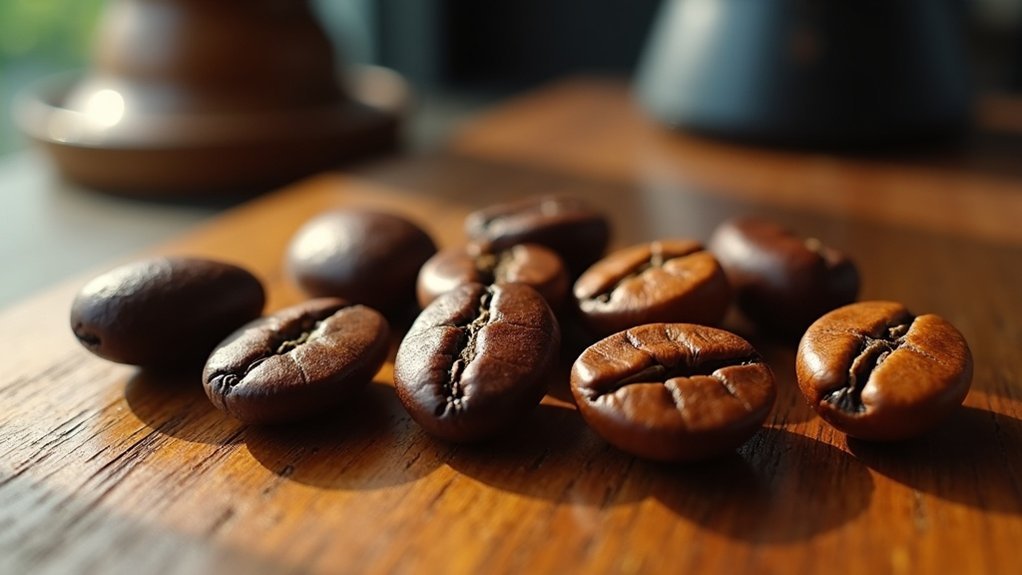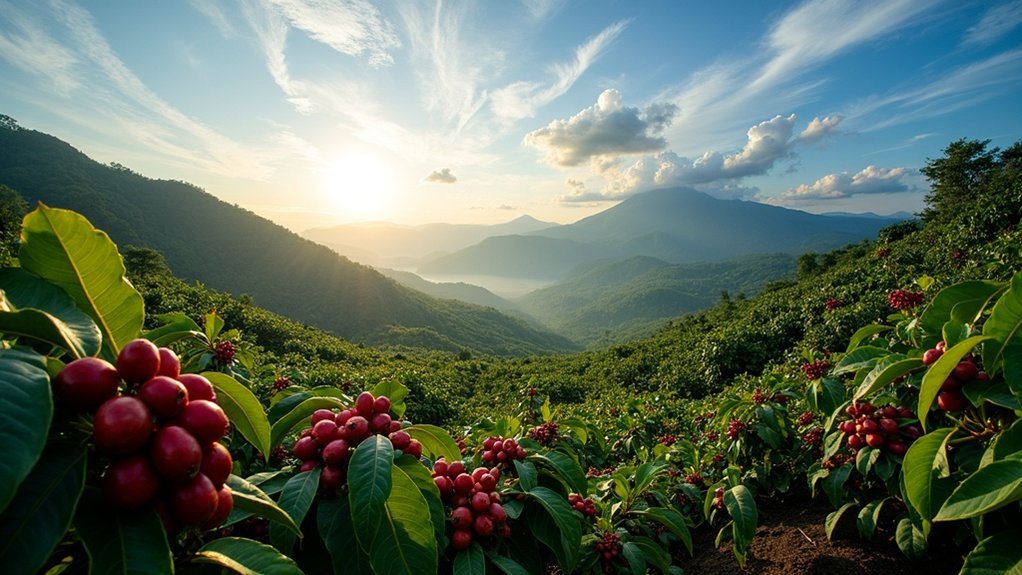
Honduran coffee flourishes in various unique regions renowned for their distinct flavors, including Copan, Montecillos, and El Paraíso. These regions boast high elevations between 1,000 and 1,500 meters, along with diverse micro-climates that enhance the coffee’s complex profiles. Here, you’ll discover thriving varieties such as Bourbon and Caturra, each offering its own unique tasting notes. Sustainable cultivation practices not only elevate the quality of the coffee but also support a community of over 100,000 farming families. Dive deeper into this vibrant coffee landscape and explore the rich stories behind each cup!
Key Takeaways
- Honduran coffee is primarily grown in diverse regions such as Copan, Montecillos, Opalaca, Comayagua, El Paraíso, and Agalta.
- The Copan region, situated at an elevation of 1,500 meters, produces coffee with delightful sweet notes of chocolate and citrus.
- In Montecillos, which includes Intibucá, the coffee is known for its fruit-forward flavors and bright acidity.
- The high altitudes and unique micro-climates found across these regions significantly enhance the quality and complexity of the coffee produced.
- Sustainable cultivation practices engage over 100,000 families, fostering community unity and ensuring the production of high-quality coffee.
Coffee Growing Regions in Honduras
Honduras boasts a rich tapestry of coffee-growing regions, each with its own distinct personality and flavor profile.
The Copan region is renowned for its sweet coffee, featuring delightful chocolate and citrus notes, thanks to its high altitude and favorable micro-climate.
The Copan region delights coffee lovers with its sweet brews, blending rich chocolate and bright citrus notes from its ideal growing conditions.
In contrast, Montecillos, including Intibucá, showcases exceptional varieties with fruit-forward, acidic profiles.
Other regions like Opalaca, Comayagua, El Paraíso, and Agalta also contribute unique flavors, emphasizing the diversity of coffee beans grown in Honduras.
The combination of high altitude and diverse micro-climates guarantees that each cup of Honduran coffee delivers quality and complexity, inviting exploration for coffee enthusiasts everywhere.
Elevation and Climate Impact
While exploring the fascinating world of Honduran coffee, you’ll quickly discover that elevation and climate play crucial roles in shaping its unique characteristics.
Here are three key factors to evaluate:
- Elevation: Grown at elevations above 1,000 meters, Honduran coffee thrives, particularly in the Copán region, where altitudes can reach 1,500 meters.
- Micro-climates: Each growing region, such as Agalta and Comayagua, features distinct micro-climates that enhance the flavor profiles of the coffee.
- Quality: The ideal climate conditions—adequate rainfall, optimal temperature, and significant altitude—support the cultivation of high-quality Arabica coffee varieties, resulting in diverse tasting notes that coffee producers expertly showcase.
Notable Coffee Varieties
As you explore the rich tapestry of Honduran coffee, you’ll encounter a variety of beans that reflect the region’s diverse growing conditions.
Notable varieties of coffee include Bourbon, known for its sweetness and complexity; Caturra, which offers bright acidity and a lighter body; and Catuai, a resilient hybrid favored for its adaptability.
In the Montecillos region, the Lempira varietal shines with promising cupping results, enhancing the reputation of Honduran coffee in specialty markets.
Each of these Honduran coffee beans showcases unique flavor profiles, contributing to the vibrant landscape of Central American coffee that enthusiasts cherish.
Cultivation and Harvesting Practices
Cultivating coffee in Honduras involves meticulous practices that greatly influence the quality of the beans. In this vibrant region, coffee farmers focus on sustainable methods that guarantee high-quality output.
Key practices include:
Key practices such as altitude selection and careful harvesting ensure the exceptional quality of Honduran coffee.
- Selecting Altitudes: Growing coffee above 1,000 meters enhances flavor profiles, resulting in a rich and aromatic cup of coffee.
- Careful Harvesting: Farmers meticulously pick the ripest cherries during the December to March season to ensure premium beans that reflect the region’s unique taste.
- Community Involvement: Over 100,000 families engage in cultivation, fostering a strong sense of unity and shared passion for coffee production.
These techniques not only boost the quality of Honduran coffee but also emphasize the importance of sustainability in its production, ensuring a brighter future for both farmers and coffee enthusiasts alike.
Processing Methods in Honduras
In Honduras, the processing methods employed by coffee producers play a crucial role in shaping the final flavor profile of the beans.
Most growers utilize the washed method, which involves removing the fruit and mucilage from coffee cherries to achieve a cleaner taste. Eco-pulpers are commonly used to conserve water and support sustainable practices.
Additionally, some producers opt for honey processing, which retains mucilage to create sweeter and more complex flavors.
For drying specialty beans, raised beds are favored as they promote ideal airflow and consistent drying conditions.
This variety in processing methods contributes to the rich diversity of flavors found in Honduran coffees, allowing each lot to showcase its unique characteristics.