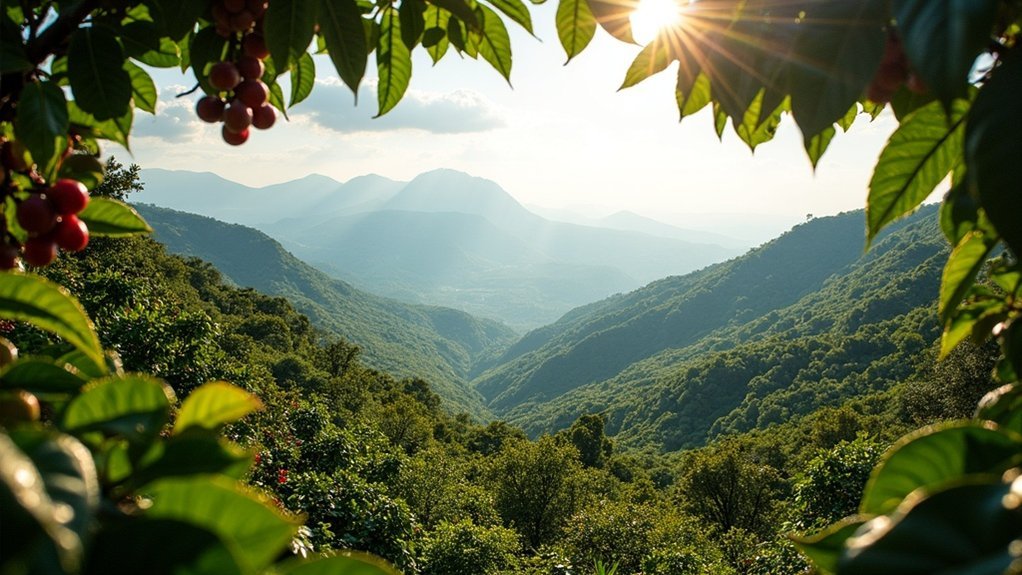
Zimbabwe coffee primarily flourishes in the Chipinge region, where the unique climate and altitude create optimal conditions for cultivating high-quality Arabica beans. This area benefits from ideal rainfall and fertile soil, which are crucial for producing flavorful coffee. The predominant varietal, Catimor Arabica, thrives in this region, contributing to the distinct flavor profiles characteristic of Zimbabwean coffee. If you’re eager to learn more about the captivating history and future prospects of Zimbabwe’s coffee industry, you’re in for an exciting exploration.
Key Takeaways
- Coffee is primarily grown in the Chipinge region of Zimbabwe, which is renowned for its favorable climate and geography conducive to coffee production.
- The altitudes in Chipinge range from 900 to 1,100 meters, creating an ideal environment for high-quality Arabica coffee cultivation.
- Chipinge is responsible for 75% of Zimbabwe’s specialty coffee production, contributing to the region’s distinct flavor profile that coffee enthusiasts appreciate.
- The region enjoys approximately 1,100 mm of annual rainfall, which is essential for maintaining the moisture levels in coffee plants and enhancing flavor complexity.
- Traditional small-scale farms in Chipinge employ hand-picking methods to ensure high production standards and exceptional coffee quality.
Zimbabwe Coffee Growing History
Since coffee was introduced to Zimbabwe by British colonizers in the mid to late 19th century, the country has experienced a remarkable journey in its coffee industry.
Initially flourishing, coffee farming faced significant challenges in the 1920s due to disease, which halted Zimbabwe’s coffee production for nearly 40 years.
The 1960s marked a turning point, with improved practices enhancing coffee cultivation, especially in the Chipinge region. By the 1980s, production soared to over 15,000 tonnes annually.
However, political instability in the 1990s led to a drastic 97% decline in production.
Recently, renewed investment signals a promising revival in Zimbabwe’s coffee landscape, offering hope for coffee enthusiasts and producers alike.
Coffee Farming in Zimbabwe
When you explore coffee farming in Zimbabwe, you’ll find that the eastern highlands, particularly the Honde Valley and Chipinge, provide an ideal climate and elevation for cultivating premium coffee.
Most farms in this region are small-scale operations, where growers utilize traditional hand-picking methods to ensure the finest harvest.
Despite encountering challenges such as dry seasons and pests, these farmers remain dedicated to upholding high production standards, showcasing the resilience and quality of Zimbabwe’s coffee industry.
Ideal Growing Conditions
Although Zimbabwe’s coffee cultivation may not be as globally recognized as other regions, the ideal growing conditions found in its eastern highlands make it a hidden gem for coffee enthusiasts.
Nestled at elevations between 1,200 and 1,500 meters, areas like Honde Valley and Chipinge receive over 800mm of annual rainfall, creating perfect conditions for coffee farming.
The dominant Catimor Arabica varietal flourishes here, prized for its exceptional quality and disease resistance.
Despite challenges like dry seasons and pests, skilled coffee farmers adeptly manage these obstacles, ensuring that the coffee produced reflects the unique terroir of Zimbabwe’s mountainous landscape, offering a distinctive experience for coffee lovers.
Small-Scale Farming Practices
Zimbabwe’s coffee landscape is significantly influenced by small-scale farming practices, particularly in regions like Chipinge. These dedicated coffee producers emphasize hand-picking and manual processing, ensuring that every bean meets high-quality standards. The Catimor Arabica varietal, known for its resilience and rapid maturation, constitutes over 90% of local production. Despite facing challenges such as prolonged dry seasons and pest outbreaks, farmers benefit from effective training programs supported by organizations like Nespresso, which provide essential skills in agronomy and post-harvest processing.
| Challenge | Solution |
|---|---|
| Long dry seasons | Expert knowledge |
| Pest outbreaks | Training programs |
| Quality control | Manual processing |
Chipinge Coffee Growing Region
In the Chipinge coffee growing region, you’ll find the perfect environment for cultivating outstanding coffee.
The unique blend of altitude, climate, and sustainable farming practices results in vibrant flavor profiles that compete with the finest East African coffees.
Here, a dedication to quality ensures that every cup embodies the rich heritage and potential of Zimbabwean coffee, making it a remarkable choice for coffee enthusiasts.
Ideal Growing Conditions
Nestled in the southern Eastern Highlands, the Chipinge region stands out as the premier coffee-growing area in Zimbabwe, thanks to its unique climate and geography.
With altitudes ranging from 900 to 1,100 meters, Chipinge offers ideal growing conditions for high-quality Arabica coffee. The region enjoys about 1,100 mm of annual rainfall, ensuring the necessary moisture for thriving coffee plants.
Warm days combined with cool nights further enhance the flavor characteristics of the beans. This perfect blend of altitude, rainfall, and temperature makes Chipinge an exceptional location for cultivating rich, flavorful coffee that delights coffee enthusiasts worldwide.
Unique Flavor Profiles
The exceptional growing conditions of the Chipinge region give rise to coffee that’s celebrated for its unique and vibrant flavor profiles. Known for its lively and wine-like acidity, Chipinge coffee often competes with fine East African varieties, making it a beloved choice in specialty coffee markets.
You’ll discover a complex array of flavors featuring notes of chocolate, berries, and subtle wood accents, culminating in a full-bodied, rich experience.
With over 75% of Zimbabwe’s specialty coffee production originating from Chipinge, the distinct terroir influenced by its proximity to Mozambique sets it apart, ensuring that every cup tells the unique story of this remarkable coffee-growing region.
Sustainable Farming Practices
While exploring the vibrant coffee culture of Chipinge, you’ll discover that sustainable farming practices are essential to its success.
Local farmers utilize manual processing techniques, such as hand-picking and wet processing, to ensure high-quality coffee while promoting environmental sustainability.
Training programs supported by Nespresso and TechnoServe equip farmers with important skills, including proper tree spacing and organic fertilization, which enhance both crop yields and soil health.
This commitment to sustainability not only improves the quality of coffee produced but also strengthens the economic stability and livelihoods of farming communities, paving the way for a brighter future for Chipinge’s coffee industry.
Zimbabwe Coffee Production Regions
While Zimbabwe may not be as famous for its coffee production as other nations, the country boasts a vibrant coffee industry primarily centered in the beautiful Honde Valley. This region offers an ideal climate for coffee cultivation, leading to the growth of exceptional coffee varieties. Notably, areas such as Chipinge and Vumba play crucial roles in this sector, with Chipinge being responsible for an impressive 75% of Zimbabwe’s specialty coffee production. The unique flavor profiles of the coffee produced here are influenced by the distinctive growing conditions found in the Eastern Highlands.
| Region | Coffee Type | Quality Level |
|---|---|---|
| Honde Valley | Arabica | High |
| Chipinge | Specialty Arabica | Highest in Zimbabwe |
| Chimanimani | Arabica | Very Good |
Coffee Types and Varietals
Zimbabwe’s coffee industry showcases a diverse array of coffee types and varietals that reflect its unique growing conditions.
The dominant varietal, Catimor Arabica, thrives in the Chipinge region, which is favored for its quick maturity and disease resistance, with over 90% of farms cultivating it.
Other notable varietals like SL-14, SL-28, SL-34, and Caturra add distinct flavor profiles, enhancing the appeal of Zimbabwean coffee.
Noteworthy varietals such as SL-14, SL-28, SL-34, and Caturra contribute unique flavors, elevating the charm of Zimbabwean coffee.
Renowned for its quality, the Chipinge region accounts for 75% of the specialty coffee produced, characterized by vibrant acidity and rich notes of chocolate, berries, and wood, drawing comparisons to East African coffees.
This rich variety makes Zimbabwean coffee a fascinating subject for coffee enthusiasts.
Characteristics of Zimbabwean Coffee
When exploring the characteristics of Zimbabwean coffee, you’ll find that its unique growing conditions play a crucial role in shaping the flavor profile.
Grown primarily in the Chipinge region, this coffee boasts:
- A favorable climate and altitudes between 900 to 1,100 meters, ideal for coffee cultivation
- A wet processing method that yields a balanced, medium-bodied cup
- Flavor notes that include rich chocolate, vibrant berries, and subtle woody accents
- A predominance of the Catimor Arabica varietal, renowned for its resilience and adaptability
Zimbabwean coffee is celebrated for its lively berry-like acidity, often ranking just behind Kenyan coffees in terms of quality and flavor complexity.
Its intriguing characteristics make it a delightful choice for coffee enthusiasts seeking a diverse tasting experience.
Optimal Roast Profile for Zimbabwean Coffee
To truly appreciate the unique flavors of Zimbabwean coffee, it’s essential to focus on achieving the ideal roast profile, which is best set at a medium roast.
This superior roast profile strikes a balance between sweetness and acidity, allowing the distinctive chocolate, berry-like acidity, and winey notes to shine.
A medium roast perfectly balances sweetness and acidity, highlighting the unique chocolate, berry, and winey notes of Zimbabwean coffee.
Given the medium density of Zimbabwean coffee beans, you’ll need to adjust roasting time and temperature for optimal flavor extraction.
A medium roast enhances the rich flavors and fine aftertaste, making it perfect for espresso or brewed coffee.
To preserve these exceptional qualities, ensure proper packaging to maintain freshness.
Future of Zimbabwean Coffee
As investment from international companies like Nespresso pours into the country, the future of Zimbabwean coffee looks increasingly bright.
You’ll see a steady increase in the quality of coffee beans as local farmers benefit from enhanced training programs and valuable resources. This revival is fueled by a growing interest in specialty coffee, particularly from regions like Chipinge.
- Enhanced training programs for farmers
- Focus on sustainable farming practices
- Growing recognition of Zimbabwean coffee in global markets
- Increased production aimed at meeting international standards
With these developments, Zimbabwe’s coffee industry is well-positioned for a promising renaissance, making it an exciting time for coffee enthusiasts and connoisseurs alike.