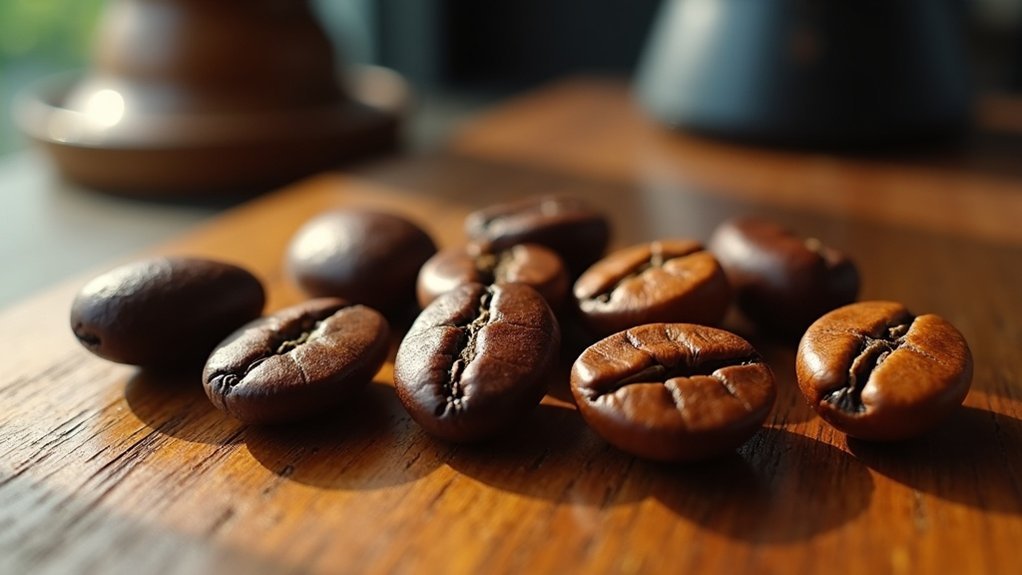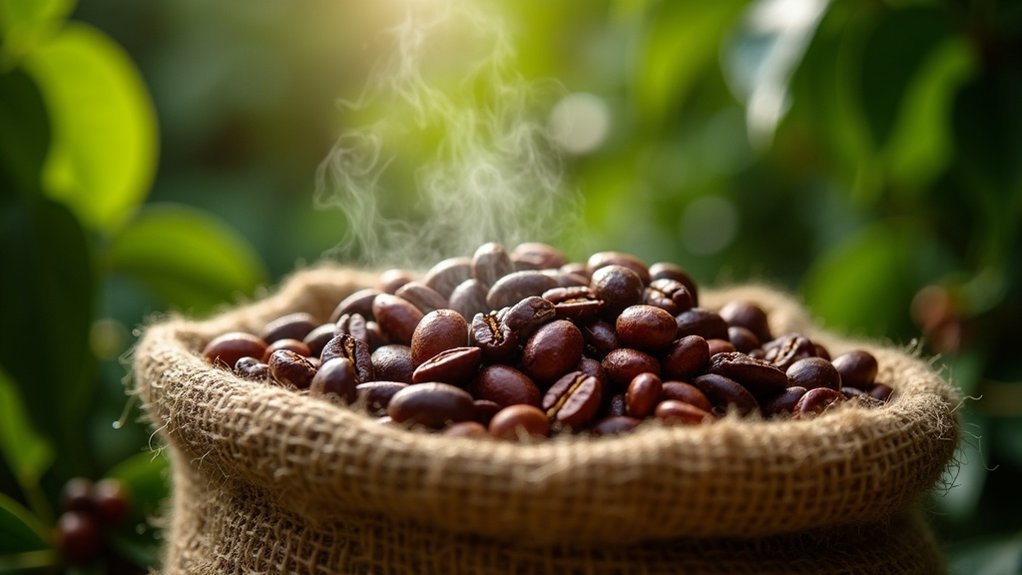
The wet-hulled process coffee, primarily from Indonesia, involves immediate depulping, overnight fermentation, and drying to create distinctive flavors. After the beans are depulped, they undergo fermentation for about 12 hours, which enhances flavor development before being hulled while still at higher moisture levels. This technique preserves rich, earthy notes and adds complexity, often revealing hints of tobacco and dark cacao. The resulting brew is perfect for those who appreciate robust coffee profiles. Delve deeper to understand the intricacies of this captivating coffee processing method.
Key Takeaways
- The wet-hulled process is a unique coffee processing method primarily used in Indonesia, especially in Sumatra.
- This method involves depulping the coffee cherries, fermenting the beans overnight, and then drying them to about 50% moisture before hulling.
- The fermentation phase lasts around 12 hours, allowing microbial activity to break down the mucilage, which enhances the development of flavor.
- Hulling is performed at a higher moisture content of 40-50%, followed by rapid drying to reach moisture levels that are ready for export.
- Wet-hulled coffee is renowned for its bold, earthy flavors, featuring notes of tobacco, cedar, and dark cacao, making it particularly appealing to those who enjoy robust flavor profiles.
Overview of the Wet-Hulled Process
The wet-hulled process, also known as giling basah, is a distinctive coffee processing method primarily practiced in Indonesia, especially in Sumatra.
This method involves several key steps: first, the coffee cherries are depulped, then allowed to ferment overnight, and finally dried to about 50% moisture before the hulling process begins. This is different from traditional coffee processing methods, which typically require the beans to be dried to lower moisture levels.
After hulling, the beans are further dried to reach a moisture content of 12-13%, making them ready for export.
The wet-hulling process not only allows for quick sales to middlemen, ensuring prompt payment, but also minimizes risks associated with humidity.
This method emphasizes quality control, producing coffee with rich, earthy flavors while avoiding mustiness, making it a significant and valued practice in the coffee industry.
Initial Processing Steps
When you harvest coffee cherries, immediate depulping is essential for effective processing. This step separates the seeds from the fruit, allowing mucilage to remain and initiate fermentation, which is crucial for developing the rich flavors in your coffee.
Additionally, the moisture content upon delivery to collection points greatly influences the subsequent handling and overall quality of the beans you enjoy in your cup.
Harvesting and Depulping Process
To initiate the wet-hulling process, coffee cherries are harvested and immediately depulped using hand-cranked machines, ensuring minimal delay in processing.
This immediate action is crucial as it helps retain the mucilage on the seeds, which is vital for microbial activity during fermentation.
After depulping, the seeds are stored in plastic tanks or jute sacks, maintaining a high moisture content of 35-50%.
Depending on local practices, these depulped seeds may be delivered as whole cherries to a collection point.
This initial processing step lays the groundwork for the hulling and drying processes, which are essential for developing the unique flavor profile of wet-hulled coffee.
Mucilage Fermentation Duration
Following the depulping process, the seeds enter a fermentation stage that typically lasts around 12 hours, during which microbial activity works to break down the mucilage.
The high moisture content of 35-50% in the seeds during this period promotes effective fermentation. This crucial step not only aids in the removal of the mucilage but also significantly impacts the flavor profiles of the final coffee product.
Once the fermentation is complete, the coffee is thoroughly washed to eliminate any remaining mucilage before proceeding to the drying stage.
Understanding this fermentation process is essential for appreciating the complexities and nuances of wet-hulled coffee and its distinctive characteristics.
Delivery to Collection Points
As coffee cherries are harvested, immediate processing becomes essential to guarantee the best quality of the final brew.
The cherries are often depulped on-site using small machines, which helps preserve the mucilage necessary for microbial activity in fermentation. After depulping, the seeds retain a moisture content of 35% to 50%, which is crucial for developing the unique flavor profile of Wet Hulled Coffee.
Farmers may opt to deliver whole cherries instead, depending on local practices and market demands. Once the seeds arrive at collection points, they’re carefully stored with their protective parchment layer intact.
This meticulous handling during delivery ensures that the initial processing steps significantly influence the coffee’s final taste and quality before it undergoes further processing.
Hulling and Drying Techniques
While the wet hulled process is distinct from traditional coffee processing methods, its hulling and drying techniques are crucial in shaping the final flavor profile of the beans.
Hulling occurs when the beans still contain around 40-50% moisture, which is atypical for coffee processing. Following hulling, the beans undergo a brief drying phase, reaching a moisture content of 12-13%.
This quick drying process retains more moisture than traditional methods, allowing for the preservation of unique flavors that are characteristic of wet-hulled coffee.
Flavor Profile of Wet-Hulled Coffee
The flavor profile of wet-hulled coffee is truly distinctive, celebrated for its bold and earthy characteristics. This makes it an enticing option for coffee enthusiasts who enjoy robust flavors.
The distinctive flavor profile of wet-hulled coffee offers bold, earthy characteristics that captivate robust flavor enthusiasts.
When you indulge in wet-hulled coffees, you can expect to encounter:
- Notes of tobacco and cedar
- Dark roasted cacao nibs
- Mellow acidity and a full-bodied mouthfeel
- Complexity with some fruit-forward hints
These intriguing flavors stem from various factors, including the unique regional characteristics of Sumatra and the diverse processing techniques employed.
Unlike washed coffees, wet-hulled coffees offer a rich, layered experience that invites adventurous drinkers to delve into unique single-origin selections, promising a memorable tasting journey.
Comparison to Other Processing Methods
Wet-hulled coffee stands out not only for its bold flavor profile but also for its unique processing method, which significantly impacts the final taste.
Unlike washed coffee, where the parchment layer is retained during the drying process, wet hulling removes this layer early on, allowing for a faster drying time and resulting in a distinct earthy flavor profile.
This method is in stark contrast to natural processing, which produces a syrupy sweetness by drying the whole cherries.
As a result, wet-hulled coffees tend to have a fuller body and muted acidity, making them distinct, albeit less common compared to the more widely preferred washed coffees in specialty markets.
Benefits for Coffee Producers
For coffee producers, utilizing the wet-hulled process can significantly improve operational efficiency and profitability.
- It quickly dries coffee, reducing spoilage in humid climates.
- It ensures prompt cash flow, contributing to financial stability.
- It adapts production methods to align with local climatic conditions.
- It opens doors to specialty coffee markets with distinct flavor profiles.
This processing method allows producers to maintain consistent quality and yield, even in the face of environmental challenges.
By embracing wet-hulling, you not only support traditional agricultural practices but also position yourself to effectively meet market demands.
Ultimately, it represents a sustainable approach that strengthens your livelihood and enhances the marketability of your coffee.