Carbonic maceration in coffee is an innovative fermentation method that seals whole cherries in CO2-rich environments, promoting intracellular fermentation. This technique enhances the coffee’s natural flavors, creating vibrant, fruit-forward brews with notes of tart cherry and tropical fruit. It revolutionizes traditional processing by preserving mucilage and allowing precise control over fermentation variables, resulting in exciting complexity. If you’re curious about the intricacies of this process and its impact on flavor profiles, there’s much more to explore in the world of coffee.
Key Takeaways
- Carbonic maceration is a fermentation process that enhances the flavor complexity of coffee by sealing whole coffee cherries in vessels filled with carbon dioxide.
- This innovative method, introduced by Saša Šestić in 2015, promotes intracellular fermentation in a low-oxygen environment, allowing for unique flavor development.
- The duration of fermentation can vary from 60 hours to several weeks, significantly impacting the final flavor profile of the coffee.
- Flavor notes commonly associated with this process include tart cherry, red apple, and tropical fruit, complemented by a floral aroma that elevates the tasting experience.
- Carbonic maceration presents a distinctive alternative to traditional coffee processing methods, resulting in a vibrant, juicy cup that can evoke the qualities of fine wines.
Definition and Origin of Carbonic Maceration
Carbonic maceration, a fascinating fermentation technique, has taken the coffee world by storm since its introduction in 2015 by Saša Šestić.
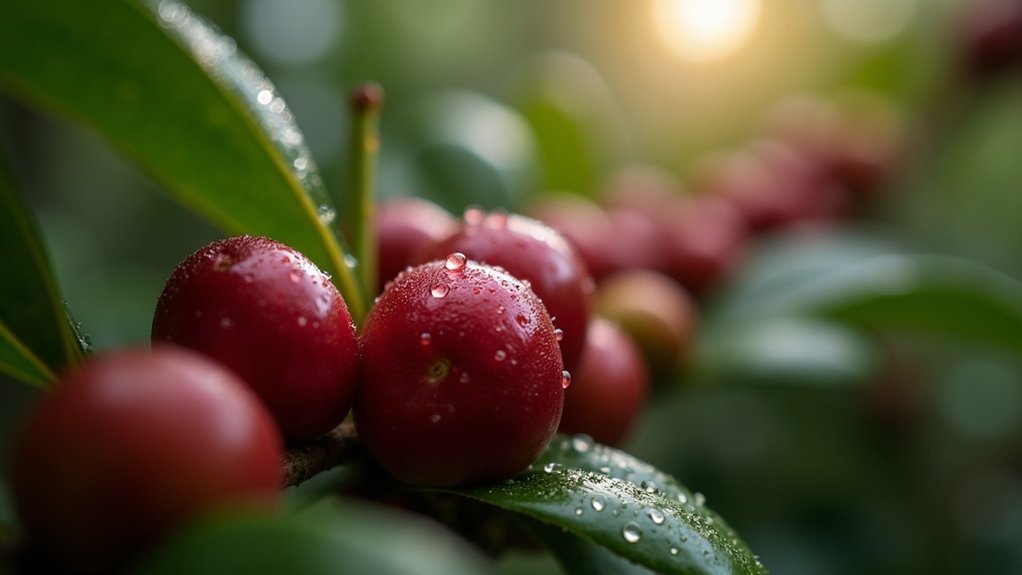
This innovative process involves sealing whole coffee cherries in vessels filled with carbon dioxide, creating an environment for low or no oxygen fermentation.
Originating from winemaking, it allows for internal fermentation, where flavors and aromatics develop uniquely from within the cherries.
This method enhances vibrancy and complexity in coffee processing, resulting in profiles that differ considerably from traditional methods.
As a relatively new approach, carbonic maceration offers exciting possibilities for coffee enthusiasts and producers alike, showcasing the unique flavors that can emerge from this advanced technique.
The Fermentation Process
In the fermentation process of carbonic maceration, you’re witnessing a fascinating interplay of anaerobic techniques that transform whole coffee cherries.
As sugars break down within the cherries, the dynamics of intracellular fermentation shape the unique flavor profile you’ll ultimately experience in your coffee.
This controlled environment not only enhances vibrant notes but also preserves the delicate characteristics that make each cup of coffee truly exceptional.
Anaerobic Fermentation Techniques
When exploring anaerobic fermentation techniques in coffee processing, you’ll discover that methods like carbonic maceration create an environment where coffee cherries can undergo a unique transformation.
By sealing whole coffee cherries in a carbon dioxide-filled vessel, you promote fermentation without oxygen, allowing sugars to break down into carbon dioxide and alcohol. This controlled processing method protects the mucilage, enhancing the coffee’s flavor profile.
Manipulating temperature and pH levels during fermentation can yield diverse tastes. With durations ranging from days to weeks, the complexities and vibrancy of the final coffee flavors are greatly influenced, making anaerobic fermentation an exciting frontier in coffee production.
Intracellular Fermentation Dynamics
The fermentation process in carbonic maceration highlights the intriguing dynamics of intracellular fermentation within coffee cherries.
By sealing whole cherries in an oxygen-poor environment filled with carbon dioxide, you promote fermentation from the inside out. This unique method allows for precise control over fermentation dynamics, enabling adjustments in factors like temperature and pH to influence the final flavor profile.
Fermentation durations can range from 60 hours to several weeks, enhancing the extraction of complex flavors. The outcome is a vibrant, fruity flavor profile and a clean cup that exhibits wine-like characteristics, all thanks to the preservation of sugars and esters throughout this innovative fermentation technique.
Flavor Profile Development
Carbonic maceration transforms the flavor profile of coffee in remarkable ways, allowing you to experience a spectrum of vibrant, fruit-forward notes.
This unique fermentation process involves whole coffee cherries, enhancing flavor complexity while preserving delicate nuances. By fermenting in a CO2-rich environment, the fruit mucilage interacts with the cherries, yielding tasting notes of tart cherry, red apple, and floral jasmine.
The anaerobic conditions control fermentation speed, impacting acidity and mouthfeel, ultimately ensuring quality in your cup of coffee.
With variations in duration, you can savor distinct profiles that highlight the coffee’s origin, making each sip a delightful exploration of flavors.
Comparison to Traditional Processing Methods
While traditional coffee processing methods have their merits, carbonic maceration stands out by revolutionizing how coffee cherries are fermented. By fermenting whole coffee cherries in a sealed, oxygen-free environment, it prevents surface fermentation and promotes intracellular fermentation.
This technique preserves the mucilage, leading to vibrant, fruit-forward flavor profiles that traditional methods can’t match. Unlike traditional processing, which ferments from the outside in, carbonic maceration enhances complexity by allowing fermentation from the inside out.
Producers can manipulate variables like temperature and pH, resulting in diverse flavors that celebrate the cherry’s natural sugars and esters, revealing a new dimension of coffee tasting.
Control and Manipulation of Fermentation
In carbonic maceration, you can precisely control the fermentation of coffee by adjusting temperature and pH, allowing you to shape the flavor profile of your brew.
This manipulation creates opportunities for unique and diverse offerings, catering to specific consumer preferences.
Temperature and Ph Control
Understanding how temperature and pH control can influence the fermentation process is essential for coffee producers aiming to elevate their product’s flavor profile.
By adjusting temperature, you can speed up fermentation during carbonic maceration, but be cautious—excessive heat might introduce unwanted flavors.
Meanwhile, controlling the pH level optimizes the microbial environment, enhancing desirable flavors and aromas in your coffee. A lower pH can yield brighter, more vibrant tasting notes, showcasing the unique characteristics of your coffee cherries.
Flavor Profile Diversification
As you delve into the fascinating world of carbonic maceration in coffee, you’ll uncover how this cutting-edge fermentation technique allows for exceptional control over flavor profile diversification. By adjusting temperature and pH levels, coffee producers can amplify fruity and vibrant notes, crafting distinct taste profiles that capture attention in the specialty coffee market. The anaerobic environment promotes the development of intricate flavors within coffee cherries, while the fermentation duration invites experimentation for complex outcomes.
| Processing Technique | Flavor Characteristics |
|---|---|
| Short Fermentation | Bright acidity, light body |
| Extended Fermentation | Increased sweetness, depth |
| Controlled Temperature | Fruity, floral notes |
| Variations in pH | Unique, nuanced flavors |
Links With Wine Production
While many mightn’t immediately connect coffee with winemaking, the technique of carbonic maceration bridges these two worlds in fascinating ways.
Originating in the Beaujolais region, this method emphasizes controlled fermentation, allowing grape sugars to ferment in a low-oxygen environment, enhancing flavor complexity.
Saša Šestić’s adaptation of carbonic maceration for coffee mirrors this process, enabling vibrant, fruity profiles that echo the nuances found in fine wines.
The parallels reveal how coffee can also benefit from intracellular fermentation, creating unique taste experiences.
The Carbonic Maceration Process in Detail
Carbonic maceration transforms the way coffee is processed, allowing you to experience flavors that are both vibrant and complex.
In this innovative process, whole coffee cherries are sealed in airtight containers filled with carbon dioxide, creating an oxygen-free environment. This encourages fermentation from within, breaking down sugars into CO2 and alcohol, enhancing flavor absorption by the coffee parchment.
Over approximately 60 hours, controlled fermentation variables like temperature and pH lead to unique profiles.
Finally, the cherries are sundried for 10-12 days, preserving the aromatics produced by carbonic maceration and preventing unwanted microbial interference, resulting in a distinctively fruity brew that showcases the intricate flavors of coffee.
Flavor Profiles and Tasting Notes
The unique fermentation process of carbonic maceration reveals an exciting spectrum of flavors in coffee that captivates enthusiasts.
You’ll encounter vibrant flavor profiles, showcasing notes of tart cherry, red apple, and tropical fruit, all enhanced by a floral aroma. This anaerobic environment allows for intricate flavor development, resulting in a juicy cup reminiscent of fine wines.
Experience vibrant flavors of tart cherry, red apple, and tropical fruit, all wrapped in a delightful floral aroma.
Tasting notes can vary by origin; Ethiopian varieties often burst with floral and fruity elements, while Colombian beans deliver a rich, balanced profile.
The complexity and clean finish of carbonic maceration coffee make each sip an exhilarating experience, much like savoring a fine wine.