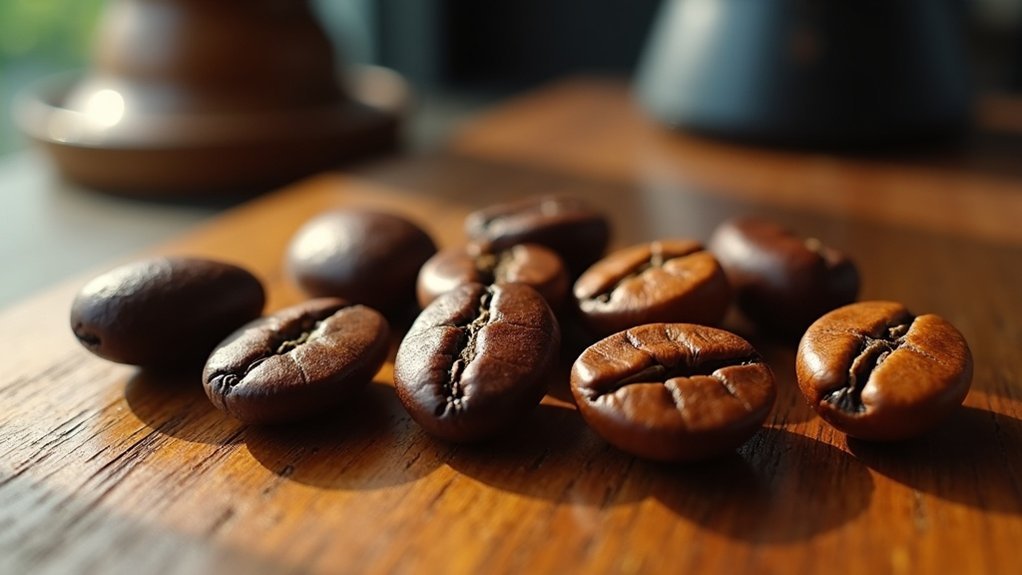
Extended fermentation coffee is a distinctive processing technique that allows beans to undergo fermentation for extended periods, resulting in enhanced flavor complexity. This method brings forth vibrant tasting notes such as floral sweetness, tropical fruits, and bright acidity. Common techniques include anaerobic fermentation and cold fermenting, both of which necessitate careful management of environmental conditions. Often produced in small batches, these coffees are highly sought after in specialty markets. Explore more about its processing methods and brewing recommendations to elevate your coffee experience.
Key Takeaways
- Extended fermentation coffee involves prolonged fermentation processes that enhance flavor complexity, yielding vibrant notes like floral sweetness and bright acidity.
- Methods such as anaerobic fermentation and cold fermenting are employed to control microbial activity and develop unique tasting profiles.
- This processing technique carries certain risks, as over-fermentation can lead to undesirable flavors, such as vinegar.
- Typically produced in small batches, extended fermentation coffee is highly sought after in specialty markets and often achieves exceptional scores in cupping tests.
- Sustainable practices and community support are integral to the production of extended fermentation coffee, ensuring fair compensation for farmers and promoting environmental responsibility.
Understanding Extended Fermentation Coffee Processing
When you explore extended fermentation coffee processing, you’ll find that it significantly alters the flavor profile of the beans. This method prolongs fermentation, enhancing complexity and yielding vibrant flavors like floral sweetness and bright acidity.
Techniques such as anaerobic fermentation and cold fermenting play vital roles in flavor development, producing distinctive notes often absent in traditional processing methods. However, this precision-driven process carries risks; over-fermentation can lead to undesirable flavors like vinegar.
Typically produced in small batches, extended fermentation coffee is highly sought after in specialty coffee markets, offering tasting notes of tropical fruits, caramel, and unique wine-like characteristics.
Methods of Extended Fermentation
The methods of extended fermentation are crucial in developing the unique flavor profiles of coffee. Anaerobic fermentation, which removes oxygen, allows for controlled microbial activity that leads to precise flavor development.
Cold fermenting slows down the fermentation process, enabling a broader range of nuanced tasting notes to emerge. Additionally, partial drying during fermentation enhances complexity, while sun drying helps to lock in fruity sugars, which alters microbial interactions and further enriches the flavor profile.
Each of these methods requires careful management of environmental conditions, making extended fermentation both a high-risk and rewarding endeavor. Ultimately, these techniques can produce vibrant, layered flavors that are often absent in traditional coffee processing.
Unique Characteristics of Extended Fermentation Coffee
While exploring the world of specialty coffee, you’ll find that extended fermentation coffee stands out for its ability to amplify natural flavor notes, creating layered and nuanced profiles.
This unique processing method often leads to tasting notes of floral sweetness, tropical fruits, and bright citrus. Typically produced in small batches, these coffees fall under the washed category, making them rare gems.
Extended fermentation coffee reveals exquisite tasting notes of floral sweetness, tropical fruits, and vibrant citrus, crafted in rare, small batches.
Techniques like anaerobic fermentation and cold fermenting enhance microbial interactions, resulting in complex flavors.
With exceptional cupping scores, such as the Auro 72h Yeast Fermentation Acaiá Peaberry’s score of 89.5, this coffee’s quality is highly sought after by connoisseurs.
Risks and Challenges of Extended Fermentation
Although extended fermentation coffee can yield remarkable flavors, it presents significant risks and challenges that coffee farmers must navigate carefully.
The fermentation process requires precise monitoring of environmental factors like temperature and humidity to avoid undesirable flavors, such as vinegary notes or overpowering alcohol characteristics. Inconsistencies due to environmental variability can jeopardize your investment, making this a high-stakes endeavor.
Mismanagement during fermentation could lead to the loss of entire coffee crops, underscoring the complexity of this method. A deep understanding of microbial activity is essential in the coffee industry, emphasizing the intricate balance needed for successful extended fermentation.
Brewing Recommendations for Extended Fermentation Coffee
When brewing extended fermentation coffee, methods like V60 and AeroPress are your best bets to showcase its complex flavors.
Experimenting with different brew ratios can help you reveal the ideal extraction for each unique flavor profile.
Don’t forget to check the flavor descriptions on the packaging for tailored brewing advice that enhances your coffee experience.
Optimal Brewing Methods
How can you best release the intricate flavors of extended fermentation coffee? To achieve optimal brewing methods, consider these recommendations:
- V60/Pour-Over: This method enhances complex flavors and highlights refined acidity, making it a favorite among coffee enthusiasts.
- AeroPress: Ideal for extracting floral sweetness and tropical fruit flavor notes, this method is versatile and easy to use.
- Light Roast Level: Choose light roasts to accentuate vibrant tasting profiles, showcasing the unique qualities of the coffee.
- Precise Brewing: Pay attention to time and temperature for accurate brewing, which helps preserve the delicate characteristics of your coffee.
Always check the flavor descriptions on the packaging to customize your brewing experience and fully appreciate the unique qualities of extended fermentation coffee.
Experimenting With Ratios
To truly unlock the potential of extended fermentation coffee, experimenting with brew ratios is essential. Try varying your coffee-to-water ratios, such as 1:15 or 1:17, to improve extraction and bring out unique flavors. Utilize the following table for your brewing experiments:
| Ratio | Water (grams) | Coffee (grams) |
|---|---|---|
| 1:15 | 300 | 20 |
| 1:17 | 340 | 20 |
| 1:16 | 320 | 20 |
Adjusting grind size and water temperature (between 195°F and 205°F) can also help you find the perfect combination that highlights the coffee’s intricate notes. Happy brewing!
Flavor Profile Exploration
While exploring the flavor profiles of extended fermentation coffee, you’ll find that these beans often boast complex notes like floral sweetness, tropical fruits, and bright citrus.
To truly appreciate these flavors, consider these brewing recommendations:
- V60/Pour-Over: This method allows for precise control over extraction, enhancing the coffee’s intricate flavors.
- AeroPress: Perfect for highlighting delicate tasting notes, the AeroPress can bring out the best in extended fermentation beans.
- Experiment with Ratios: Adjusting brew ratios can help you uncover unique characteristics in the coffee.
- Check Packaging Descriptions: Align your brewing method with specific flavor notes mentioned on the packaging for optimal results.
Enjoy your coffee journey!
Sustainability and Ethical Sourcing in Extended Fermentation Coffee
When you choose extended fermentation coffee, you’re supporting Fair Trade practices that ensure farmers receive a fair price for their beans.
This coffee often comes from small-scale producers who use sustainable farming methods, minimizing environmental impact.
Additionally, the transparent supply chains allow you to trace the journey of your coffee from farm to cup, reinforcing ethical sourcing.
Fair Trade Practices
Fair Trade practices are crucial in promoting sustainable and ethical production of extended fermentation coffee. They emphasize:
- Fair pricing that goes beyond the Fair Trade Certified Minimum of $1.87 FOB/lb.
- Sustainable livelihoods for coffee producers through responsible sourcing methods.
- A dedication to enhancing quality, ensuring exceptional coffee experiences.
- Partnerships with organizations like the ASPROCAES association, which has been committed to quality-driven sourcing since 2012.
Sustainable Farming Methods
Sustainable farming methods are essential in the production of extended fermentation coffee, ensuring that the process respects both the environment and the communities involved.
By prioritizing sustainable practices, small-scale coffee farmers enhance the quality of their beans while engaging in ethical sourcing. Initiatives such as Fair Trade Certified standards guarantee a minimum price for coffee, supporting the long-term viability of coffee-growing communities.
Additionally, environmentally friendly techniques, including the careful monitoring of fermentation conditions, help reduce waste and conserve resources.
With B Corp Certification and annual transparency reports, these efforts emphasize a commitment to social and environmental accountability, fostering trust throughout the entire coffee supply chain.
Transparent Supply Chains
How can transparent supply chains revolutionize the production of extended fermentation coffee? By ensuring farmers receive fair compensation and promoting sustainable practices, these supply chains enhance the specialty coffee industry. Here’s how:
- Fair Compensation: Farmers earn above fair trade minimums, ensuring their livelihoods and allowing them to invest in their communities.
- Sustainable Practices: Transparency fosters environmentally responsible farming methods, contributing to the health of the planet and the quality of the coffee.
- Quality-Focused Sourcing: Unique flavor profiles command premium prices, benefiting producers who prioritize quality.
- Ethical Purchasing Practices: B Corp Certification reflects a commitment to social responsibility, ensuring that your coffee choices support ethical companies.
Investing in these transparent systems not only elevates coffee quality but also supports the hardworking communities behind your favorite brews.
Enjoy your coffee with the knowledge that it promotes fairness and sustainability!