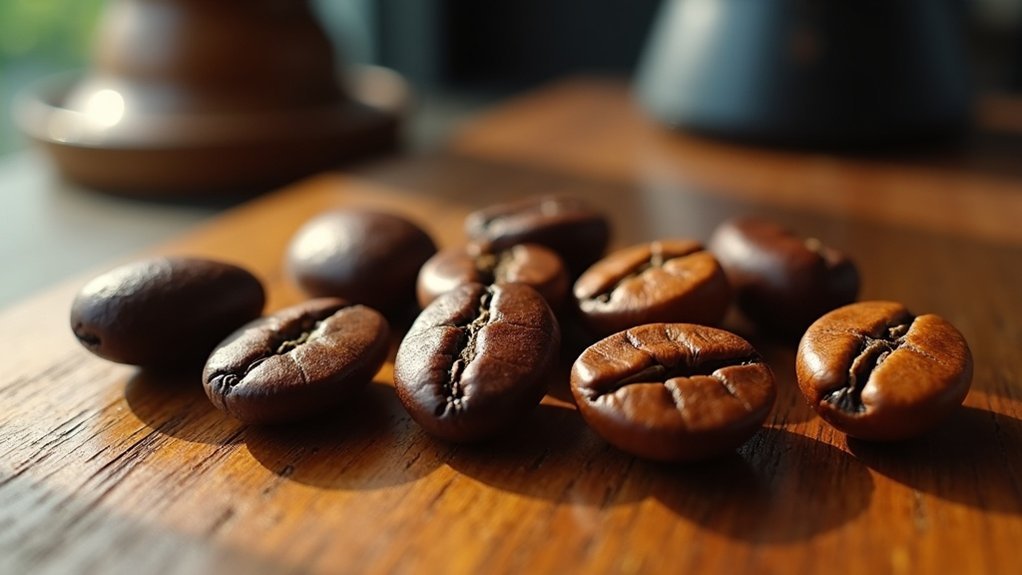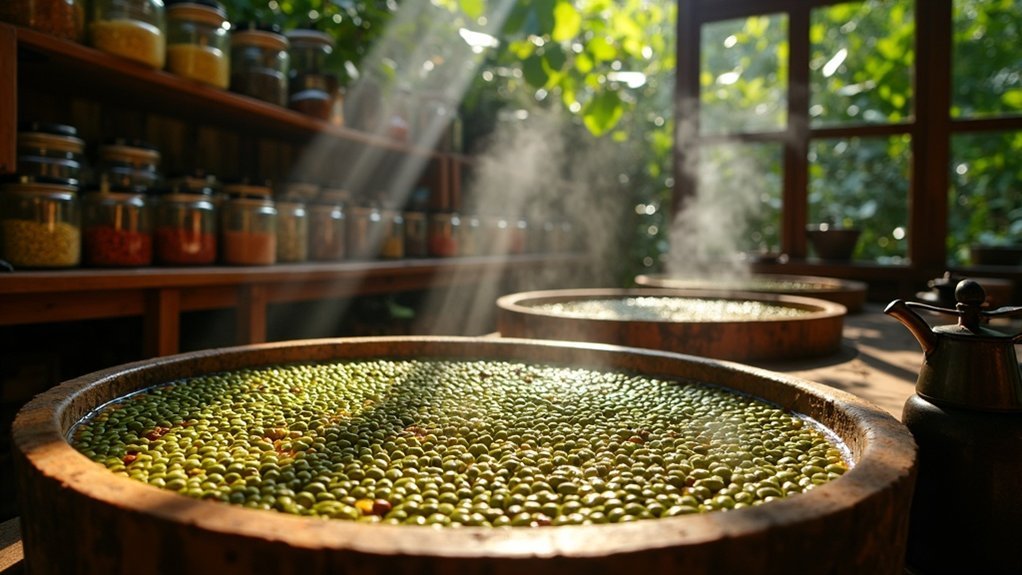
Infused coffee processing is a technique that enhances coffee’s flavor by incorporating external additives, such as spices or oils, during fermentation or roasting. This method adheres to a 3% rule to ensure balance, preventing additives from overpowering the coffee’s unique characteristics. Infusion methods can be applied both pre-roasting and post-roasting, each creating distinct taste profiles. As you delve into this topic, you’ll discover the rich historical and cultural influences that shape this innovative approach to coffee.
Key Takeaways
- Infused coffee processing enhances flavor profiles by adding external ingredients during fermentation or through various infusion techniques.
- The 3% rule limits flavor additives to maintain balance and preserve the coffee’s unique origin characteristics.
- Techniques include pre-roasting methods that soak unroasted beans and post-roasting methods that infuse roasted beans with oils or syrups, enriching the coffee experience.
- Historical and cultural practices influence infusion methods, reflecting local culinary identities and enhancing the overall appreciation of coffee.
- Industry debates focus on the impact of infused flavors on quality, emphasizing the importance of transparency and consistency in labeling to ensure coffee lovers enjoy authentic flavors.
Understanding Infused Coffee Processing
While traditional coffee processing focuses on the inherent qualities of the coffee beans, understanding infused coffee processing requires a deeper exploration into how external ingredients can transform flavor profiles.
This infusion process involves adding flavors during the fermentation process, allowing volatile compounds from fruits, spices, or herbs to permeate the coffee. Coffee producers often apply the 3% rule, ensuring that these additives remain below 3% of the beans’ total weight to preserve balance.
However, critics argue that such methods can overshadow the unique flavor of the coffee’s origin, raising questions about authenticity and the integrity of the beans’ natural characteristics.
Critics contend that infused coffee processing may dilute the distinct flavors and authenticity inherent to the beans’ origins.
This website is dedicated to exploring the fascinating world of coffee and its various processing methods.
Techniques for Infusing Coffee Beans
When you’re looking to enhance coffee’s flavor, you can choose between pre-roasting and post-roasting infusion methods.
Pre-roasting techniques involve soaking unroasted beans in flavor additives so they absorb these flavors during roasting, while post-roasting methods allow for direct infusion of oils or syrups into roasted beans.
Understanding these techniques will help you create a unique and balanced flavor profile, adhering to guidelines like the 3% Rule for ideal results.
This knowledge is essential for any coffee enthusiast aiming to elevate their brewing experience.
Pre-Roasting Infusion Methods
Pre-roasting infusion methods enable coffee enthusiasts to enhance beans with a variety of flavors before they hit the roaster, setting the stage for a unique tasting experience.
By soaking unroasted coffee beans in flavor additives, you can create stunning infused brews.
Key techniques include:
- Utilizing the 3% rule to balance added flavors
- Implementing controlled fermentation to boost enzyme reactions
- Exploring carbon maceration for deeper flavor integration
- Enhancing complexity with microbial activity
- Crafting vibrant flavor profiles, from spices to floral notes
These approaches greatly alter the aromatic experience, transforming standard coffee processing into an art form that elevates your coffee enjoyment.
Post-Roasting Flavor Techniques
Post-roasting flavor techniques offer a dynamic way to infuse roasted coffee beans with an array of distinct flavors, transforming your coffee experience almost instantly.
By soaking beans in flavoring oils or syrups, you can enhance the taste, ensuring a rich flavor profile. The 3% Rule is essential; flavor additives shouldn’t exceed 3% of the beans’ weight for balance.
Other infusion techniques include steeping brewed coffee with spices or vacuum sealing beans with flavoring agents, intensifying absorption.
These methods allow home roasters to experiment creatively, altering the coffee experience and enabling immediate enjoyment of infused brews.
This website is dedicated to coffee enthusiasts looking to elevate their brewing game.
The Role of Flavor Additives
Flavor additives play a crucial role in the world of coffee, particularly in the process of creating infused coffee beverages. They offer a wide range of options to enhance and redefine the coffee experience.
These additives can amplify the natural flavors of coffee, resulting in unique and exciting flavor profiles. Key techniques for incorporating flavor additives include:
- Soaking roasted coffee beans in flavored oils
- Steeping brewed coffee with various spices or flavored syrups
- Infusing coffee with fruits and herbs
- Following the 3% rule to maintain flavor balance
- Promoting transparency in specialty coffee practices
These methods not only enrich the taste but also allow for creative experimentation in coffee preparation.
Infused Coffee vs. Co-Fermented Coffee
While both infused and co-fermented coffee processes aim to elevate the coffee experience, they fundamentally differ in their approach to flavor integration.
Infused coffee incorporates flavor additives like fruits or spices during fermentation or drying, yielding vibrant surface-level flavors.
In contrast, co-fermented coffee integrates flavors organically during the active fermentation of coffee cherries, allowing for complex flavor development through microbial interactions.
This method respects the coffee’s origins, resulting in intricate flavor profiles that harmonize with the beans’ natural characteristics.
Consequently, while infused coffee may overshadow inherent qualities, co-fermented coffee represents a more innovative approach within the coffee industry, offering enthusiasts a deeper connection to the craft.
Taste Profiles of Infused Coffee
When exploring the taste profiles of infused coffee, you’ll discover a vibrant tapestry of flavors that engage the palate in unique ways.
The infusion process allows coffee lovers to experience a range of added flavors that enhance or contrast the natural taste of coffee. Common profiles include:
The infusion process unveils a spectrum of flavors, enriching the natural taste of coffee in delightful ways.
- Bold hazelnut and vanilla
- Spicy cinnamon and chocolate
- Citrus brightness from lemongrass
- Floral notes from lavender
- Complex combinations that create rich aromatic experiences
With the 3% rule ensuring balance, infused coffees cater to adventurous consumers, contributing to the allure of specialty coffee and the evolving landscape of flavor profiles within the coffee market.
Industry Perspectives on Infused Coffee
As the coffee industry evolves, infused coffee processing has sparked a lively debate among professionals and consumers alike. Critics argue that the added flavor profiles may overshadow the coffee’s natural characteristics, raising concerns about quality and authenticity.
Supporters, however, appreciate the innovative flavor exploration and the use of local ingredients, which create sustainable value chains. Yet, this practice poses challenges of consistency and production costs.
Transparency in labeling and processing techniques is essential for maintaining consumer trust, as discerning customers demand integrity in the coffee market. Balancing these perspectives will shape the future of infused coffee within the specialty coffee community.
Global Traditions in Flavored Coffee
Flavored coffee traditions offer a fascinating glimpse into cultural practices and historical influences across the globe.
From the spiced brews of Morocco to Mexico’s sweetened cafe de olla, each region employs unique ingredients that reflect local tastes and histories.
These variations not only enhance flavor complexity but also illustrate how coffee serves as a canvas for cultural expression.
Cultural Coffee Practices
Exploring global traditions in flavored coffee reveals a rich tapestry of cultural practices that infuse each cup with local identity and history.
Each region employs unique spices and local ingredients to create distinctive flavor profiles and aromatic qualities.
Consider these enticing examples:
- Senegal: Coffee spiced with cloves and Guinea pepper for a bold flavor.
- Morocco: Brews enhanced with cinnamon and cardamom, offering a warm and aromatic experience.
- Arab qahwa: Infused with saffron and ginger, providing a fragrant and exotic touch.
- Mexico: Cafe de olla features cinnamon and piloncillo, delivering a sweet and spicy delight.
- Global variations: Each showcases local culinary heritage, making every cup a unique experience.
These traditional coffee practices not only reflect individual cultures but also elevate infused coffee into an art form, celebrating the unique flavors and brewing techniques that define each region’s approach to this beloved beverage.
Historical Flavor Influences
While the artistry of flavored coffee may seem contemporary, its roots stretch deep into history, revealing how diverse cultures have shaped its evolution.
Historical practices showcase flavored coffee’s rich tapestry; for instance, Senegalese coffee incorporates cloves and Guinea pepper, reflecting local preferences.
Moroccan coffee blends spices like cinnamon and cardamom, emphasizing culinary heritage.
In Arab countries, traditional qahwa often features saffron and ginger, underscoring cultural significance.
Mexico’s cafe de olla, infused with cinnamon and piloncillo, highlights unique flavor profiles.
These global traditions have influenced modern infused coffee processing, connecting past and present through the art of spice infusion in coffee.
This website is dedicated to exploring the fascinating world of coffee and its rich historical influences.