Category One defects in coffee are significant flaws that can greatly affect the overall quality of the beans. These defects include full black beans, full sour beans, foreign matter, and insect damage. Such issues disqualify coffee from being classified as specialty grade, negatively impacting both its flavor and aroma. A high count of these defects can drive down market prices, making it crucial for producers and roasters to maintain strict quality control. Understanding and identifying these defects is essential not only for ensuring quality but also for enhancing your enjoyment of coffee. If you’re interested, feel free to explore more details on this topic.
Key Takeaways
- Category One defects have a significant negative effect on coffee quality, resulting in beans being disqualified from specialty grade classification.
- Typical defects in this category include full black beans, full sour beans, foreign matter, and insect damage.
- A high prevalence of these defects can lead to reduced market prices and financial losses for coffee producers.
- To minimize the occurrence of these defects, quality control measures such as selective harvesting and sorting are crucial.
- Raising consumer awareness about Category One defects can help elevate standards in specialty coffee production.
Understanding Category One Defects in Coffee
When it comes to coffee quality, understanding Category One defects is crucial for both producers and consumers.
These defects, such as full black or sour beans, foreign matter, and insect damage, greatly affect the flavor profile and overall quality of coffee.
According to the Specialty Coffee Association, any presence of Category One defects disqualifies coffee from being classified as specialty grade.
This makes meticulous quality control essential during processing.
Regular monitoring and systematic identification of these defects help maintain high standards, preventing economic losses from reduced market prices for defective coffee.
Ultimately, awareness of Category One defects enhances your coffee experience.
Common Types of Category One Defects
When evaluating Category One defects in coffee, you’ll encounter several significant issues that can compromise quality.
Full black and full sour beans are prime examples, as they introduce undesirable flavors and aromas that detract from the overall coffee experience.
Additionally, foreign matter contamination poses a serious risk, introducing physical impurities that can further degrade the integrity of the coffee.
Full Black Beans
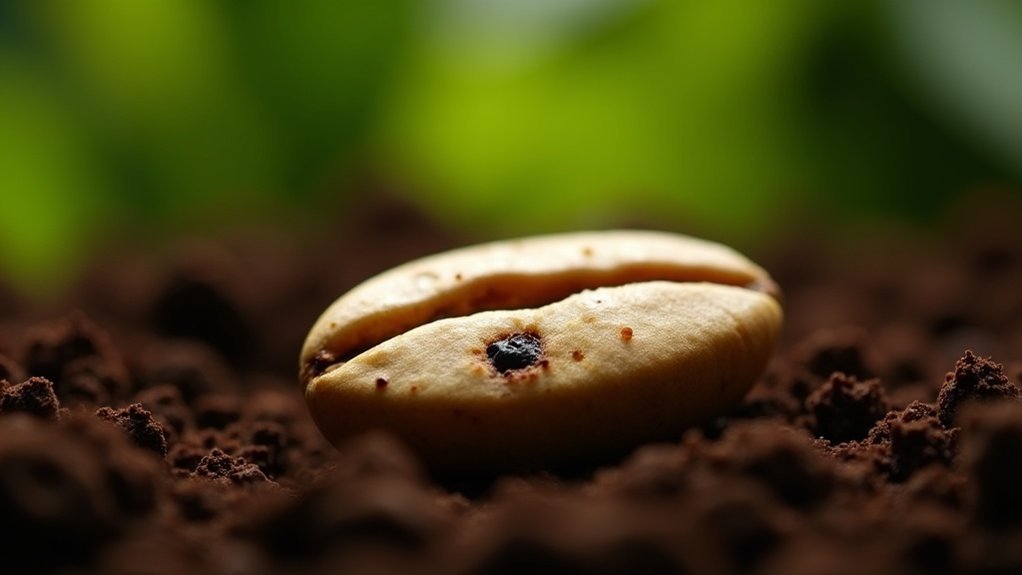
Full black beans represent a significant Category One defect in coffee, indicating severe flaws that detrimentally affect flavor and quality.
This defect typically arises from over-fermentation or improper processing of coffee cherries, leading to undesirable sensory characteristics. Full black beans can impart medicinal or chemical off-flavors, severely degrading the drinking experience.
According to the Specialty Coffee Association, samples containing full black beans are disqualified from specialty grade status.
Identifying and sorting out these defects is vital for maintaining high quality in coffee production, ensuring that consumers enjoy a satisfactory product without the negative impacts these beans can introduce.
Full Sour Beans
Sourness in coffee can be attributed to full sour beans, a significant Category One defect that dramatically alters the beverage’s flavor profile. These beans often arise from over-fermentation during the processing stage or premature harvesting, resulting in undesirable sour notes. A single full sour bean can spoil an entire batch, which is why meticulous quality control is vital in coffee production. Specialty coffee must contain zero Category 1 defects, as the presence of full sour beans disqualifies it from specialty grade status, ultimately impacting producers economically.
| Defect Type | Characteristics | Impact on Coffee |
|---|---|---|
| Full Sour | Sharp, unpleasant acidity | Alters flavor profile |
| Over-Fermentation | Leads to sour notes | Disqualifies specialty |
| Unripe Harvest | Results in sour taste | Affects aroma and taste |
| Quality Control | Essential for defect prevention | Maintains specialty status |
| Economic Impact | Detrimental to producers’ profits | Influences marketability |
Foreign Matter Contamination
While the allure of high-quality coffee often hinges on its intricate flavors and aromas, foreign matter contamination poses a significant threat to this experience.
This contamination refers to non-coffee items, such as sticks and stones, found within green beans. The Specialty Coffee Association classifies this as a Category 1 defect due to its major negative impact on coffee quality.
The presence of foreign matter can lead to unpleasant sensory experiences, including off-flavors and undesirable textures in the brewed coffee.
To ensure an exceptional coffee experience, it’s crucial to implement effective sorting and quality control measures, minimizing these defects and upholding the high standards of specialty coffee.
The Impact of Category One Defects on Coffee Quality
Category One defects significantly impact coffee quality by introducing serious flaws that compromise both flavor and aroma. Beans exhibiting defects such as full black or sour characteristics are disqualified from specialty grade, which requires perfection in a 350-gram sample.
The presence of these defects can result in undesirable off-flavors and aromas, greatly diminishing the overall sensory experience. Additionally, high counts of defects have economic implications for producers and roasters, leading to lower market prices and decreased consumer demand.
Therefore, systematic identification and removal of Category One defects is crucial for maintaining high quality standards and ensuring consumer satisfaction in the specialty coffee industry.
Identifying Category One Defects During Grading
When grading coffee, it’s essential to recognize the various types of Category One defects, as each significantly impacts the overall quality.
You’ll follow a systematic grading process that involves inspecting for full black beans, full sour beans, and any foreign matter.
Understanding these defects not only informs your grading but also determines whether the coffee can achieve specialty status.
Types of Primary Defects
Identifying primary defects during the grading process is essential for ensuring coffee quality.
Category One defects are severe issues that disqualify coffee from specialty grading. Here are common types you should watch for:
- Full black beans – severely damaged, imparting undesirable flavors.
- Full sour beans – introduce sourness, negatively affecting quality.
- Foreign objects – stones or sticks that contaminate the coffee.
- Fungal damage – alters the sensory profile of the beans.
According to the Specialty Coffee Association, specialty coffee must have zero Category One defects to maintain high-quality standards, directly impacting market value and consumer satisfaction.
Grading Process Explained
The grading process plays an essential role in determining the quality of coffee, as it involves a thorough inspection of samples to identify any Category One defects.
According to the Specialty Coffee Association, these defects include severe issues like full black beans and significant insect damage that drastically affect flavor and aroma. Graders analyze a 350-gram sample, ensuring the coffee has zero Category One defects and no more than five Category Two defects to qualify as specialty grade.
Systematic evaluation methods, including visual inspection and cupping, help maintain high standards in specialty coffee quality by minimizing defects and ensuring that only the finest beans make it to your cup.
Impact on Coffee Quality
While evaluating coffee quality, recognizing Category One defects is vital since these major flaws directly influence flavor profiles and marketability.
The Specialty Coffee Association identifies these defects as disqualifying for specialty grade status. Here are some common Category One defects:
- Full black beans – contribute off-flavors.
- Full sour beans – mask delicate notes.
- Foreign objects – risk physical contamination.
- Dried cherries and fungal damage – lead to undesirable tastes.
Regular monitoring of these defects is essential for maintaining quality control in the coffee industry, as higher defect counts can result in significant economic consequences for producers and roasters.
Prevention Strategies to Minimize Category One Defects
To effectively minimize Category One defects in coffee, it’s essential to adopt a multi-faceted approach that encompasses selective harvesting, meticulous processing, and rigorous sorting practices.
By ensuring only ripe cherries are picked, you greatly reduce the risk of full black or sour beans. Implementing careful processing techniques, such as controlled fermentation and maintaining cleanliness, helps prevent fungal damage.
Proper drying methods to achieve the correct moisture content further mitigate mold risks. Finally, thorough sorting, including density and color grading, eliminates foreign objects and defective cherries, thereby maintaining the high-quality standards expected in specialty coffee and minimizing Category One defects in the final product.
The Role of the Specialty Coffee Association in Defect Classification
Understanding the Specialty Coffee Association‘s (SCA) role in defect classification is crucial for anyone engaged in the coffee industry.
The SCA’s guidelines ensure that coffee quality remains high, especially for specialty grade coffee. Here are four key aspects of their role:
The SCA’s guidelines uphold high standards for specialty coffee quality through effective defect classification.
- Classifying defects into Category 1 (major impact) and Category 2 (minor impact).
- Defining Category 1 defects, such as full black beans and foreign objects.
- Enforcing standards: zero Category 1 defects and a maximum of five Category 2 defects per 350-gram sample.
- Providing resources like the Green Arabica Defect Handbook to facilitate accurate green coffee grading.
Consumer Awareness: Recognizing Category One Defects
The standards set by the Specialty Coffee Association (SCA) not only guide the grading process but also empower coffee lovers to recognize Category One defects in coffee.
Identifying these defects, such as full black beans and fungal damage, is essential for appreciating the quality of coffee beans. By understanding these flaws, you can avoid undesirable sensory experiences that overshadow the delicate notes of high-quality coffee.
Increased consumer awareness fosters a culture of excellence within the specialty coffee movement, ensuring that producers and roasters are held accountable.
Ultimately, by demanding higher standards, you contribute to better coffee and support a thriving, quality-driven market.