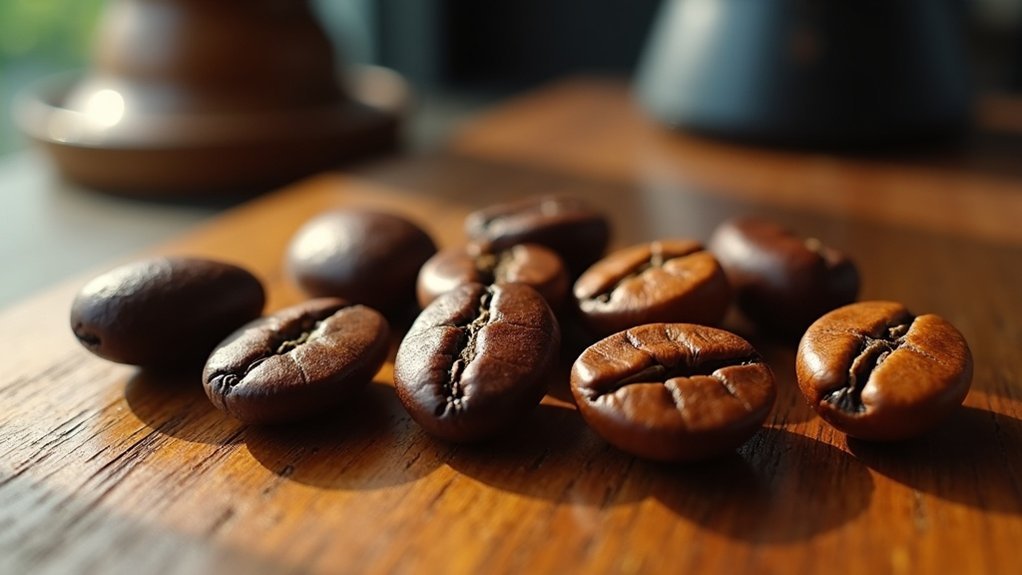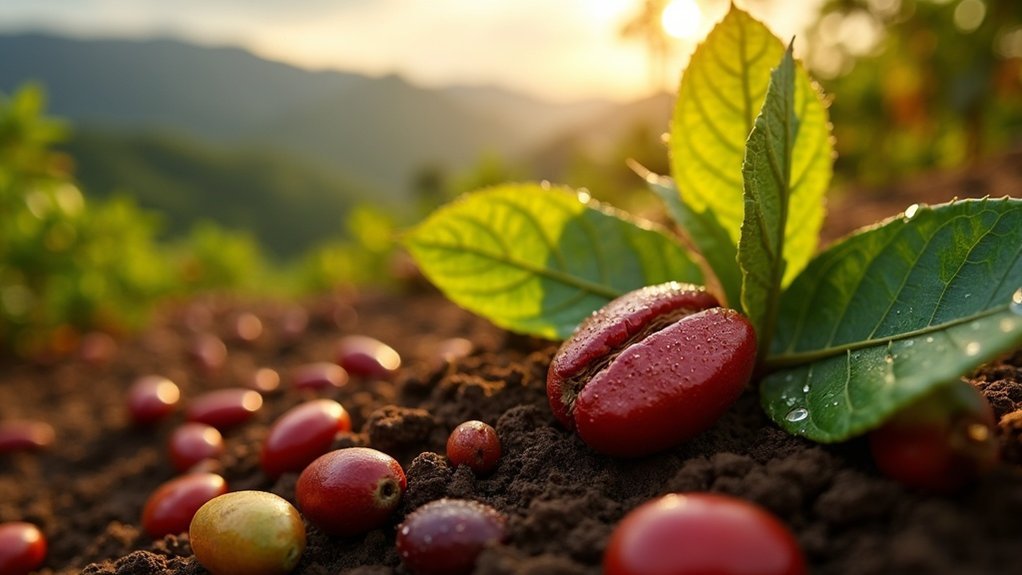
Coffee terroir refers to the intricate interplay of environmental factors that contribute to a coffee’s distinct flavor profile. The soil, climate, and elevation all play a crucial role in determining what you experience in your cup. For instance, volcanic soils can impart richness, while higher altitudes often enhance sweetness and complexity. Additionally, traditional cultivation methods add further layers to the flavor. By understanding terroir, you can cultivate a deeper appreciation for every brew you enjoy. Explore how these elements converge to create that perfect sip of coffee.
Key Takeaways
- Terroir refers to the unique environmental factors, such as soil, climate, and altitude, that influence the flavor of coffee.
- High altitudes and volcanic soils are particularly important for enhancing floral notes in coffees, especially those from Ethiopia.
- The composition of the soil, including its mineral content, directly impacts the body and acidity of coffee beans.
- Variations in climate and elevation contribute to the complexity and sweetness of coffee flavors.
- Traditional harvesting and processing methods also play a significant role in defining the terroir of coffee and its overall quality.
What Is Terroir?
When you sip your coffee, have you ever considered how the land it comes from shapes its flavor?
Terroir, derived from the French word “terre,” encompasses the unique environmental factors—like soil composition, climate, and altitude—that influence the characteristics of coffee beans.
Terroir, rooted in the French word for “earth,” shapes coffee’s unique flavor through soil, climate, and altitude.
For instance, high altitudes and volcanic soils can produce vibrant, floral notes found in Ethiopian coffees.
Even neighboring regions can yield fundamentally different taste profiles due to subtle variations in terroir.
Understanding these nuances enhances your appreciation for each cup, connecting you to the diverse landscapes and cultural practices that create the coffee you love.
4 Key Factors That Affect Terroir
When you sip your coffee, consider the soil beneath the coffee plants and the climate that surrounds them.
Volcanic soil can enrich the beans with essential nutrients, while the warmth and rainfall of the coffee belt play a crucial role in shaping their flavors.
Elevation adds another dimension, as the cooler temperatures at higher altitudes enhance the sweetness and complexity of the beans, making each cup a true reflection of its unique terroir.
Soil Composition Impact
Soil composition plays a crucial role in shaping the flavor profile of coffee, with rich nutrients from volcanic soils significantly enhancing both growth and complexity.
- The mineral content in the soil influences the body and acidity of the coffee, directly affecting its taste.
- Complementary crops, such as avocados, contribute to improved soil health, which in turn alters the flavor notes of the coffee.
- The variety of soil types found across different regions results in unique tasting characteristics, making each coffee experience distinct.
Climate and Elevation
While the intricate interplay of climate and elevation shapes the terroir of coffee, it’s fascinating how these elements combine to create unique flavor profiles.
Specialty coffee flourishes in the “coffee bean belt,” where climate dictates rainfall and dry seasons, both essential for growth and harvesting. Higher elevations, above 1000 meters, contribute to sweeter, more complex flavors, as colder temperatures slow fruit maturation, increasing acidity and sugar concentration.
Each region’s distinct climate and elevation conditions culminate in flavors that reflect the unique terroir, allowing you to savor the nuances of your coffee, shaped by the very environment in which it’s grown.
Soil
The foundation of coffee cultivation lies in the rich tapestry of soil, which plays an essential role in shaping the flavor profile of your favorite brew.
- Soil composition directly affects nutrient availability for coffee plants.
- Volcanic soils enrich coffee grown, enhancing body and acidity.
- Variations across regions create distinct flavor characteristics.
Farmers often experiment with soil management practices and intercropping techniques, like planting avocados, to enrich soil health and enhance tasting notes.
Each cup of coffee you enjoy reflects the unique soil from which those beans emerged, making your coffee experience a sensory journey through the earth itself.
Climate
Rich soil sets the stage, but it’s the climate that truly orchestrates the symphony of flavors in your coffee.
The coffee bean belt near the equator offers the ideal growing conditions, where macro and micro climates converge. Rainy seasons nourish the plants, while dry periods are perfect for harvesting, ensuring beans mature effectively.
Temperature fluctuations, especially in higher elevations, enhance acidity and sweetness by slowing fruit development and concentrating sugars.
Each region’s unique climate directly influences the growth cycle and flavor profile of your cup, making an understanding of these local conditions essential for appreciating the complexity of your coffee experience.
Elevation
When you sip coffee from high-altitude regions, you’ll often notice a delightful acidity and sweetness that dances on your palate.
The cooler temperatures at these elevations allow beans to mature slowly, enhancing their flavor complexity and creating a rich tapestry of tastes.
Elevation isn’t just a number; it’s an essential factor that can elevate your coffee experience to new heights.
Impact on Flavor Profile
As you delve into the captivating world of coffee, you’ll find that elevation plays a crucial role in shaping its flavor profile. Higher altitudes create unique environmental conditions that enhance the characteristics of the coffee bean.
Here are some key impacts:
- Sweeter flavors: The slower maturation of fruit at higher elevations leads to a higher concentration of sugars.
- Enhanced acidity: Cooler temperatures contribute to a vibrant and complex taste.
- Distinct notes: Coffee grown at elevations above 1400 meters often reveals delightful floral and fruity aromas.
Regions such as Ethiopia and Colombia exemplify these traits, producing exceptional coffee that appeals to specialty enthusiasts.
Higher elevation coffee isn’t merely a beverage; it’s an experience that tantalizes your palate.
Optimal Growing Conditions
While many factors contribute to the ideal growing conditions for coffee, elevation stands out as a key determinant in cultivating exceptional beans.
Growing coffee above 1,200 meters enhances its sweetness and acidity due to the cooler temperatures that slow the maturation of cherries. This unique environment allows the beans to develop intricate flavor profiles, often resulting in a more aromatic cup.
High-altitude varieties from regions like Ethiopia and Colombia are celebrated for their vibrant characteristics.
When selecting coffee, pay attention to elevation details on the packaging, as they can reveal the potential quality and complexity of the flavors you’ll enjoy.
Tradition
Coffee tradition plays an essential role in shaping the unique flavors and characteristics of each cup you enjoy. These traditions are deeply influenced by environmental factors and local practices, creating a rich tapestry of coffee culture.
Consider:
- Methods of harvesting and processing that have been passed down through generations, ensuring quality and authenticity.
- Techniques like intercropping in Uganda, which not only enhance soil health but also contribute to the distinctive flavor profiles of the beans.
- Regional roasting styles that highlight the unique characteristics of coffee from different areas, bringing out varied taste notes.
These elements not only affect the taste of your coffee but also embody the cultural heritage behind each cup.