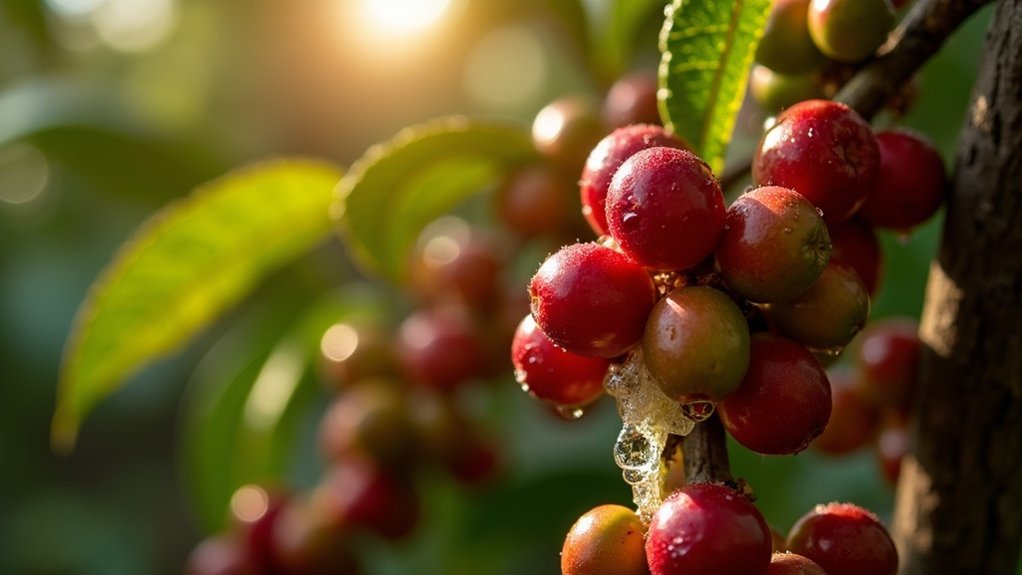
Mucilage is a sticky layer found in coffee cherries that sits between the outer skin and inner parchment. It’s rich in polysaccharides, which significantly influence your coffee’s sweetness and flavor profile. During processing, you can choose methods like washed, which removes mucilage through fermentation for a clean taste, or natural, which retains it, enhancing the complexity of flavors. Effective mucilage management is essential for environmental sustainability in coffee production, as it promotes composting and reduces the need for chemical fertilizers. There’s much more to discover about the crucial role mucilage plays in the journey from cherry to cup.
Key Takeaways
- Mucilage is a sticky layer found in coffee cherries, situated between the outer skin and inner parchment.
- It contains polysaccharides that play a crucial role in influencing the sweetness and overall flavor profile of the coffee.
- The removal of mucilage through various processing methods has a significant impact on the final taste of the coffee.
- The washed processing method utilizes fermentation to eliminate mucilage, resulting in a clean and bright flavor that is often sought after.
- In contrast, natural processing retains mucilage, which enhances the coffee’s complexity and brings out fruity flavors, adding depth to the overall tasting experience.
Understanding Mucilage in Coffee
When you explore coffee processing, you’ll quickly realize that mucilage plays a vital role in shaping the final flavor profile of your brew.
This sticky layer, found between the outer skin and inner parchment of coffee cherries, contains polysaccharides that influence sweetness and taste.
Different mucilage removal methods, such as the washed process, utilize fermentation to eliminate it, while the natural process retains mucilage, adding complexity to the flavor.
The quality of coffee largely depends on how effectively mucilage is managed during processing.
Improper removal can result in undesirable sour flavors, making a thorough understanding of mucilage essential for achieving the desired characteristics in your coffee.
The Role of Mucilage in Coffee Processing
Mucilage plays a crucial role in coffee processing, significantly influencing both flavor and quality. Located between the outer skin and inner parchment of coffee cherries, mucilage helps retain moisture and deliver nutrients during the development of the beans.
When it comes to processing, you can opt for the washed method, which involves fermentation to remove mucilage, or the natural method, where mucilage is kept to enhance the coffee’s complexity. This choice has a profound impact on the flavor profile: washed coffees tend to be clean and bright, while natural coffees are fuller-bodied with a delightful sweetness.
Furthermore, effective management of mucilage can promote environmental sustainability through composting, which ultimately enhances soil health and improves the quality of the coffee you enjoy.
Impact of Mucilage on Coffee Flavor Profiles
While the processing method chosen can dramatically shape coffee’s flavor profile, mucilage uniquely influences the sensory experience of each cup.
In washed processing, the removal of mucilage leads to a cleaner cup with bright acidity, showcasing the coffee’s inherent traits. Conversely, natural processing retains mucilage, allowing fermentation during drying that produces fuller-bodied, fruity flavors and lower acidity.
Washed processing delivers a bright, clean cup, while natural processing offers fuller, fruitier flavors through retained mucilage.
Honey processing strikes a balance, retaining some mucilage to enhance sweetness while keeping acidity in check, resulting in a distinct flavor profile.
Additionally, environmental factors during fermentation further impact how mucilage influences flavor, creating diverse taste experiences across different coffee batches.
Mucilage Management and Environmental Sustainability
Effective mucilage management is vital for promoting environmental sustainability in coffee production. By composting mucilage, you can improve soil health by enriching it with organic matter and beneficial microorganisms.
This process not only minimizes waste but also reduces the need for chemical fertilizers, thereby supporting sustainable coffee farming practices. Furthermore, recycling mucilage can result in the development of value-added products, creating additional revenue streams and enhancing the resilience of the coffee supply chain.
Implementing these strategies aligns with global efforts for responsible coffee production, encouraging eco-friendly cultivation while mitigating environmental degradation. Embrace mucilage management for a sustainable future in coffee.
Economic Opportunities and Future Trends in Mucilage Utilization
As the coffee industry increasingly embraces sustainability, the potential economic opportunities surrounding mucilage utilization become more apparent.
Coffee producers can explore innovative ways to utilize mucilage, transforming this byproduct into valuable assets for various sectors, including cosmetics and food industries. Enhanced processing techniques, such as enzymatic treatments, not only boost the commercial viability of mucilage but also help preserve its beneficial properties.
Furthermore, recycling mucilage as a natural fertilizer contributes to sustainable agriculture, promoting soil health and biodiversity. By implementing effective mucilage management practices, coffee producers can align with global sustainability trends, enhance the resilience of coffee supply chains, and meet consumers’ growing demand for high-quality, eco-friendly products, ultimately driving economic growth in the coffee sector.