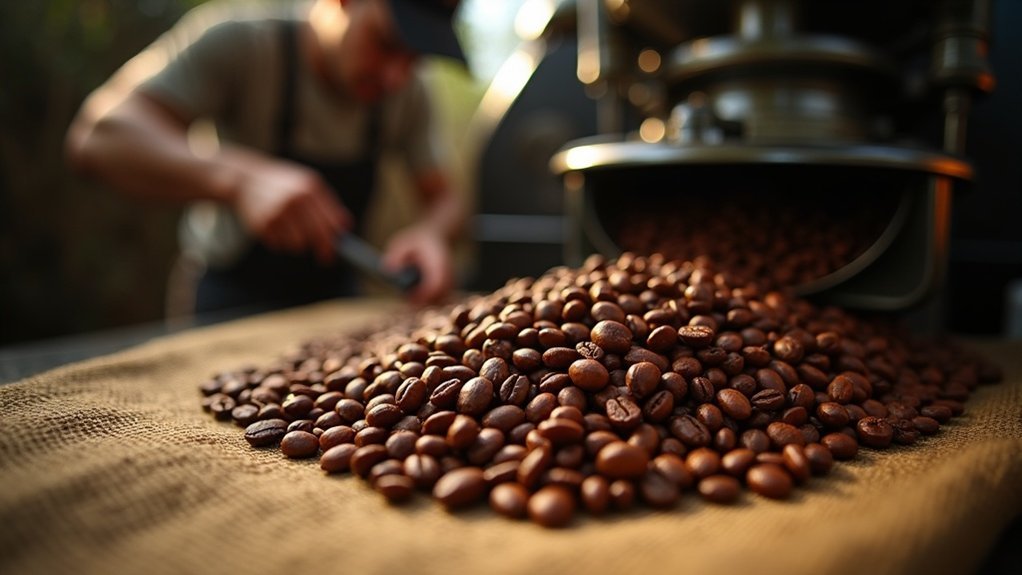
Hulling in coffee processing is the method of removing the parchment shell from dried coffee beans. This vital step occurs at the dry mill after the drying stage, ensuring that beans are protected from mold and contaminants. The hulling process is crucial as it greatly influences the coffee’s quality and flavor profile. During this phase, sorting and grading are performed to identify defects, which ultimately impacts the taste of your brew. There’s more to discover about different hulling methods and quality control measures; keep exploring to enhance your coffee knowledge!
Key Takeaways
- Hulling is the process of removing the parchment shell from dried coffee beans at a dry mill, revealing the green coffee beans that are essential to your favorite brews.
- This process is crucial for maintaining coffee quality, as it helps prevent mold and contaminants while enhancing the flavor profile of the final cup.
- There are different hulling methods, including traditional dry hulling and wet hulling, each of which can influence the final quality of the coffee in unique ways.
- Mechanical hulling methods employ friction and pressure, utilizing a range of equipment from traditional to advanced automated systems to achieve the desired results.
- Ensuring proper maintenance and quality control during the hulling process is vital for preserving the integrity of the beans, ultimately leading to a high-quality coffee experience.
Definition of Hulling
Hulling is a crucial step in coffee processing, where the parchment shell is removed from dried coffee beans following the drying stage. This process occurs at a dry mill, revealing green coffee beans that are ready for further processing.
Mechanical methods apply friction and pressure to detach the parchment without damaging the beans. The quality of hulling greatly impacts the final coffee product; improper techniques can lead to defects like broken beans and residual shells.
Additionally, different hulling methods, such as the traditional dry or wet hulled processes, influence both the quality and taste of the final coffee, affecting your overall coffee experience.
Importance of Hulling
While many may overlook the significance of hulling in coffee processing, this step is essential for ensuring the quality and safety of the beans.
Hulling is a crucial yet often overlooked step that guarantees the quality and safety of coffee beans.
The hulling process involves removing the parchment layer, which plays a vital role in:
- Protecting coffee beans from mold and contaminants
- Enhancing overall coffee quality by eliminating impurities
- Markedly influencing the final flavor profile of the brew
- Preventing defects such as broken beans and shells
- Maintaining consistency and high standards in coffee production
Hulling Methods
When exploring hulling methods in coffee processing, you’ll notice significant variations in techniques such as traditional dry hulling and wet hulling, especially in regions like Indonesia.
Each method, whether it involves allowing coffee beans to fully dry before removing the parchment or extracting it while moisture levels are high, has a notable impact on the final coffee quality.
A deeper understanding of mechanical hulling methods, which utilize friction and pressure, further highlights how crucial the choice of technique is in preventing defects and ensuring consistency in the coffee’s flavor profile.
Traditional Dry Hulling
Traditional dry hulling is a critical step in coffee processing that enhances the quality of the final product. This method involves allowing coffee beans to fully dry, ensuring they’re brittle and easier to hull.
Here are key aspects to contemplate:
- Utilizes friction-based machines for effective hulling
- Removes the parchment layer after adequate drying
- Preserves flavor by preventing moisture-related defects
- Typically used when beans are at 10-12% moisture content
- Improper hulling can lead to broken beans and inconsistent roasting
Understanding the importance of traditional dry hulling can help coffee enthusiasts appreciate the meticulous care that goes into producing high-quality coffee.
Wet Hulling Technique
The wet hulling technique, known as Giling Balash, is a unique method that sets itself apart from traditional dry hulling by processing coffee beans with a high moisture content of 40%-50%.
In this approach, the parchment layer is removed shortly after fermentation, resulting in a distinct flavor profile characterized by rich, winey, and fruity notes.
Although wet hulling may lead to slightly damaged beans due to the pressure applied during the process, this can actually enhance the coffee’s complexity.
Moreover, this technique allows for quicker drying in humid climates, making it particularly suitable for regions like Indonesia, where Sumatran and Sulawesi-Kalosi coffees thrive in global markets.
Mechanical Hulling Methods
While various mechanical hulling methods exist, they all share the common goal of efficiently removing the parchment layer from dried coffee beans.
Utilizing advanced hulling machines, these methods focus on applying friction and pressure.
Here are key aspects to contemplate in the world of coffee:
- Different regions use specific hulling machines tailored to their coffee varieties.
- Traditional dry hulling methods contrast with Indonesia’s unique wet hulling process, affecting flavor profiles.
- The quality of hulling equipment significantly influences the overall coffee production and taste.
- Careful attention to detail in the hulling process helps prevent damage to beans and ensures minimal shell contamination.
- After hulling, the beans undergo rigorous sorting and grading to maintain consistency in quality.
Understanding these mechanical hulling methods is essential for producing high-quality coffee that meets the expectations of coffee enthusiasts.
The Hulling Process
As coffee beans dry, hulling becomes an essential mechanical process that strips away the parchment layer, preparing the beans for subsequent stages in coffee production.
During hulling, machines apply friction and pressure, efficiently abrading the hull until it crumbles, revealing the green coffee beans inside. This process is particularly important after drying, as beans with lower moisture content are easier to hull.
Hulling typically occurs at the dry mill, where beans are sorted and graded to ensure quality. Quality control during hulling is critical; improper techniques can lead to defects like broken beans or residual shells, which can negatively impact the milling process and the overall quality of your coffee.
Impact of Hulling on Coffee Quality
Hulling plays an essential role in maintaining quality consistency during coffee roasting by ensuring beans are free from defects.
By implementing effective defect prevention strategies, such as careful handling and processing, you can minimize issues like broken beans and shell residue that compromise flavor.
Understanding the impact of hulling on your coffee’s quality can greatly enhance your final product’s market value, making it more appealing to consumers who appreciate high-quality coffee.
Quality Consistency in Roasting
When you consider the journey of coffee from bean to cup, the hulling process plays a pivotal role in determining the quality of the final roast.
Hulling ensures that coffee beans are free from defects, promoting consistent flavor profiles. Key aspects include:
- Preventing broken shells and impurities
- Ensuring uniform roasting rates
- Maintaining moisture content for ideal conditions
- Implementing quality control measures during processing
- Enhancing the overall flavor consistency
In the world of coffee, each step, particularly hulling, is crucial to delivering the rich and delightful experience that coffee lovers cherish.
Defect Prevention Strategies
To guarantee the highest quality of coffee, implementing effective defect prevention strategies during the hulling process is essential.
Start by ensuring consistent hulling to maintain uniformity in size and shape, which is vital for achieving consistent roast profiles.
Monitor moisture levels closely; hulling wet beans can increase the risk of defects.
Immediately after hulling, sort and grade the beans to identify and remove any defective ones, safeguarding the overall quality of the batch.
Finally, use reliable and well-maintained hulling equipment to minimize defects, as the efficiency of the machinery directly impacts the effectiveness of the hulling process.
Equipment Used in Hulling
Efficient hulling equipment is essential for transforming harvested coffee into a market-ready product. Various machines are designed to remove the parchment layer effectively, ensuring the beans remain intact and preserving their quality.
Here are some key types of hulling equipment you might encounter in the coffee industry:
- Traditional millstones for a rustic approach to hulling
- Friction-based machines that provide efficient hull abrasion
- Advanced automated systems designed for high volume processing
- Pneumatic hulling devices that ensure gentle handling of the beans
- Maintenance tools that promote the longevity of your hulling equipment
Understanding these options will help you select the right hulling equipment, which is crucial for maintaining the quality and integrity of your coffee beans throughout the hulling process.
Quality Control in Hulling
Quality control in hulling plays a vital role in ensuring the integrity of coffee beans, as improper removal of the parchment layer can lead to broken beans and undesirable shells.
Consistently monitoring the hulling process is essential to identify irregularities or defects, allowing for timely corrective actions.
After hulling, sorting and grading of the beans assess quality, ensuring only the best beans are selected for roasting.
The hulling method you choose greatly impacts bean quality, affecting roast profiles and flavor characteristics, which are crucial for a great cup of coffee.
Regular maintenance and calibration of hulling machines are essential, as reliable equipment directly influences the overall quality of hulled coffee beans, ultimately affecting the taste and experience of the coffee you serve.