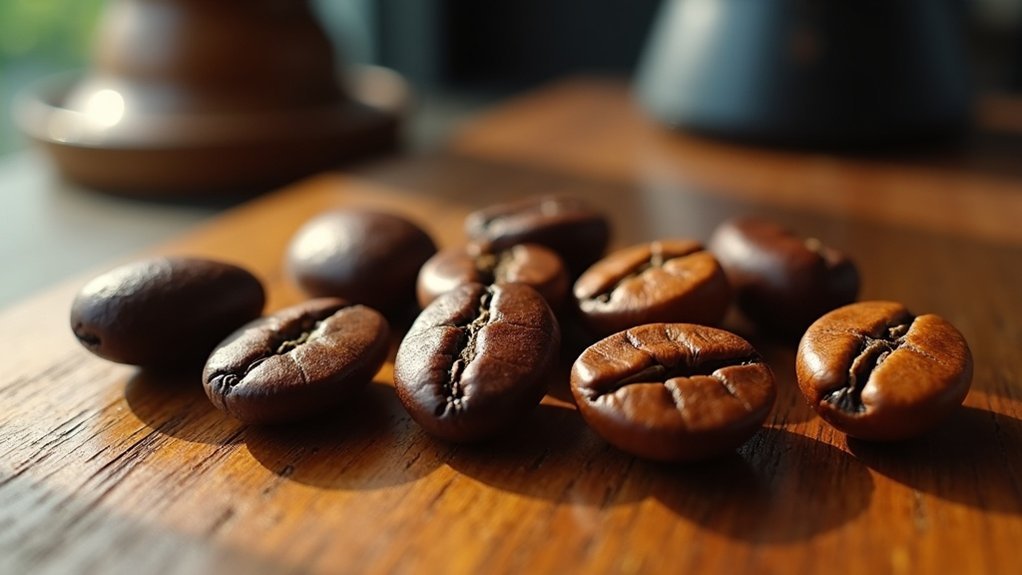
Sorting coffee by density is a crucial process in the coffee industry that emphasizes selecting the finest beans for quality assurance. Denser beans, which are retained during the sorting process, tend to have richer flavors due to their higher content of sugars and nutrients. Techniques such as the floating process are employed to separate defective beans, ensuring that only the highest quality beans make it to the roasting stage. This meticulous approach not only enhances the taste of the coffee but also offers economic advantages to producers. Additionally, advancements in sorting technologies continue to refine this process, leading to exceptional coffee quality that delights enthusiasts and connoisseurs alike.
Key Takeaways
- Sorting coffee by density is the process of separating beans based on their weight to ensure that only high-quality, dense beans are selected for roasting.
- Denser beans are known to retain more sugars and nutrients, which leads to richer flavors and an overall improvement in coffee quality.
- This method enhances market value by enabling producers to access specialty markets that offer premium prices for high-quality beans.
- Techniques such as the floating process are employed in density sorting to identify and remove defective beans early in the production stage.
- Effective density sorting contributes to sustainability efforts by reducing waste and enhancing flavor profiles, ultimately benefiting both producers and consumers.
Understanding Bean Density
Bean density plays a crucial role in the overall quality and flavor of coffee. Denser beans typically retain more sugars and nutrients during roasting, resulting in complex flavors that coffee enthusiasts appreciate.
High elevation environments are conducive to producing denser beans by slowing cellular respiration, which enhances flavor profiles. Density sorting is a key process in coffee preparation, as it helps eliminate lighter, defective beans, ensuring that only high-quality beans are roasted for your cup of coffee.
Additionally, bean density influences the roasting process, affecting charge temperature and achieving consistent roast color and flavor. Proper planting techniques, such as using shade-bearing trees and cultivating on north-facing hillsides, significantly contribute to the density and overall quality of the coffee that you enjoy.
The Floating Process in Coffee Production
While many factors contribute to coffee quality, the floating process stands out as an essential method for ensuring that only the highest-quality beans make it through production. This technique involves submerging coffee beans in water, allowing you to effectively separate defective beans from superior options.
Here are three key benefits of the floating process:
- Identifies underripe, overripe, or defective beans early in the production process.
- Improves overall coffee quality before further processing, leading to a better final product.
- Enhances sustainability by ensuring that only the best beans are selected for roasting and brewing.
Although debates exist regarding its impact on sugar content, the floating process remains a critical step in achieving exceptional coffee that delights the palate.
Impact of Planting Techniques on Bean Quality
The quality of coffee beans is significantly impacted by the techniques used during planting. Planting on north-facing hillsides can reduce sunlight exposure, leading to slower growth and consequently, denser beans.
Incorporating shade-bearing trees not only helps to lower temperatures but also enhances the quality of coffee by encouraging a higher density of beans. Furthermore, close planting creates additional shade, fostering a cooler environment that improves both bean density and overall flavor.
High elevation planting is crucial as it interacts with shade to influence both the density and flavor profile of the beans. Implementing proper planting methods is vital for maximizing sugar and nutrient retention, which ultimately enhances the quality of the coffee produced.
Economic Benefits of Density Sorting
How can density sorting transform the economic landscape for coffee producers? By implementing density sorting, you can unlock significant economic advantages:
- Access to Specialty Markets: Higher-quality coffee beans can command premium prices and satisfy increasing consumer demand for exceptional flavors.
- Increased Cupping Scores: Utilizing proper density sorting techniques enhances flavor profiles, leading to improved cupping scores and higher market value.
- Sustainable Revenue Models: Selling sorted coffee instead of blended lots allows producers to achieve substantially higher earnings.
Enhanced sorting processes through density classification ensure consistent quality, which boosts pricing opportunities in competitive coffee markets and maximizes revenue potential.
Embracing density sorting is essential for long-term profitability in the coffee industry.
Quality Control Measures in Coffee Processing
In coffee processing, density sorting plays an essential role in quality control, ensuring that only the best beans advance to the next stages.
Implementing effective techniques for monitoring and adjusting sorting machine settings is crucial for maintaining accuracy throughout the process.
Importance of Density Sorting
While you mightn’t realize it, density sorting plays a pivotal role in enhancing the quality of coffee during processing. This essential quality control measure guarantees that only the best beans make it to your cup of coffee.
Here are three key benefits of density sorting:
- Flavor Enhancement: High-density coffee beans yield richer flavors when roasted, resulting in a more enjoyable cup.
- Quality Assurance: Density sorting effectively removes defective and lower-quality coffee beans, ensuring a premium product for consumers.
- Market Access: Coffee producers can attract specialty markets by offering sorted, high-quality beans that meet discerning tastes.
Techniques for Quality Assurance
Effective quality assurance in coffee processing hinges on the implementation of various techniques designed to enhance the overall integrity of the final coffee product. Key measures include rigorous density sorting to eliminate lighter, defective beans, ensuring only the best coffee beans are selected. Continuous monitoring of machine settings is crucial during the sorting of coffee, as is conducting additional runs on the upper third of the sorted batch. These practices help refine quality, leading to higher cupping scores and better market prices for coffee.
| Technique | Purpose | Benefit |
|---|---|---|
| Density Sorting | Remove defective coffee beans | Enhances flavor quality of coffee |
| Continuous Monitoring | Maintain ideal machine settings | Guarantees effective separation of coffee beans |
| Additional Runs | Refine selection process | Improves overall characteristics of the coffee |
This website is dedicated to the art and science of coffee.
Impact on Flavor Profile
Understanding the impact of density sorting on flavor profile is essential for anyone involved in coffee processing. By focusing on this method, you can enhance the quality of your coffee.
Here are three key benefits of density sorting:
- Flavor Richness: Denser coffee beans contain more sugars and nutrients, resulting in a more complex and rich flavor profile during roasting.
- Quality Assurance: By removing defective and less dense beans, density sorting ensures that only high-quality beans contribute to the final flavor of your brew.
- Optimal Roasting: Proper density sorting aids in determining charge temperatures, which improves flavor extraction during the roasting process.
Incorporating density sorting into your quality control measures can significantly elevate the overall coffee experience, allowing you to enjoy a more flavorful cup with every sip.
The Role of Optical Sorting Technology
As coffee producers strive for higher quality and consistency, optical sorting technology has become an indispensable tool in the post-roast process. Utilizing high-speed cameras and sensors, this technology detects variations in color, shape, and size, ensuring uniformity in the final product.
Since Counter Culture Coffee pioneered its use in 2018, optical sorters have become essential for specialty coffee processing. They effectively eject undesirable beans, primarily quakers, using pressurized air blasts, significantly enhancing the overall quality of the coffee.
Properly tuning the optical sorter is crucial, aiming for a 97% reduction in quakers while minimizing the rejection of good beans, thus upholding high standards in coffee production.
Identifying and Removing Quakers
When evaluating coffee quality, it’s essential to recognize the characteristics of quakers, which are underdeveloped beans that display a yellow or tan color when roasted.
To ensure the best coffee experience, it’s important to follow an efficient detection and removal process, often utilizing optical sorting technology to achieve a significant reduction in these defective beans.
Understanding how quakers impact the final flavor profile will help you maintain the high standards expected in specialty coffee.
Quaker Bean Characteristics
Identifying quaker beans is essential for maintaining the quality of your coffee, as these underdeveloped beans can negatively impact flavor. Quaker beans typically exhibit distinct characteristics that set them apart from properly developed beans.
Here are three key traits to watch for:
- Appearance: Quaker beans have a yellow or tan color post-roasting, contrasting with the usual rich brown of well-developed beans.
- Source: These beans often result from underripe picking or plant diseases, which limit sugar accumulation and affect the overall quality of the coffee.
- Taste: The presence of quaker beans can introduce undesirable flavors, such as bitterness and sourness, compromising the enjoyable experience of your brew.
Eliminating quaker beans is vital for ensuring a delightful coffee experience.
Detection and Removal Process
Detecting and removing quaker beans is essential for maintaining coffee quality, and the process relies heavily on advanced sorting technologies.
Optical sorting, utilizing high-speed cameras and pressurized air blasts, effectively identifies beans that don’t meet quality standards. Tuning these machines is critical; strict tolerances may eliminate good beans, while broader settings risk allowing quakers through.
Aiming for a 97% reduction in quakers enhances consistency and flavor. Typically, 0.5-5% of coffee by density is sorted out, with naturally processed coffees often containing a higher proportion of these undesirable beans, which can significantly impact the overall quality of your brew.
Impact on Coffee Quality
The presence of quakers in coffee can significantly compromise the overall quality and flavor of your brew. These underdeveloped beans may introduce undesirable bitterness or sourness, detracting from your coffee experience.
To enhance coffee quality, consider the following:
- Optical Sorting: This process can achieve a remarkable 97% reduction in quakers, ensuring that only the highest-quality beans are roasted for your enjoyment.
- Tuning Precision: Proper calibration of the sorter is crucial; being too strict can result in the rejection of good beans, while being too lenient allows quakers to slip through, affecting the final taste.
- Sustainability: Rejected quakers are often re-roasted and donated, helping to minimize waste and underscoring the importance of effective sorting in the coffee industry.
The Importance of Consistency in Coffee Quality
While it might seem that any coffee could deliver a satisfying cup, consistency in coffee quality is essential for ensuring an exceptional flavor experience.
Density sorting plays a critical role here, as it enables the selection of high-quality, dense beans that roast evenly. By removing defective and less dense beans, producers eliminate undesirable flavors that can compromise the final product.
Density sorting is essential for selecting high-quality beans, ensuring even roasting and eliminating undesirable flavors for a superior coffee experience.
This commitment to consistent quality not only enhances flavor profiles and cupping scores but also allows access to specialty coffee markets, leading to better prices and sustainability.
Ultimately, density sorting reinforces the traceability and reliability of specialty coffee for consumers, ensuring each cup is a delightful experience.