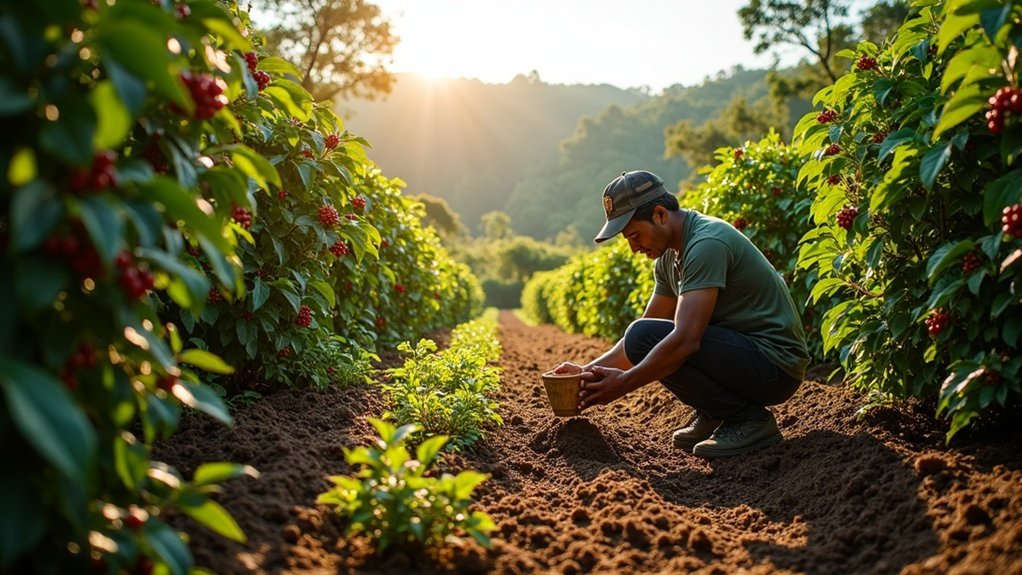
Regenerative agriculture coffee focuses on sustainable farming practices that prioritize ecosystem health and combat climate change. It emphasizes techniques like cover cropping and agroforestry, which improve soil health and promote biodiversity. By supporting smallholder farmers, it ensures livelihoods while enhancing the flavor and nutritional value of coffee. This approach significantly reduces greenhouse gas emissions associated with industrial agriculture. Explore how choosing regenerative agriculture coffee can transform your coffee experience and contribute to a sustainable future for coffee cultivation.
Key Takeaways
Regenerative coffee farming emphasizes the health of ecosystems, promotes biodiversity, and enhances the livelihoods of smallholder farmers. By employing techniques such as cover cropping and agroforestry, farmers can improve soil health, reduce erosion, and enhance carbon capture. This approach not only lowers greenhouse gas emissions and combats climate change but also results in coffee that is more flavorful and nutritious. Consumers can support regenerative coffee by opting for certified brands and local farmers who engage in sustainable practices. Collaborations with organizations are crucial for assisting farmers in transitioning to regenerative methods, ensuring both environmental resilience and economic viability.
Definition and Importance of Regenerative Coffee
Regenerative coffee farming is characterized by its holistic approach, focusing not only on producing high-quality coffee but also on nurturing the health of the ecosystem.
By enhancing soil health and restoring ecological balance, it plays a crucial role in combating climate change and reducing greenhouse gas emissions. This sustainable farming method incorporates organic practices such as cover cropping and agroforestry, which improve both soil quality and crop yield.
Enhancing soil health and ecological balance, regenerative coffee farming combats climate change while boosting yields through organic practices.
Moreover, regenerative agriculture is vital for supporting smallholder coffee farmers, who account for over 70% of the world’s coffee production, thereby ensuring their livelihoods and promoting biodiversity.
Ultimately, this approach results in more flavorful, nutritious coffee while fostering long-term environmental resilience.
Farming Techniques Behind Regenerative Coffee
In regenerative coffee farming, cover cropping significantly improves soil health by preventing erosion and increasing fertility during off-seasons.
Additionally, Integrated Pest Management (IPM) is crucial in this approach as it utilizes natural predators to control pests, thereby reducing the need for chemical inputs.
Together, these practices establish a sustainable framework that not only enhances coffee production but also preserves ecological integrity.
Cover Cropping Benefits
While implementing cover cropping techniques, coffee farmers can greatly enhance soil health and overall farm sustainability.
Cover crops protect the soil from erosion, stabilizing its structure and preventing degradation. As they decompose, they enrich the soil with organic matter and essential nutrients crucial for sustainable coffee production.
Additionally, cover crops improve water retention, reducing irrigation needs and minimizing waste during dry periods. They also help suppress weed growth, decreasing reliance on chemical herbicides, which fosters a healthier ecosystem on coffee farms.
Integrated Pest Management
Cover cropping lays a strong foundation for the implementation of Integrated Pest Management (IPM) in coffee farming.
IPM employs organic methods and natural predators to manage pests, greatly reducing reliance on chemical pesticides in regenerative coffee systems. By enhancing biodiversity, you create a balanced ecosystem where beneficial insects coexist with coffee plants.
Effective IPM practices, such as traps, barriers, and biological controls, help maintain healthy coffee crops while minimizing environmental impact. Promoting diverse plant and animal life strengthens pest resistance and improves the overall health of your coffee ecosystem, supporting sustainable practices that lead to higher quality coffee and healthier soil.
Environmental and Health Benefits of Regenerative Coffee
Regenerative coffee farming offers significant environmental and health benefits that contribute to sustainable coffee production. This approach enhances soil health by improving structure, fertility, and water retention, effectively combating erosion.
By increasing biodiversity, regenerative coffee farms bolster resilience against environmental stresses and promote healthier ecosystems. Techniques like agroforestry enhance carbon capture, mitigating climate change by reducing greenhouse gas emissions.
Additionally, regenerative coffee provides health benefits, including lower acid content and reduced jitters, resulting in a more enjoyable coffee drinking experience. The absence of chemicals leads to a cleaner, natural taste, supporting overall wellness for consumers and promoting a healthier lifestyle.
Choosing and Supporting Regenerative Coffee
When choosing regenerative coffee, look for certification labels like Regenerative Organic Certified and Fair Trade, which indicate commitment to sustainable practices.
It’s important to research brands that clearly share their sustainability efforts and maintain supply chain transparency.
Additionally, consider supporting local coffee farmers who practice regenerative methods, as this not only bolsters community economies but also fosters environmentally responsible coffee cultivation.
Certification Labels to Consider
Choosing coffee with the right certification labels can significantly enhance sustainable farming practices.
Look for certified coffee such as Regenerative Organic Certified, Fair Trade, and USDA Organic, which indicate adherence to high standards of soil health and biodiversity. These certifications ensure transparency in farming methods, benefiting local producers who engage in sustainable practices.
By supporting brands with these labels, you strengthen local economies and contribute to ethical supply chains.
Additionally, researching brands’ commitment to sustainability and participating in community initiatives can deepen your understanding and support for regenerative agriculture within the coffee industry, making informed choices easier.
Research Sustainable Brands
To make informed choices about coffee that supports regenerative agriculture, it’s essential to research sustainable brands that align with your values.
Here are three key steps:
- Look for certifications: Seek coffee brands with Regenerative Organic Certified, Fair Trade, or USDA Organic labels, which indicate a commitment to regenerative farming practices.
- Investigate supply chains: Ensure that coffee brands provide transparency about their sustainability efforts and soil health initiatives that support farmers.
- Engage with communities: Support local coffee producers practicing sustainable agriculture, strengthening ties and promoting responsible coffee farming.
Support Local Farmers
Supporting local coffee farmers who engage in regenerative practices yields significant benefits for both communities and the environment. By prioritizing these small-scale coffee producers, you can actively contribute to sustainable agricultural practices that enhance soil health and biodiversity. Engaging with local coffee initiatives allows you to support farmers’ livelihoods while promoting ecosystem resilience. Choosing coffee brands that are transparent about their supply chain guarantees your purchases aid those implementing regenerative practices. Supporting local coffee farmers not only addresses climate change but also boosts their incomes by 20% to 30%.
| Benefit | Impact on Farmers | Environmental Benefit |
|---|---|---|
| Strengthened Economy | Increased Income | Improved Soil Health |
| Fair Trade Practices | Livelihood Support | Enhanced Biodiversity |
| Community Engagement | Economic Stability | Ecosystem Resilience |
| Sustainable Practices | Long-term Viability | Climate Change Mitigation |
| Transparency | Consumer Trust | Sustainable Agriculture |
Impact of Industrial Agriculture and Consumer Role
While industrial coffee farming significantly contributes to global greenhouse gas emissions, accounting for up to 25%, consumers have the power to influence agricultural practices through their choices.
Industrial coffee farming is a major source of greenhouse gas emissions, but consumer choices can drive positive change.
By opting for regenerative coffee, you support sustainable practices that enhance soil health and mitigate climate change.
Here’s how you can make an impact:
- Choose coffee brands committed to regenerative agriculture.
- Educate yourself about the benefits of sustainable coffee farming.
- Advocate for policies that support coffee farmers shifting to regenerative methods.
Your coffee choices can drive demand for better practices, encouraging farmers to adopt methods that promote environmental health and combat the adverse effects of industrial coffee agriculture.
The Role of Partnerships in Promoting Regenerative Practices
As partnerships between coffee companies and organizations evolve, they play an essential role in advancing regenerative agriculture practices within the coffee industry.
Collaborations with the Rainforest Alliance, for instance, provide crucial support to coffee farmers in enhancing soil health through regenerative organic methods. By developing guidelines and tools like the Regenerative Coffee Scorecard, these partnerships facilitate the transition to nature-based farming practices specifically tailored for coffee cultivation.
Certification processes enable farmers to monitor their regenerative impact, effectively addressing challenges posed by environmental degradation and the climate crisis that affect coffee production.
Ultimately, these joint efforts enhance biodiversity and climate resilience, promoting sustainable agricultural standards while improving coffee farmer productivity in an ever-changing world.
The Future of Coffee: Sustainable and Regenerative Solutions
The future of coffee lies in embracing sustainable and regenerative solutions that prioritize ecological health and economic viability.
By focusing on regenerative practices, coffee enthusiasts can support positive change in coffee farms while improving soil health and farmers’ livelihoods.
Supporting regenerative practices fosters positive change in coffee farming, enhancing soil health and uplifting farmers’ lives.
Consider these key aspects:
- Biodiversity Promotion: Enhancing biodiversity through agroforestry and cover cropping leads to resilient ecosystems, essential for thriving coffee cultivation.
- Economic Benefits: Shifting to regenerative methods can boost farmers’ incomes by 20% to 30%, ensuring a more sustainable livelihood for those who grow our beloved coffee.
- Quality Improvement: Healthier soil results in higher quality, flavorful coffee beans, reducing the need for chemical inputs and enhancing the coffee experience.
Adopting these principles guarantees a sustainable future for coffee cultivation, benefiting both the environment and coffee lovers worldwide.