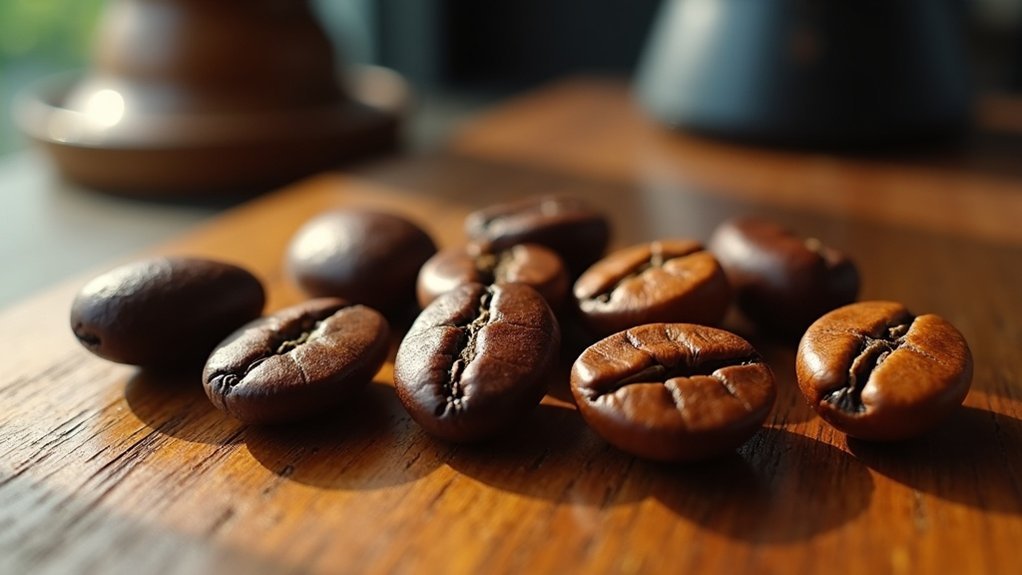
Blooming in espresso is a crucial pre-infusion step that allows trapped carbon dioxide to escape, which ultimately enhances the quality of extraction. By allowing water to saturate the coffee puck, you can improve flavor clarity and prevent under-extraction. This technique can increase your extraction yield by up to 1.5%, resulting in a sweeter and richer cup of coffee. Attention to timing and technique is essential for achieving the best results. There’s much more to discover about perfecting your blooming process in the world of coffee.
Key Takeaways
- Blooming is a pre-infusion technique used in coffee brewing that allows CO2 gas to escape from the coffee puck, enhancing the quality of extraction.
- This process improves water saturation in the coffee grounds, leading to a more uniform extraction for a delicious cup of coffee.
- A well-executed blooming profile can increase extraction yield by 1% to 1.5%, resulting in sweeter and more complex flavors in your brew.
- Blooming helps prevent under-extraction, releasing desirable flavors like sugars and oils while minimizing any bitterness that can detract from the coffee experience.
- Common techniques for blooming include incorporating a 30-second pause after pre-infusion and adjusting flow rates to achieve optimal saturation of the coffee grounds.
Understanding the Blooming Process
When preparing espresso, grasping the blooming process is crucial, as it significantly impacts the extraction quality of your shot.
During this stage, you introduce water to the coffee grounds, allowing trapped carbon dioxide (CO2) to escape. This initial step enhances the saturation of the coffee puck and encourages a more uniform extraction of soluble compounds.
Introducing water to the coffee grounds allows trapped CO2 to escape, enhancing saturation and promoting uniform extraction.
Typically involving a 30-second pause after preinfusion, a well-executed blooming profile can increase extraction yield by 1% to 1.5%, leading to a balanced cup with enhanced flavor clarity.
Mastering the blooming process helps prevent under-extraction, ensuring you achieve a richer flavor profile without undesirable bitterness or astringency in your final espresso.
Benefits of Blooming in Espresso
The benefits of blooming in espresso are significant, impacting both flavor and extraction quality.
By allowing CO2 gas to escape during the pre-infusion phase, blooming ensures better water saturation of the coffee grounds, which enhances the espresso extraction process. This technique can boost extraction yield by 1% to 1.5%, resulting in a sweeter, less astringent cup of coffee.
Proper blooming also prevents under-extraction, allowing for the release of desirable flavors like sugars and oils, contributing to a well-balanced coffee experience.
Additionally, it promotes even water distribution, minimizing the risk of channeling that can lead to uneven extraction and undesirable flavors, ultimately enhancing the clarity of nuanced flavor notes in your espresso.
Techniques for Effective Blooming
Effective blooming techniques play an essential role in maximizing the benefits of the pre-infusion phase when brewing coffee.
Start by allowing a 30-second pause after pre-infusion to enhance puck saturation and improve extraction evenness. Experiment with flow rates during pre-infusion, adjusting between 0 ml/s to 0.1 ml/s to find your machine’s sweet spot.
Allow a 30-second pause post pre-infusion to enhance puck saturation and perfect your coffee extraction.
If you’re using a spring lever machine, varying lever angles is necessary to prevent gush-through during extraction.
Additionally, employing a blooming ramp that gradually increases flow until reaching 4 bars can greatly boost extraction quality, yielding a sweeter, less bitter cup of coffee.
Embrace these techniques for optimal blooming results and a superior coffee experience.
Common Mistakes in Blooming
How often do you consider the common mistakes that can undermine your coffee blooming process? Not allowing enough time—30 seconds is ideal—can hinder CO2 release and puck saturation.
Additionally, neglecting to adjust your grind size may lead to a gush-through effect, compromising evenness of extraction in your coffee.
Using stale beans, older than four weeks post-roast, traps CO2, reducing blooming effectiveness.
Monitoring water temperature is essential; improper temperatures can muddle flavor clarity in your brew.
Finally, failing to gradually ramp up flow rates during pre-infusion may prevent maximum saturation and extraction, leaving you with a less satisfying cup of coffee.
Avoid these pitfalls for better results in your coffee brewing.
Enhancing Your Espresso Experience With Blooming
Avoiding common mistakes in blooming opens the door to a richer coffee experience.
Blooming in coffee brewing involves a vital 30-second pause after preinfusion, allowing trapped CO2 to escape and enhancing water penetration. This technique not only elevates extraction yield by up to 1.5% but also prevents under-extraction, which can result in sour flavors.
Users often report a more robust body and clarity in flavors due to the uniform extraction of soluble compounds.
Experimenting with blooming profiles on different brewing methods can yield unique results, underscoring the necessity of adjusting grind size and preinfusion duration for a peak, tailored coffee experience.