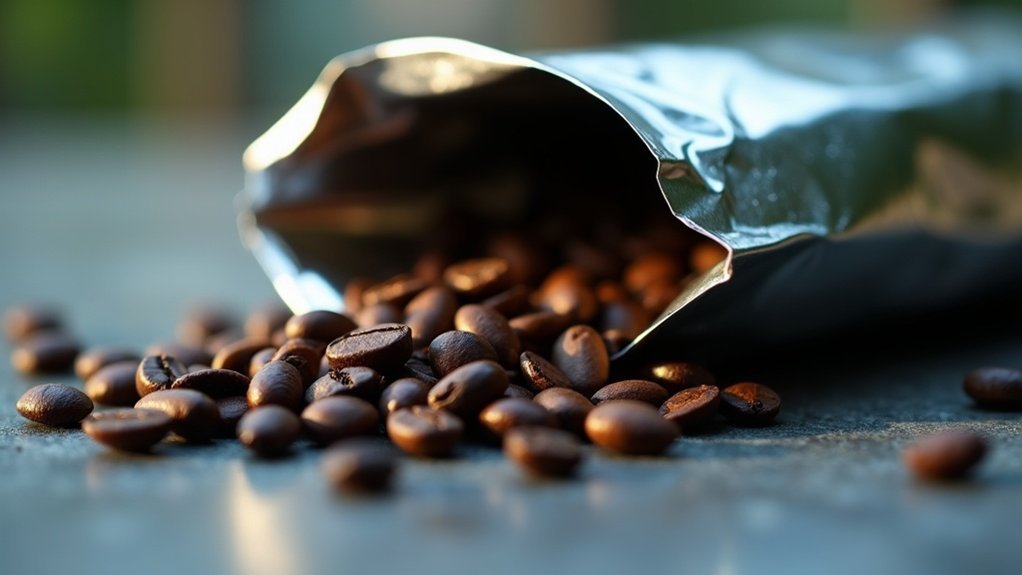
Aluminum lined coffee bags are considered safe for food contact. Their chemically inert properties prevent harmful substances from migrating into your coffee, thus preserving its integrity and flavor. Regulatory agencies like the FDA endorse these bags and set strict migration limits to ensure safety. Although there are some concerns about leaching, well-designed packaging minimizes these risks. By understanding these factors, you can make informed choices about your coffee packaging. Stay tuned for more insights into sustainable practices in coffee packaging and the various options available to you.
Key Takeaways
- Aluminum foil is chemically inert and non-reactive, making it safe for food contact according to regulatory agencies like the FDA and EFSA, which is especially important for preserving the quality of coffee.
- Strict guidelines and specific migration limits (SMLs) ensure aluminum does not leach harmful substances into coffee, ensuring a safe brewing experience.
- Well-designed aluminum lined bags prevent direct contact with coffee, minimizing chemical migration risks and maintaining the integrity of your favorite brew.
- Aluminum foil effectively protects coffee from moisture, oxygen, and light, preserving its freshness and quality, which is crucial for coffee lovers.
- Choosing BPA-free and phthalate-free aluminum options further enhances safety and reduces health risks, allowing you to enjoy your coffee with peace of mind.
The Safety of Aluminum in Food Packaging
When considering the safety of aluminum in coffee packaging, it’s important to note that aluminum foil is chemically inert and non-reactive, meaning it won’t leach harmful substances into your coffee.
Regulatory agencies like the FDA and EFSA endorse aluminum as a safe option, establishing specific migration limits to prevent any detrimental transfer.
Regulatory agencies such as the FDA and EFSA confirm aluminum’s safety, setting strict limits to ensure no harmful transfer occurs.
Aluminum foil’s barrier properties effectively protect coffee from moisture, oxygen, and light, which are essential for maintaining freshness and preserving flavor.
With about 75% of produced aluminum still in circulation, its use in coffee packaging reflects both sustainability and safety, addressing concerns about dietary exposure through modern packaging practices that minimize direct contact with the coffee itself.
Understanding the Barrier Properties of Aluminum Lined Bags
Understanding the barrier properties of aluminum lined coffee bags reveals their critical role in preserving coffee quality. These bags effectively shield against oxygen, light, and moisture, which are essential for maintaining the freshness of your favorite coffee.
The aluminum used is safe for food contact, as it’s chemically inert and doesn’t leach harmful substances, ensuring your brew remains pure. Studies show that aluminum outperforms other packaging materials, making it a favored choice in the coffee industry for keeping your coffee beans flavorful and aromatic.
Additionally, well-designed bags ensure that the aluminum doesn’t come into direct contact with the coffee, enhancing safety for consumption. While aluminum is recyclable, it complicates the recycling process, impacting overall environmental sustainability, an important consideration for eco-conscious coffee lovers.
Chemical Migration Concerns in Food Packaging
While aluminum lined coffee bags provide excellent barrier properties to keep your coffee fresh, it’s essential to address concerns regarding chemical migration in food packaging. Chemical migration refers to the transfer of substances from the packaging into the coffee, influenced by factors such as temperature, time, and the composition of the coffee itself. For instance, mobile molecules in aluminum foil can migrate into fatty or oily coffee blends. Regulatory bodies like the FDA and EFSA have established specific migration limits (SMLs) to ensure the safety of food packaging and to prevent harmful substances from contaminating your coffee. Choosing BPA-free and phthalate-free packaging can further mitigate health risks.
| Factor | Impact on Migration | Recommendations |
|---|---|---|
| Temperature | Increases migration rate | Store coffee at cool temps |
| Time | Longer exposure heightens risk | Minimize storage time |
| Coffee Composition | Fats/oils enhance migration | Opt for low-oil coffee blends |
| Packaging Materials | Quality matters | Select certified coffee bags |
| Regulatory Standards | Follow SML guidelines | Ensure compliance with regulations |
Regulatory Standards for Food Contact Materials
When considering aluminum lined coffee bags, understanding regulatory standards for food contact materials is essential for the safety of your coffee.
The FDA and EU impose strict guidelines to guarantee that packaging materials don’t transfer harmful substances to food.
FDA Regulations Overview
The FDA plays an essential role in guaranteeing the safety of food contact materials, including aluminum used in coffee bags. Compliance with FDA regulations is vital for protecting your health while enjoying your favorite coffee.
Here are three key points to reflect on:
- Aluminum foil is generally recognized as safe (GRAS) for food packaging, ensuring that your coffee remains uncontaminated.
- The FDA sets specific migration limits (SMLs) to prevent harmful substances from transferring to your coffee from the packaging.
- Regular safety evaluations guarantee that aluminum and other packaging materials used for coffee remain non-toxic and safe for consumption.
EU Safety Standards
Ensuring the safety of aluminum-lined coffee bags in the EU is crucial for protecting consumer health and enhancing the coffee experience.
These bags must comply with Regulation (EC) No. 1935/2004, which prevents harmful substances from migrating into food. The European Food Safety Authority (EFSA) establishes specific migration limits (SMLs) for materials used in food contact, ensuring that your coffee remains safe and enjoyable.
Manufacturers are required to provide documentation and perform testing to confirm compliance with these safety standards, specifically focusing on potential chemical migration.
Furthermore, utilizing BPA-free materials in the innermost layer of aluminum-lined bags addresses health concerns and meets safety evaluations, ensuring that every cup of coffee you enjoy isn’t only delicious but also safe for consumption.
Comparisons With Alternative Packaging Materials
While aluminum lined coffee bags excel in barrier protection, it’s important to compare them with alternative packaging materials to understand their relative advantages and disadvantages for coffee preservation.
Consider these points:
- Shelf Life: Aluminum foil-lined coffee bags preserve the freshness of coffee far better than kraft paper or LDPE options, which may compromise the flavor and aroma of your favorite brew.
- Chemical Safety: Aluminum is a safe choice for food contact, ensuring that your coffee remains untouched by harmful substances, whereas some plastics, particularly those containing BPA, pose potential risks to health.
- Environmental Considerations: PLA bioplastics offer eco-friendly packaging alternatives, but they often struggle with effective recycling processes, which can impact their sustainability in the coffee industry.
Ultimately, aluminum bags provide reliability and safety in coffee packaging, making them a compelling choice for preserving the rich flavors and aromas of your coffee.
Environmental Impact and Recycling of Aluminum Bags
When you consider aluminum-lined coffee bags, the recycling challenges become apparent.
Their composite nature complicates the recycling process, leading many to end up in landfills, which contributes to greenhouse gas emissions.
Exploring sustainable alternatives and understanding the environmental costs associated with coffee packaging can guide you toward more responsible choices for your favorite brew.
Recycling Challenges Faced
Recycling aluminum lined coffee bags poses notable challenges primarily due to their mixed material composition, which complicates the recycling process.
Unfortunately, many standard recycling programs don’t accept these foil bags, resulting in increased landfill disposal and raising environmental concerns.
Here are three key issues to consider:
- Contamination risks: The thin aluminum foil can easily tear, leading to contamination during the recycling process.
- Lack of awareness: Many coffee consumers aren’t informed about the specific recycling requirements for these aluminum bags, which hinders proper disposal.
- Environmental impact: Improper disposal of these bags contributes to greenhouse gas emissions, further exacerbating environmental challenges.
Recognizing these challenges is crucial for improving disposal practices and enhancing recycling efforts within the coffee industry.
Environmental Cost Considerations
The environmental cost of aluminum-lined coffee bags extends beyond their convenience and freshness preservation, impacting our planet in several significant ways. The extraction and refining of aluminum foil contribute to resource depletion and greenhouse gas emissions. While aluminum is 100% recyclable, the use of mixed materials complicates recycling practices, leading to a significant number of these bags ultimately ending up in landfills.
| Factor | Impact | Significance |
|---|---|---|
| Resource Depletion | High due to extraction processes | Urgent need for sustainable practices |
| Greenhouse Gas Emissions | Increased from improper disposal | Highlights the need for consumer awareness |
| Recycling Challenges | Complicated by mixed materials | Lower recycling rates hinder environmental benefits |
Understanding these factors is essential for coffee lovers to make informed choices that benefit both their brews and the environment.
Sustainable Alternatives Available
Aluminum-lined coffee bags present significant recycling challenges due to their mixed material composition, often resulting in rejection by recycling facilities.
Thankfully, sustainable alternatives for coffee packaging are becoming available:
- Kraft paper bags – These biodegradable bags can be composted, making them an eco-friendly choice for coffee lovers.
- PLA (polylactic acid) lining – This sustainable packaging option not only protects your coffee but also minimizes landfill impact.
- Paper composites – More brands are adopting these materials due to their effective moisture and oxygen barrier properties, ensuring your coffee stays fresh.
Best Practices for Safe Coffee Storage
To ensure your coffee stays fresh and flavorful, proper storage is essential. Store your coffee in a cool, dark place to minimize exposure to light, heat, and moisture.
Use airtight containers or resealable aluminum lined bags to limit oxygen exposure, which helps prevent staleness. Be cautious of strong odors, as coffee can absorb surrounding smells that may compromise its flavor.
If opting for aluminum lined bags, ensure they’re sealed tightly, or consider transferring your coffee to glass or ceramic containers for long-term storage.
Regularly monitor humidity levels, keeping them below 60% to prevent mold growth and maintain optimal quality.
Consumer Awareness and Packaging Choices
Understanding how packaging impacts coffee safety and quality is key for coffee lovers. When selecting aluminum lined bags for your favorite brew, consider these important factors:
- Look for food-safe materials; ensuring that no harmful substances leach into your coffee is essential for a pure taste.
- Opt for BPA-free and phthalate-free options to avoid potential health risks associated with these chemicals.
- Stay informed about recycling guidelines for coffee packaging to minimize your environmental footprint.
Consumer education plays a vital role in making informed choices about coffee packaging. By prioritizing safety and sustainability, you ensure that your coffee stays fresh while supporting responsible disposal practices.
Prioritizing safety and sustainability in coffee packaging ensures freshness and supports responsible disposal practices.
Your choices matter in maintaining both your health and the health of the planet.