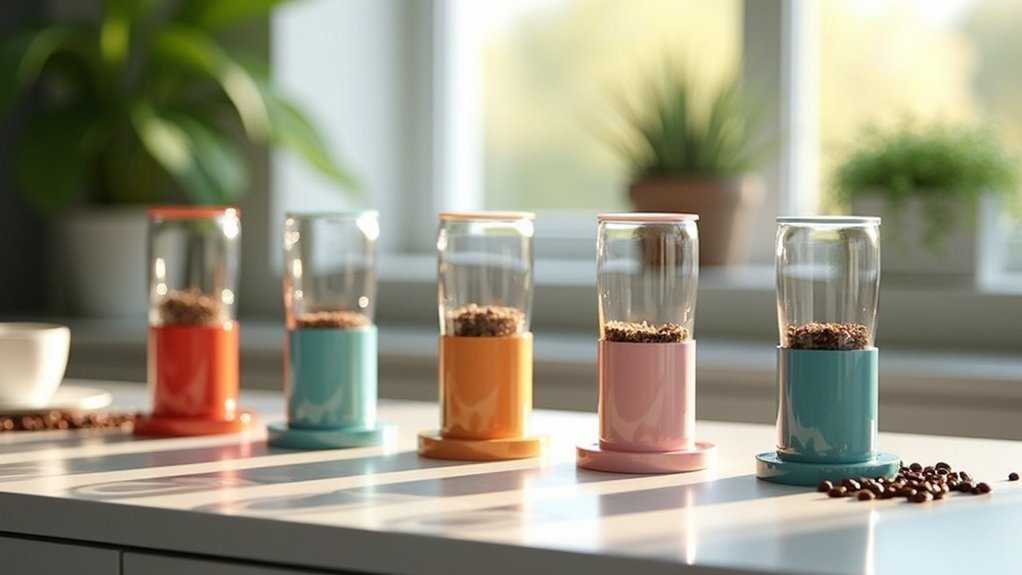
Yes, glass jars are a fantastic alternative to original coffee packaging. They’re airtight, blocking moisture and oxygen to maintain the freshness and flavor of your coffee for weeks. Unlike plastic, glass doesn’t absorb odors or chemicals, ensuring that your coffee tastes just as it should. Additionally, glass jars are recyclable and sustainable, helping to reduce environmental impact. While they can be fragile, the benefits of using glass jars for coffee storage far outweigh the drawbacks. If you’re interested in learning how to maximize the storage of your coffee or exploring other storage options, there’s plenty more to consider!
Key Takeaways
- Glass jars provide an airtight seal, protecting your coffee from moisture and oxygen better than many original coffee packaging options often allow.
- Their non-reactive nature helps to preserve the integrity of your coffee’s flavor, preventing the absorption of unwanted odors that can occur with some packaging materials.
- Glass jars are transparent, making it easy to monitor your coffee levels without needing to open the container frequently, which is a common drawback of opaque original packaging.
- Being 100% recyclable, glass jars support sustainability by reducing waste compared to single-use coffee packaging, contributing positively to the environment.
- While they can be fragile, glass jars are a great option for extending the freshness of your coffee for short-term storage, making them a practical alternative to traditional packaging.
Benefits of Using Glass Jars for Coffee Storage
When it comes to preserving the rich flavors of coffee, glass jars stand out as an ideal storage solution. These airtight containers effectively block moisture and oxygen, which are essential factors that compromise the freshness of coffee.
By using glass jars for whole coffee beans, you can extend their freshness for up to four weeks post-roasting. Additionally, their non-reactive nature prevents chemical interactions, ensuring that the flavor remains intact.
The transparency of glass allows you to monitor your coffee levels without frequent openings, enhancing convenience for your brewing routine. Plus, glass is 100% recyclable and promotes sustainability, making it a responsible choice that helps reduce waste compared to conventional packaging options.
Glass vs. Plastic: Which Is Better for Coffee?
While both glass and plastic containers are commonly used for coffee storage, glass emerges as the superior choice for preserving the quality and flavor of your beans.
Glass jars are non-reactive, ensuring that they won’t absorb odors or flavors, unlike plastic containers. They provide an effective barrier against moisture, light, and oxygen, which can degrade coffee freshness.
Glass jars are non-reactive, preserving the true flavors of your coffee while effectively blocking moisture, light, and oxygen.
Furthermore, dark or opaque glass jars block harmful light exposure, offering better protection than clear plastic.
Glass is also 100% recyclable and can be reused indefinitely, promoting sustainability, while plastic may contribute to environmental pollution.
For the best coffee experience, choose glass jars to keep your beans fresh and flavorful.
How Glass Jars Preserve Coffee Freshness
To maintain the freshness of coffee, glass jars stand out as an excellent storage solution due to their airtight seals that effectively block out oxygen and moisture. This prevents degradation of coffee quality, preserving its flavor for extended periods.
The non-reactive nature of glass guarantees no unwanted flavors are absorbed, maintaining your coffee’s original taste profile. By using dark glass jars or storing clear jars in a dark place, you minimize light exposure, which can lead to flavor loss.
Additionally, glass jars are easy to clean, ensuring a pure coffee experience without compromising aroma or flavor over time.
Environmental Impact of Glass Coffee Storage
When you choose glass jars for coffee storage, you’re opting for a packaging solution that’s 100% recyclable and can be reused indefinitely.
This decision not only reduces environmental waste but also supports sustainable production practices, as glass is made from natural materials rather than fossil fuels.
Recyclability of Glass
Glass jars for coffee packaging stand out as an environmentally responsible choice primarily due to their excellent recyclability.
Glass is 100% recyclable and can be reused indefinitely without losing quality, making it an eco-friendly option for coffee lovers. The recycling process consumes up to 30% less energy than producing new glass, significantly reducing carbon emissions.
With over 80 glass recycling processors in the U.S. recycling approximately 20 tons of glass per hour, the efficiency of these systems is impressive.
Reduced Environmental Footprint
Choosing glass jars for coffee storage greatly reduces your environmental footprint, as these containers aren’t only 100% recyclable but also made from natural, non-toxic materials.
By opting for glass, you help reduce plastic pollution and limit the demand for new plastic packaging, which poses a threat to marine life. The production of glass generates fewer greenhouse gas emissions compared to plastic, and using recycled glass requires 30% less energy.
Additionally, utilizing glass jars supports a sustainable circular economy, allowing for indefinite reuse without compromising quality.
Sustainable Production Practices
The environmental advantages of glass packaging for coffee extend beyond its recyclability and natural composition; they also encompass sustainable production practices that minimize ecological impact.
By choosing glass for coffee storage, you support methods that:
- Utilize natural ingredients like sand, soda ash, and limestone
- Promote a circular economy through 100% recyclability
- Save energy, conserving 1,000 kilowatt-hours per ton of recycled glass
- Encourage advanced recycling processes in U.S. manufacturing plants
- Reduce reliance on single-use plastics and harmful chemicals
These sustainable practices significantly reduce waste and mitigate the overall environmental impact, making glass jars a responsible choice for coffee enthusiasts who care about the planet.
Tips for Storing Coffee in Glass Jars
When storing coffee in glass jars, it’s essential to consider factors that affect freshness and flavor.
Using non-reactive Mason jars ensures that the coffee’s aromas remain intact without any chemical interactions. A 32-ounce jar can hold up to 12 ounces of coffee, minimizing oxygen exposure to help maintain its freshness.
Store the coffee in a cool, dry place, away from light, as sunlight can degrade its quality. Make sure to seal the jars tightly to block moisture, which can lead to staleness.
Additionally, transferring small batches into smaller glass jars for daily use can help limit oxygen exposure, preserving the rich taste of your coffee with every brew.
Signs Your Coffee Is No Longer Fresh
How can you tell if your coffee has lost its freshness? Here are some critical signs to watch for:
- Dull or flat flavor profile
- Lack of aroma
- Bitter or sour taste compared to when it was fresh
- Dry appearance of coffee beans, indicating oxidation
- Signs of mold or an off-putting smell if not stored properly
If your coffee beans have been exposed to oxygen, moisture, or light, they may lose their freshness rapidly.
Remember, ground coffee deteriorates even faster, usually within a week.
Stay vigilant to ensure your coffee experience is at its best!
Maintaining Coffee Quality With Proper Storage
To maintain your coffee’s quality, using airtight glass jars is essential.
These jars effectively shield your beans from oxygen, light, and moisture, which can compromise freshness.
Airtight Seal Importance
Airtight seals in glass jars are crucial for preserving the quality of coffee, as they effectively protect the beans from harmful factors such as oxygen, moisture, and light.
To ensure whole beans stay fresh, proper storage is key, and utilizing airtight packaging solutions can significantly enhance your coffee experience.
Here are the main benefits:
- Keeps your coffee fresh for three to four weeks after roasting
- Minimizes the risk of stale or bitter flavors
- Preserves aromatic qualities and rich flavors
- Made from non-reactive materials and easy to clean
- Ensures consistent brew quality for coffee enthusiasts and businesses alike
Investing in airtight glass jars is a wise decision for anyone who’s passionate about savoring high-quality coffee.
Light and Moisture Protection
While many factors influence the quality of coffee, protecting it from light and moisture is crucial for maintaining its flavor and aroma.
Glass jars provide an airtight barrier that prevents moisture exposure, which can lead to quicker staleness. Their non-reactive nature also shields coffee from light, an essential element for preserving flavor compounds.
Opting for dark glass can further combat UV light, which accelerates flavor degradation.
When stored properly in cool, dry conditions, glass jars can significantly extend the shelf life of your coffee beans, ensuring they remain within the peak flavor window of 2 to 4 weeks post-roasting.
Alternatives to Glass Jars for Coffee Storage
When considering alternatives to glass jars for coffee storage, it’s crucial to understand how different materials can affect the freshness and flavor of your beloved brew. Here are some effective options:
- Plastic containers: These are suitable for short-term storage, but they may absorb odors and allow air exposure, potentially compromising your coffee’s taste.
- Metal tins: Known for their durability, metal tins protect your beans from light and moisture. Just be sure to check that they’ve airtight seals to maintain freshness.
- Vacuum-sealed bags: These are perfect for long-term storage, as they eliminate air and moisture, which are enemies of coffee freshness.
- Resealable pouches with degassing valves: These innovative pouches keep oxygen out while allowing gases to escape, preserving the flavor of your coffee.
- Ceramic containers: Offering an airtight seal and protection from light, ceramic containers are an excellent choice, though they can be heavier and less portable than other options.
Each of these alternatives has its own advantages and disadvantages for storing your coffee, so choose the one that best fits your brewing habits and lifestyle.