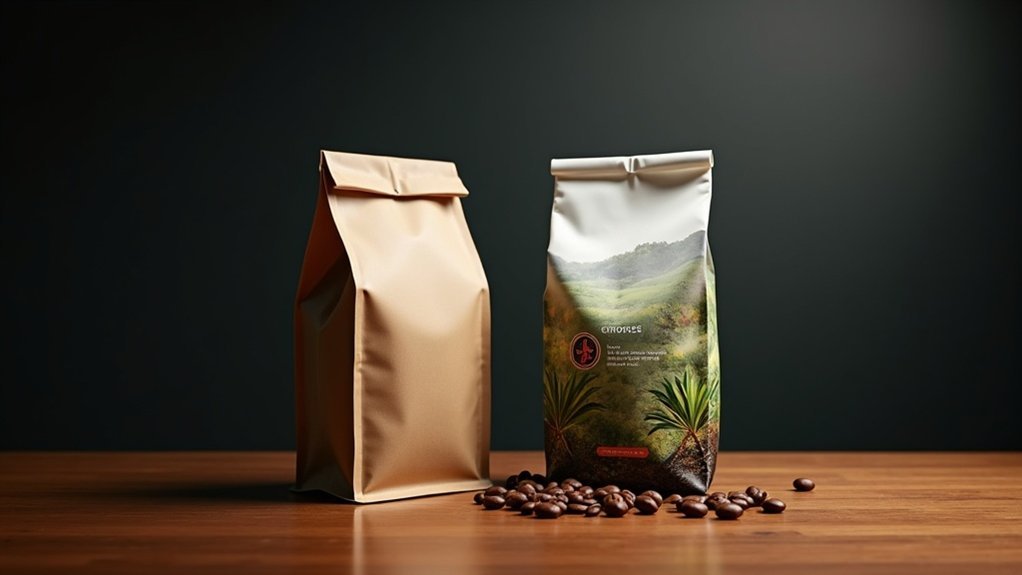
Vacuum packaging removes air to create a sealed environment for coffee, but it often leaves some oxygen behind, which can negatively impact freshness. In contrast, nitrogen flushing replaces oxygen with nitrogen gas, effectively preventing oxidation and preserving the rich flavors of coffee. This method typically employs a one-way valve to manage off-gassing during storage, ensuring optimal conditions for the beans. Overall, nitrogen flushing provides superior flavor retention and extended shelf life compared to vacuum packaging. To delve deeper into these methods and their implications for coffee quality, continue to the next sections.
Key Takeaways
- Vacuum packaging removes air but may leave some oxygen, while nitrogen flushing completely replaces oxygen with nitrogen gas, ensuring a more effective barrier against oxidation.
- Nitrogen flushing significantly reduces oxidation, leading to superior flavor retention when compared to vacuum packaging methods.
- The shelf life of nitrogen-flushed coffee is generally longer, thanks to its enhanced protection against freshness degradation.
- While vacuum packaging can save storage space, nitrogen flushing helps to preserve the integrity of coffee better, particularly with its one-way valve mechanism.
- Specialty coffee roasters typically prefer nitrogen flushing to maintain the optimal flavor and aroma of their coffee products.
Overview of Vacuum Packaging
When considering methods to preserve coffee quality, vacuum packaging emerges as a reliable option. This technique creates an airtight environment by removing air, effectively extending the shelf life of your coffee and reducing spoilage by preventing oxidation.
By utilizing a vacuum chamber, it also inhibits the growth of bacteria and fungi. Many vacuum-sealed coffee bags come equipped with a degassing valve, which allows carbon dioxide from freshly roasted beans to escape while preventing oxygen from re-entering the package.
While vacuum packaging is a straightforward and cost-effective method, it may not be as effective as nitrogen flushing in maintaining the coffee’s freshness and flavor, as residual oxygen can still impact the quality over time.
Overview of Nitrogen Flushing
Nitrogen flushing is an innovative packaging technique specifically designed to enhance the quality of coffee. By replacing oxygen in coffee bags with nitrogen gas, this process creates an inert environment that significantly reduces oxidation.
The bags are filled with nitrogen, flushing out any oxygen, and then sealed immediately to preserve the coffee’s rich flavor and aroma until you’re ready to enjoy it. Nitrogen is an odorless, food-safe gas that’s economical for maintaining the freshness of your coffee.
Many nitrogen-flushed bags come equipped with a one-way valve, which allows carbon dioxide from freshly roasted coffee to escape while preventing oxygen from re-entering. This careful management of off-gassing not only extends the shelf life of the coffee but also makes nitrogen flushing an exceptional choice for preserving the quality of roasted coffee.
Key Differences Between Vacuum Packaging and Nitrogen Flushing
When comparing vacuum packaging and nitrogen flushing for coffee, you’ll notice key differences in their oxygen removal techniques.
Vacuum packaging relies on suction to create a seal, which may still leave some oxygen in the bag, potentially affecting the freshness and flavor of the coffee over time.
In contrast, nitrogen flushing replaces oxygen with inert gas immediately after filling, significantly enhancing the coffee’s flavor retention and overall quality, ensuring that each brew delivers the best taste experience.
Oxygen Removal Techniques
While both vacuum packaging and nitrogen flushing serve the critical purpose of oxygen removal to preserve coffee quality, they differ remarkably in their methodologies and effectiveness.
- Vacuum packaging creates a sealed environment but retains some oxygen, which can risk flavor loss over time and diminish the rich aroma of your favorite beans.
- Nitrogen flushing replaces oxygen with nitrogen gas, utilizing a one-way valve for off-gassing, effectively maintaining the freshness and robust flavor profile of the coffee.
- Shelf life is greatly enhanced with nitrogen, as it limits oxidation more efficiently than vacuum sealing, allowing you to enjoy your coffee at its peak flavor for longer.
Understanding these techniques helps you choose the best method for maximizing coffee freshness and flavor retention in sealed bags, ensuring every cup you brew is as delightful as the first.
Impact on Freshness
Understanding the impact of packaging methods on coffee freshness is essential for both roasters and consumers seeking the ideal flavor profile.
Vacuum packaging creates a sealed environment by removing some oxygen, but it doesn’t eliminate all oxygen, which can compromise flavor retention over time.
In contrast, nitrogen flushing replaces oxygen with inert nitrogen gas, significantly enhancing freshness and flavor retention. This method seals coffee bags immediately after roasting, minimizing oxygen exposure and off-gassing, which is crucial for preserving that freshly roasted taste.
Furthermore, the one-way valve in nitrogen-flushed bags allows carbon dioxide to escape while preventing oxygen from re-entering, ensuring that the coffee remains vibrant and flavorful.
Advantages of Vacuum Packaging
When you utilize vacuum packaging for coffee, you greatly enhance its shelf life by minimizing oxidation.
This method not only saves valuable storage space but also improves flavor retention, allowing the coffee to maintain its quality over time.
Increased Shelf Life
Vacuum packaging is a crucial technique for extending the shelf life of coffee by efficiently eliminating oxygen from its surroundings.
This process significantly curtails oxidation and spoilage, allowing your coffee to maintain its rich flavors and aromas.
- A hermetic seal protects against moisture and contaminants
- The absence of air prevents mold and bacteria growth
- Your coffee stays flavorful and aromatic for months on end
Space Efficiency
Efficient storage is a key advantage of vacuum packaging that complements its ability to extend the shelf life of coffee. By removing air, vacuum packaging greatly reduces the volume of coffee bags, allowing for compact storage that optimizes shelf space. This method guarantees the integrity of the coffee while enabling efficient stacking.
Additionally, the absence of air decreases overall shipping weight, leading to lower transportation costs for roasters and retailers. Vacuum packaging typically uses fewer materials than nitrogen flushing, resulting in cost savings and a reduced environmental impact.
This efficiency enhances operational effectiveness for coffee distributors, making vacuum packaging a superior choice for coffee storage and logistics.
Flavor Enhancement
By creating an airtight seal, vacuum packaging effectively enhances the flavor of coffee, preserving its taste and aroma over time. This method reduces oxygen exposure, minimizing staleness and allowing coffee to marinate in its own oils, which intensifies flavor profiles.
- Crisp notes of chocolate and caramel linger longer.
- A rich, bold coffee aroma fills the air upon opening.
- Freshness preservation keeps your brew vibrant and lively.
While nitrogen flushing offers benefits, vacuum packaging provides a straightforward, cost-effective solution for small-scale roasters aiming for flavor enhancement.
Embrace vacuum packaging to achieve ideal taste retention through reduced off-gassing and oxygen exposure, ensuring that every cup of coffee you brew remains as delightful as the day it was roasted.
Advantages of Nitrogen Flushing
While many packaging methods aim to preserve coffee quality, nitrogen flushing stands out due to its effectiveness in preventing oxidation. By replacing oxygen with inert nitrogen during the packaging process, you enhance the freshness and prolong the flavor and aroma of the coffee.
This method typically includes a one-way valve that allows off-gassing carbon dioxide to escape while preventing oxygen from re-entering. Compared to vacuum sealing, nitrogen flushing effectively mitigates the risk of staleness associated with off-gassing.
Specialty coffee roasters widely adopt this technique, ensuring that the coffee maintains its integrity until you’re ready to brew, ultimately delivering an exceptional coffee experience.
Applications of Each Packaging Method
When considering packaging methods specifically for coffee, the applications of vacuum packaging and nitrogen flushing reveal distinct advantages tailored to preserving quality and freshness.
- Vacuum packaging helps maintain the freshness of coffee by eliminating oxygen, which can lead to oxidation and loss of flavor.
- Nitrogen flushing is particularly effective for retaining the aroma and flavor of coffee during transport, ensuring that the consumer receives a product that’s as fresh as possible.
- Both methods enhance the shelf life of coffee products, with vacuum packaging providing a barrier against external elements and nitrogen flushing preventing degradation from exposure to air.
Which Method Is Best for Coffee Preservation?
Which method truly reigns supreme for coffee preservation: nitrogen flushing or vacuum packaging?
Nitrogen flushing is generally superior, as it replaces oxygen with inert nitrogen gas immediately post-roasting, minimizing oxidation and staleness, which is crucial for coffee enthusiasts.
Nitrogen flushing excels by replacing oxygen with inert gas right after roasting, preserving freshness and flavor for coffee aficionados.
Vacuum sealing, on the other hand, requires 24-48 hours for off-gassing, exposing coffee to oxygen during this period, potentially compromising the freshness that coffee lovers seek.
While vacuum-sealed bags may retain some oxygen, nitrogen-flushed coffee bags incorporate a one-way valve that allows carbon dioxide to escape without letting oxygen back in, ensuring ideal flavor retention.
Consequently, for maintaining freshness and enhancing flavor for your favorite brew, nitrogen flushing is the preferred choice.