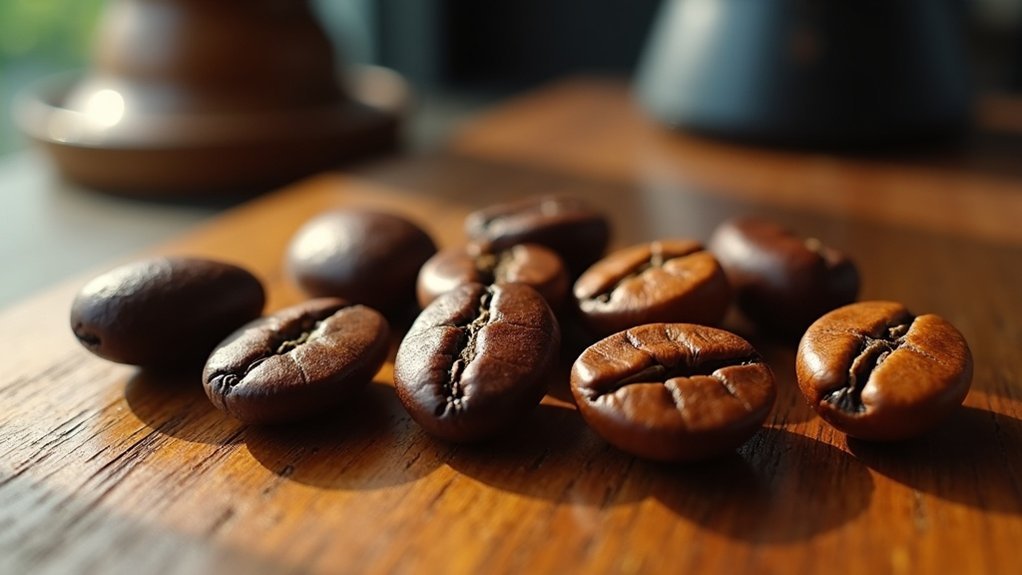
Category Two defects in coffee refer to minor issues such as broken beans, slight insect damage, and unripe beans. These defects do not disqualify the coffee from specialty grade status, but they can impact flavor profiles by introducing undesirable notes and affecting overall quality. In a 350-gram sample, a maximum of five of these defects is permitted. Managing these issues is crucial for maintaining market value and enhancing sensory experiences. It is important to further explore the significance of these defects in the coffee grading process.
Key Takeaways
- Category Two defects in coffee include broken beans, minor insect damage, and unripe beans that do not disqualify specialty grade status.
- A maximum of five Category Two defects is allowed in a 350-gram sample to maintain quality standards.
- These defects can alter flavor profiles, introducing off-flavors and impacting the sensory experience of coffee.
- Effective sorting and processing practices are essential for managing Category Two defects and enhancing coffee quality.
- Addressing these defects is crucial for preserving market value and ensuring economic viability in the coffee supply chain.
Understanding Category Two Defects
While you might think all defects in coffee are equally detrimental, Category Two defects are specifically defined by their less severe nature compared to Category One issues.
These include broken beans, minor insect damage, and unripe beans, which do impact coffee quality but don’t disqualify it from specialty grade status.
Category Two defects, such as broken beans and minor insect damage, affect quality but do not exclude coffee from specialty grade status.
The Specialty Coffee Association allows a maximum of five Category Two defects in a 350-gram sample.
Systematic identification and sorting of these defects are essential in the coffee supply chain to enhance overall quality, as they can lower both quality scores and market prices of green coffee beans.
Common Examples of Category Two Defects
Category Two defects in coffee can significantly impact the quality and market perception of the beans.
Common examples include broken beans, chipped beans, minor insect damage, unripe beans, and shriveled beans. While these defects are less severe than primary defects, they still compromise coffee quality and can introduce undesirable flavors and aromas in the final brew.
The Specialty Coffee Association allows for up to five Category Two defects in a 350-gram sample for the coffee to maintain its specialty grade classification.
However, a higher incidence of such defects may lower the overall grade and negatively affect market pricing.
Impact of Category Two Defects on Coffee Quality
Category Two defects can significantly alter the flavor profile of coffee, introducing off-flavors that compromise its quality.
These defects not only affect taste but also have economic implications; higher defect counts can lead to lower market prices and negatively impact producers’ returns.
Understanding how these defects influence both flavor and economics is essential for anyone involved in the coffee industry.
Flavor Alterations
While they may seem minor, defects such as broken beans and slight insect damage can significantly alter the flavor profile of coffee.
Category Two defects introduce undesirable off-flavors, like bitterness or a loss of sweetness, which can skew the sensory experience of your brew. Unripe or withered beans often impart grassy notes, detracting from the overall quality of the coffee.
Although these defects are less severe than Category One, they still compromise the high-quality expectations that coffee lovers seek, allowing only five defects in a 350-gram sample.
The cumulative impact of these flaws can diminish the perceived value of the coffee, potentially affecting market prices and reducing consumer satisfaction.
Economic Implications
While minor, the presence of Category Two defects in coffee can considerably impact economic outcomes for producers and roasters.
These defects lead to:
- Lower quality scores, jeopardizing the specialty grade status of the coffee.
- Increased sorting and processing costs to meet the standards required for high-quality coffee.
- A diminished sensory experience, masking the complex flavors that coffee lovers seek.
- Reduced market value, affecting sales and overall demand for the product.
With only about 5% of green coffees achieving specialty grade, managing Category Two defects is essential for maintaining quality.
By minimizing these defects, coffee producers can secure a competitive advantage, ensuring higher prices and enhanced consumer satisfaction.
This ultimately bolsters their economic viability in a demanding coffee market.
Identifying Category Two Defects in Green and Roasted Coffee
How can you effectively identify Category Two defects in both green and roasted coffee?
Begin with meticulous evaluation of green coffee beans, focusing on broken beans, shells, and minor insect damage, as noted by the Specialty Coffee Association.
Meticulously evaluate green coffee beans for broken pieces, shells, and minor insect damage to ensure quality.
Ensure that your quality control processes can detect unripe beans and partial black or sour beans, which can negatively impact flavor.
For specialty grade coffee, limit defects to five per 350-gram sample.
When evaluating roasted coffee beans, inspect for consistency in appearance and aroma, as these factors can reveal underlying defects.
Effective defect management is vital for maintaining the overall quality of your coffee and ensuring a superior coffee experience.
Prevention Strategies for Category Two Defects
To effectively prevent Category Two defects in coffee, implementing rigorous sorting practices during processing is crucial.
Focus on these preventive strategies:
- Meticulous sorting: Remove broken beans, minor insect damage, and unripe beans to enhance the overall quality of the coffee.
- Training sessions: Regularly educate farm workers on selective harvesting techniques to minimize the presence of withered or shriveled beans in the final product.
- Proper drying: Ensure an even moisture content during drying processes to prevent water damage and shell development in the beans.
- Density sorting: Conduct size grading to achieve uniformity in green coffee, thereby reducing the occurrence of secondary defects.
The Importance of Category Two Defects in Coffee Grading
Understanding the significance of Category Two defects in coffee grading is essential for producers and roasters who aim to maintain high quality and meet consumer expectations.
These defects, while less severe than Category One, can still adversely affect the flavor and overall quality of coffee beans. The Specialty Coffee Association (SCA) permits a maximum of five Category Two defects in a 350-gram sample for specialty grade designation, making systematic identification vital.
Higher defect counts can diminish market value and complicate the supply chain. By addressing these issues, you enhance the coffee experience, aligning with the specialty coffee movement’s commitment to higher quality.