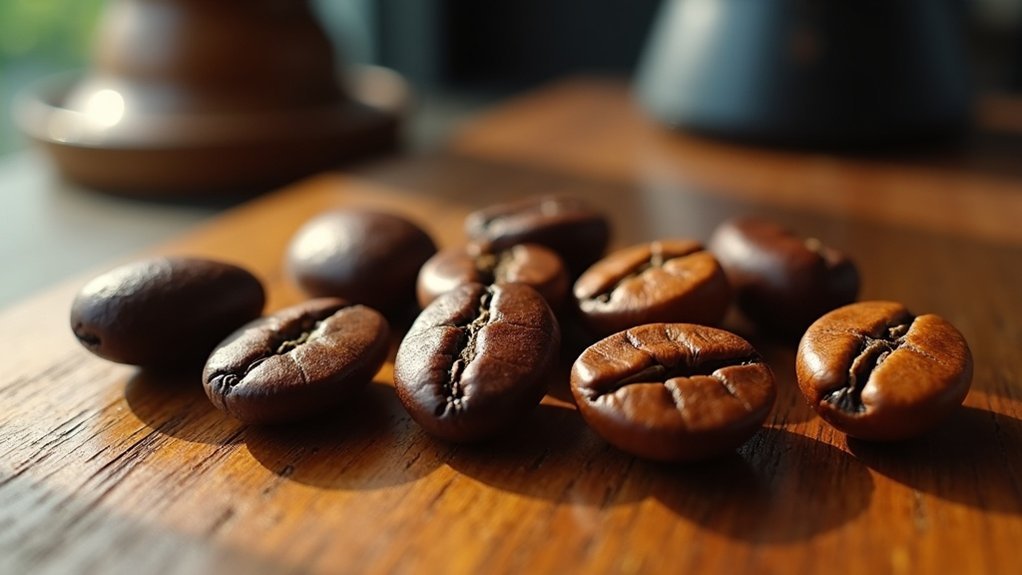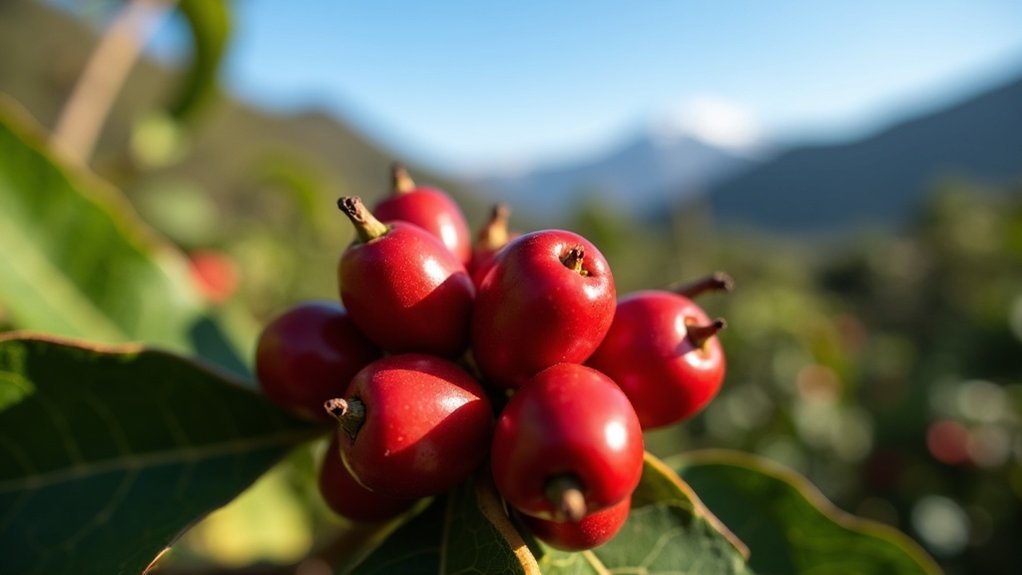
Caturra coffee is a notable Arabica varietal, a natural mutation of Bourbon that originated in Brazil. It thrives at altitudes between 1,200 and 2,000 meters, making it ideal for high-quality coffee production. This compact coffee plant allows for dense planting and easier harvesting, enhancing efficiency for farmers. Caturra is celebrated for its complexity, offering sweet chocolate and citrus notes, complemented by medium acidity. Colombian and Costa Rican beans are often preferred for their exceptional quality. Dive into the nuances of different Caturra varietals and discover the ideal growing conditions that shape its unique flavor profile.
Key Takeaways
- Caturra is an Arabica coffee varietal that originated as a natural mutation of Bourbon in Brazil between 1915 and 1918.
- It thrives at altitudes ranging from 1,200 to 2,000 meters and requires approximately 3,000 mm of rainfall annually to flourish.
- The compact nature of the Caturra plant allows for higher planting densities and simplifies the harvesting process, making it a popular choice among coffee farmers.
- Caturra coffee is known for its complex flavor profile, which includes sweet chocolate notes, vibrant citrus, and subtle hints of honey and maple.
- Coffee enthusiasts can explore different Caturra varietals, such as Red, Yellow, and Purple Caturra, each offering a unique sensory experience.
What Is Caturra Coffee?
Caturra coffee is a notable Arabica varietal that emerged as a natural mutation of the Bourbon variety in Brazil’s Minas Gerais region during the early 20th century.
Caturra coffee, a unique Arabica varietal, originated as a natural mutation of Bourbon in Brazil’s Minas Gerais region.
This dwarf plant thrives at altitudes of 1,200 to 2,000 meters and requires around 3,000 mm of rainfall annually for ideal growth.
Caturra beans are smaller and denser, offering a flavor profile with balanced sweetness, citrus notes, and pleasant acidity, making them a favorite among coffee enthusiasts.
However, the Caturra variety is highly susceptible to coffee leaf rust, which has prompted the development of cross-breeding programs for rust-resistant cultivars.
Notable sub-varietals include Red, Yellow, and Purple Caturra, each exhibiting distinct flavor characteristics that contribute to the rich diversity of coffee offerings.
Origins and Discovery of Caturra
Caturra is a fascinating coffee variety that originated as a natural mutation of the Bourbon variety, first discovered in Minas Gerais, Brazil, during the early 20th century.
This unique genetic mutation introduced a dwarf stature, which enhances planting density, making it an important development in coffee cultivation practices.
Genetic Mutation Details
Discovered in Minas Gerais, Brazil, between 1915 and 1918, this coffee varietal emerged as a natural mutation of the Bourbon variety. The Caturra plant’s unique traits stem from its genetic characteristics, influencing both cultivation and resilience.
Key points include:
- Compact stature allows for higher planting densities, optimizing space in coffee farms.
- Easier harvesting due to its dwarf growth, making it more accessible for coffee producers.
- Notable susceptibility to coffee leaf rust, posing challenges for growers.
- Development of hybrid varieties aimed at improving resistance to diseases like coffee leaf rust.
Understanding Caturra’s mutation of Bourbon is essential for appreciating its agricultural impact and challenges in coffee production.
This knowledge helps inform strategies for sustainable cultivation and effective disease management in the coffee industry.
Historical Significance of Caturra
The discovery of a natural mutation in Brazil during the early 20th century marked a pivotal moment in coffee cultivation. Caturra, a dwarf cultivar derived from Bourbon, emerged between 1915 and 1918 in Minas Gerais. Its compact stature allowed for higher planting density, leading to widespread adoption among coffee growers.
| Year | Event |
|---|---|
| 1915-1918 | Caturra mutation discovered |
| 1940s | Introduced to Guatemala |
| 2008 | Caturra constituted 50% of Colombia’s production |
| 2000s | Led to rust-resistant hybrids |
| Present | Impact on Central American coffee |
Caturra’s historical significance has reshaped coffee production dynamics in the region, influencing cultivation practices and contributing to the development of resilient coffee varieties.
Ideal Growing Conditions for Caturra
When cultivating Caturra coffee, you’ll find that perfect growth hinges on several critical factors, particularly altitude and rainfall.
- Ideal altitude is between 1,200 and 2,000 meters.
- Aim for annual rainfall around 3,000 mm.
- Maintain an ideal planting density of 5,000 to 6,000 Caturra plants per hectare.
- Prioritize high soil quality and nutrition, as Caturra is susceptible to coffee leaf rust.
These conditions guarantee robust growth and fruit development, while also necessitating careful management to mitigate risks from pests and diseases.
Robust growth and fruitful development require diligent management to combat pests and diseases effectively.
Adhering to these guidelines will enhance your Caturra coffee cultivation experience considerably.
Flavor Profile and Tasting Notes
When you taste Caturra coffee, you’ll discover a remarkable complexity and balance, highlighted by sweet chocolate and vibrant citrus notes that harmonize beautifully.
The aromatic qualities often include subtle hints of honey and maple, enriching the overall experience.
Furthermore, the flavor profile can vary between varietals; for instance, Red Caturra tends to be sweeter than its Yellow counterpart, significantly influencing your tasting experience.
Flavor Complexity and Balance
Caturra coffee is often compared to its Bourbon predecessor, but it truly stands out with its unique flavor complexity and balance.
When you explore Caturra’s flavor profiles, you’ll encounter:
- Sweetness harmonized with vibrant citrus notes
- A medium acidity that enhances the overall cup experience
- Rich undertones of chocolate and caramel
- Variations like Red Caturra, which offer a sweeter tasting experience
This combination results in an intriguing cupping experience.
The versatility in roasting allows you to emphasize acidity in light roasts, while medium to dark roasts bring out the inherent sweetness.
This makes Caturra a favorite among both roasters and consumers for its harmonious blend of flavors.
Aroma Characteristics
The aroma characteristics of Caturra coffee are pivotal to its overall flavor profile, captivating coffee enthusiasts with their rich complexity.
You’ll detect sweet, fruity, and sometimes floral notes that enhance its allure in the specialty coffee market. Light roasts typically highlight bright citrus aromas, such as orange and grapefruit, while medium to dark roasts transition to deeper chocolate scents, creating a delightful balance.
Moreover, the aroma can differ based on the growth location; for example, Red Caturra generally presents a sweeter bouquet compared to Yellow Caturra.
This diverse aroma profile enriches your tasting experience, making Caturra a genuinely captivating choice for coffee lovers.
Varietal Differences in Taste
How do varietal differences in Caturra coffee influence its taste?
Caturra’s flavor profiles can vary considerably, impacting your tasting experience. Remarkably, the Red Caturra typically showcases greater sweetness compared to the Yellow variant.
Here are key aspects to examine:
- Balanced flavor profile with bright citrus notes
- Tasting notes include chocolate, caramel, and citrus (orange, mandarin, grapefruit)
- Medium body with pleasant citric acidity
- Variability based on growing conditions and roast levels
These elements highlight Caturra’s complexity, making it a favorite among coffee enthusiasts and a strong contender in competitions for high-quality cups.
Different Varietals of Caturra
Four main varietals of Caturra—Red Caturra, Yellow Caturra, Purple Caturra, and Caturra Chiroso—offer distinct characteristics and flavor profiles that appeal to coffee enthusiasts.
Red Caturra is celebrated for its sweet, balanced flavor, making it a favorite among coffee lovers.
Yellow Caturra ripens faster, producing vibrant yellow cherries that add a unique visual appeal and flavor.
Purple Caturra, primarily from Colombia, boasts award-winning flavors, showcasing delightful notes of tamarind, cocoa powder, and red fruits that elevate the coffee experience.
Finally, Caturra Chiroso, a high-altitude mutation, is recognized for its bright acidity and floral nuances, although it’s susceptible to coffee leaf rust.
Each varietal provides unique sensory experiences, enriching the coffee landscape for roasters and consumers alike.
Cultivation Challenges and Disease Resistance
While exploring the distinct varietals of Caturra, it’s important to recognize the cultivation challenges and disease resistance issues that affect these plants.
Caturra is particularly susceptible to various threats, which can impact both yields and quality. Key challenges include:
- High susceptibility to coffee leaf rust, leading to efforts in cross-breeding for enhanced resistance.
- Vulnerability to nematodes such as Meloidogyne and Pratylenchus species.
- Proneness to Coffee Berry Disease (CBD), which poses a significant risk to production.
- High nutritional requirements, necessitating careful soil management.
Understanding these factors is essential for effective cultivation and maximizing Caturra’s potential in coffee production.
How to Choose the Best Caturra Coffee Beans
Choosing the best Caturra coffee beans requires careful consideration of several key factors that influence flavor and quality. Prioritize beans from Colombia or Costa Rica and check for a recent roast date to guarantee freshness. Match the roast level to your brewing method—lighter roasts enhance acidity, while darker roasts boost sweetness. Evaluate the processing method; washed beans offer clarity, and natural processing yields sweetness. Inspect for uniformity and a robust aroma to gauge quality.
| Factor | Recommendation |
|---|---|
| Origin | Colombia, Costa Rica |
| Roast Date | Within a few weeks |
| Roast Level | Light for acidity, dark for sweetness |
| Processing Method | Washed for clarity, natural for sweetness |