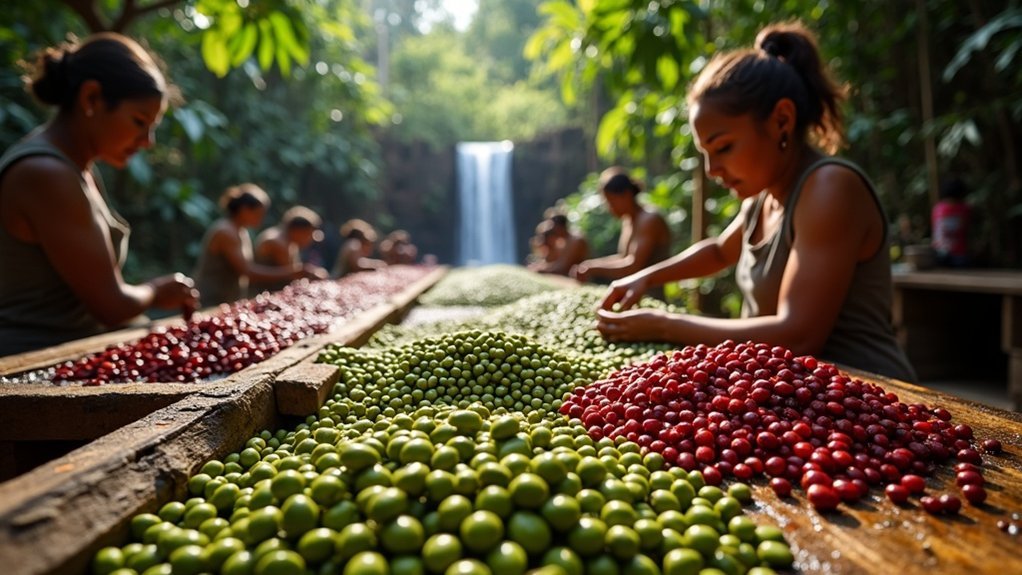
A coffee processing station is where raw coffee cherries are transformed into market-ready beans. Here, you can expect various processing methods, such as natural, washed, or honey, each significantly influencing the flavor profile of the coffee. These stations prioritize quality control through rigorous systems, ensuring every batch meets high flavor standards. Sustainability practices are also essential, with a strong emphasis on renewable energy and effective waste management. If you’re eager to delve into the nuances of processing methods and their profound effects on coffee quality, there’s much more to explore.
Key Takeaways
- A coffee processing station is where coffee cherries are transformed into brew-ready beans through methods such as natural, washed, and honey processing.
- These stations prioritize quality control by adhering to rigorous standards, ensuring traceability, and conducting sensory evaluations at each stage of processing.
- They implement sustainable practices, including the use of renewable energy and effective wastewater management, to reduce their environmental footprint.
- Micro coffee processing stations empower local producers by allowing them to control the processing methods, which enhances the flavor profile of the coffee and supports community development.
- Technological advancements in processing stations enhance efficiency and quality, although they necessitate substantial capital investment for modern equipment.
Coffee Processing Overview
When you immerse yourself in coffee processing, you’re engaging with an essential step that transforms coffee cherries into the beans you brew.
At a coffee processing station, various processing methods dictate the final flavor profile. Natural processing involves drying whole coffee cherries under the sun for 3-6 weeks, intensifying sweetness and body through fermentation.
In contrast, the washed process swiftly removes fruit from the seed, yielding a cleaner taste and lighter body. Honey processing strikes a balance, retaining some mucilage for added complexity.
Each method affects moisture content, influencing the final brew’s taste, aroma, and overall quality.
The Role of Processing Stations in Quality Control
Processing stations play a vital role in ensuring coffee quality through rigorous quality assurance measures.
By implementing traceability and transparency, you can track each batch’s journey from cherry to cup, reinforcing accountability.
Additionally, sustainable processing practices not only enhance the flavor of the coffee but also support environmental responsibility in the coffee supply chain.
Quality Assurance Measures
While ensuring the quality of coffee may appear simple, the role of processing stations in implementing quality assurance measures is vital for achieving a consistent product.
These facilities employ rigorous quality control systems, meticulously documenting each batch to adhere to flavor and quality standards specific to coffee. By monitoring critical factors like temperature and humidity during the drying process, they ensure ideal moisture levels of 10-12% to maintain the coffee’s quality.
Skilled personnel conduct sensory evaluations and adhere to standard operating procedures at every stage of processing. Additionally, advanced machinery, including moisture meters, enhances precision in maintaining quality, supporting compliance with international standards such as ISO 22000 or HACCP, which are essential for the coffee industry.
Traceability and Transparency
Guaranteeing quality in coffee extends beyond processing; it encompasses traceability and transparency throughout the coffee supply chain.
Coffee processing stations play a pivotal role in managing individual batches, allowing you to trace the origin and quality of your favorite brew. Through rigorous quality control systems and adherence to international standards like ISO 22000, these processing stations enhance transparency.
Micro-factories empower smallholder farmers to maintain control, which improves quality verification at every stage of production. Moreover, blockchain systems are increasingly being adopted, providing detailed insights into coffee’s journey from farm to cup.
This emphasis on traceability ensures that the unique flavor profiles of specialty coffees are preserved and accurately represented, allowing coffee lovers to enjoy a truly exceptional experience.
Sustainable Processing Practices
Coffee processing stations play a crucial role in ensuring the quality of coffee through sustainable practices that significantly influence flavor and safety. By maintaining strict moisture content standards of 10-12%, these facilities effectively prevent microbial growth and ensure optimal flavor during roasting.
Key features of these stations include:
- Modern infrastructure equipped with spacious drying yards that allow for effective airflow
- Advanced equipment, such as moisture meters and automated mixers, that ensure consistent drying
- Sustainable practices, including the use of renewable energy and efficient water management systems
These operations not only enhance the quality of coffee but also promote environmentally friendly practices, ensuring compliance with international standards like ISO 22000 and HACCP throughout the production process.
Different Coffee Processing Methods
When exploring various coffee processing methods, you’ll come across the natural, washed, and honey processes, each significantly impacting the final flavor profile of your brew.
The natural method enhances body and complexity by sun-drying whole cherries, resulting in a rich and fruity taste.
In contrast, the washed technique focuses on clarity and brightness, although it may have a greater environmental impact due to water usage.
Honey processing finds a middle ground by retaining some mucilage, which contributes a delightful balance of sweetness and acidity, setting it apart from the other methods.
Natural Processing Method
The natural processing method is one of the oldest and most distinctive techniques in coffee production. This labor-intensive approach involves drying whole coffee cherries in the sun for 3-6 weeks, allowing the seeds to absorb the fruit’s unique flavors.
- Produces heavy-bodied coffees with rich fruity and floral notes
- Requires meticulous management to prevent defects such as mold
- Celebrated for its unique and vibrant flavor profiles, especially those from Ethiopia
While the natural process can yield exceptional coffee quality, inconsistent fermentation can lead to variable flavor profiles, making it challenging to achieve consistent results.
Washed Processing Technique
While many coffee enthusiasts appreciate the complexity of natural processing, the washed processing technique offers a contrasting approach that emphasizes clarity and brightness in flavor.
This method involves the immediate removal of the coffee cherry from the seed post-harvest. Ripe cherries are sorted and depulped, then placed in fermentation tanks to eliminate mucilage before drying.
Washed coffees typically present higher acidity and a cleaner profile, highlighting the bean’s inherent flavors with minimal fruit influence.
Despite its popularity since the 1950s, this technique is often criticized for its significant water usage and organic waste, necessitating effective waste management at processing stations.
Coffee lovers who seek a vibrant and pure coffee experience often gravitate towards washed coffees for their crisp and distinct taste.
Honey Process Characteristics
Honey processing, often regarded as a hybrid between washed and natural methods, retains varying levels of mucilage on the coffee beans during drying.
This mucilage influences the sweetness and complexity of honey processed coffees, setting them apart in the specialty coffee market.
Key characteristics include:
- A cleaner body compared to natural coffees
- Syrupy sweetness that balances acidity
- Flavor profiles ranging from fruity and floral to sweet and complex
The degree of mucilage retention, categorized into black, red, or yellow honey, greatly affects the coffee taste and overall experience, showcasing the diverse potential of this processing method in the world of coffee.
Sustainability in Coffee Processing
As coffee processing stations increasingly prioritize sustainability, they’re implementing innovative practices that greatly reduce their environmental footprint.
By adopting renewable energy sources like solar power, these stations can significantly cut energy costs, making coffee production more economically viable.
Effective wastewater treatment systems help manage water usage responsibly, minimizing the impact on local ecosystems.
Converting coffee by-products into organic fertilizers fosters a closed-loop system, enhancing sustainability in coffee production.
This shift is vital to mitigate the ecological challenges posed by climate change, ensuring the longevity of coffee cultivation.
Additionally, training local workers in sustainable practices boosts operational efficiency and supports community development, contributing to a more resilient and responsible coffee industry.
Micro Coffee Processing Stations: Opportunities and Challenges
Coffee processing stations are evolving to meet the demands of sustainability and quality, particularly through the emergence of micro coffee processing stations.
These facilities empower coffee producers by enhancing control over processing methods, such as washed and natural processed coffee, which improve flavor profiles for specialty markets.
Micro coffee processing stations empower producers by giving them greater control over processing methods, enhancing flavor profiles for specialty markets.
However, challenges remain, including:
- Significant capital investment for modern machinery
- Effective waste management and sustainability practices
- Ensuring traceability and transparency in the coffee supply chain
Technological Innovations in Coffee Processing
While the coffee industry faces increasing pressure to enhance quality and sustainability, technological innovations in coffee processing stations are revolutionizing how coffee producers operate.
IoT sensors provide real-time monitoring, which improves quality control and optimizes moisture levels during the drying and milling processes. Machine learning analyzes data to fine-tune drying times, minimizing defects and maintaining flavor consistency.
Automated systems, such as industrial fans and mixers, enhance drying efficiency and reduce the risk of mold, ensuring higher quality standards for coffee.
Additionally, the use of solar power and advanced wastewater treatment promotes sustainability by cutting energy costs and conserving water, ultimately leading to a more environmentally responsible coffee processing method.
The Importance of Traceability in Specialty Coffee
In today’s specialty coffee landscape, traceability plays a crucial role in helping consumers connect with the origins of their brew. By tracing coffee back to its specific farm and processing method, you enhance transparency and support ethical sourcing.
- Discover the journey of your coffee from smallholder farmers to your cup.
- Enjoy improved quality control through consistent production practices.
- Build brand loyalty by prioritizing ethical consumption.
Ultimately, traceability empowers you to make informed choices, ensures fair compensation for smallholder farmers, and drives quality improvements within processing stations, reinforcing the value of specialty coffee.