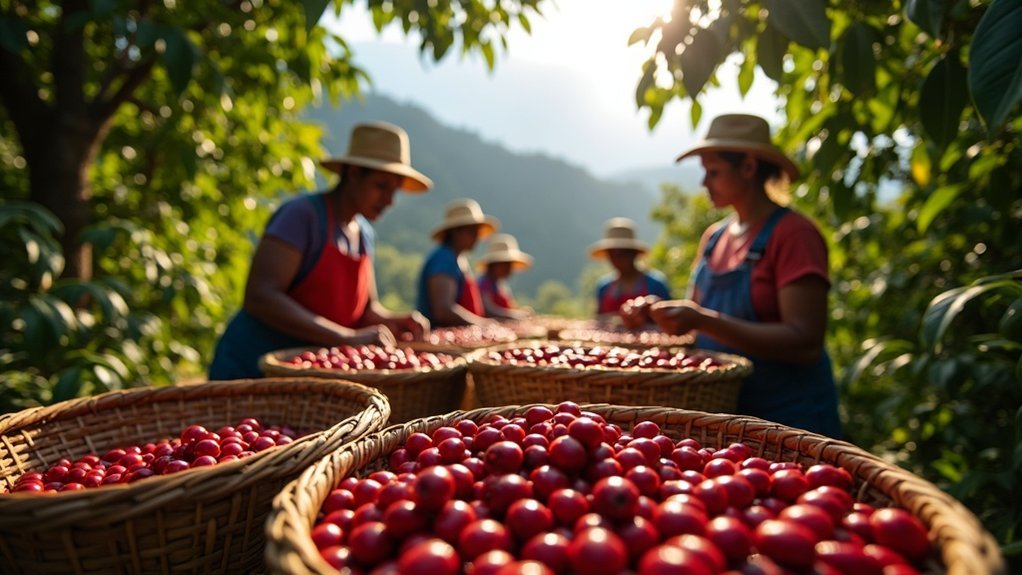
Cooperative coffee is a model that empowers small farmers by pooling resources for processing and price negotiation. This collective approach enhances infrastructure, boosts income, and promotes sustainable practices, all while ensuring fair trade standards. By working together, farmers gain better bargaining power and access to credit, leading to improved product quality. Choosing cooperative coffee not only supports growers but also enriches your coffee experience. Discover more about its benefits and impact on coffee-growing communities.
Key Takeaways
- Cooperative coffee is produced by small farmers who come together in cooperatives to enhance processing, pricing, and access to markets.
- These cooperatives improve farmer income through collective bargaining and provide vital resources such as training and credit.
- Cooperative coffee often emphasizes ethical sourcing, with Fair Trade certifications ensuring fair wages for farmers.
- Members of cooperatives benefit from shared resources, which help reduce costs and risks while boosting profits and investment opportunities in sustainable practices.
- Purchasing cooperative coffee not only strengthens local economies but also promotes community development through reinvestment in essential services.
Overview of Coffee Cooperatives
What makes coffee cooperatives an essential part of the coffee industry? Coffee co-ops centralize processing and price negotiation for small farmers, offering better infrastructure than they could afford individually.
By pooling resources, these cooperatives elevate bean quality and leverage collective bargaining power to secure higher prices. They charge a flat fee for processing, retaining part of the sale cost while advocating for growers in the complex global coffee market.
Furthermore, coffee co-ops provide access to training, seeds, and credit, greatly improving members’ operations and market reach, fostering a sense of community collaboration among small farmers in the coffee landscape.
Benefits of Cooperative Coffee
When you explore cooperative coffee, you’ll discover that it significantly boosts farmer income through collective bargaining power, which leads to fairer pricing.
These cooperatives also champion sustainable farming practices that benefit both the environment and the quality of the coffee.
Enhanced Farmer Income
Cooperative coffee significantly boosts farmer income by enabling them to collectively negotiate better prices for their beans.
Small coffee farmers reap the benefits of pooled resources, which help reduce farming and processing costs, ultimately leading to increased individual profits.
Access to credit and financial services through cooperatives empowers these farmers to invest in their operations, enhancing both production and income potential.
Additionally, cooperative models often guarantee fair trade coffees, ensuring farmers receive fair wages that directly improve their economic circumstances.
The reinvestment of profits into the community strengthens local economies, providing further financial benefits to farmers and their families, thereby enhancing their overall livelihoods.
Sustainable Farming Practices
While many coffee farmers face challenges in adopting sustainable practices, cooperative coffee offers a pathway to environmentally friendly farming.
By joining cooperatives, small coffee farmers gain access to training and resources that promote sustainable farming practices, such as organic methods and water conservation techniques specifically tailored for coffee cultivation.
Cooperatives also spearhead reforestation efforts, enhancing biodiversity in coffee-growing regions.
This pooling of resources enables farmers to invest in sustainable technologies that improve both the quality and yield of their coffee.
Ultimately, cooperatives foster an environment where small coffee farmers can thrive economically while committing to environmentally responsible practices that protect our planet for future generations.
Collective Bargaining Power
Joining forces through cooperative coffee not only promotes sustainable farming practices but also significantly enhances the collective bargaining power of small-scale coffee farmers.
By pooling resources, you can negotiate as a united front, securing higher prices for your coffee that often surpass market rates. This collective approach allows you to access shared financial resources, minimizing risks and improving the quality of your coffee production.
Moreover, cooperatives leverage their size to negotiate favorable contracts with buyers and enhance access to international coffee markets, bolstering profitability.
Ultimately, the collaborative nature of cooperatives fosters community support, empowering you to advocate for fair trade practices and sustainable coffee farming initiatives effectively.
Sustainable Practices in Coffee Cooperatives
In the quest for sustainability, coffee cooperatives play a pivotal role by championing organic farming methods that reduce chemical usage and enhance soil health. These efforts empower small coffee farmers to adopt sustainable practices, ensuring a healthier environment and quality coffee.
Coffee cooperatives champion organic farming, empowering small farmers to embrace sustainability for a healthier environment and premium coffee quality.
- Implementing water conservation strategies to protect local watersheds
- Engaging in reforestation to preserve biodiversity and improve coffee habitats
- Providing training on sustainable agriculture techniques tailored for coffee cultivation
- Facilitating access to financial services for investments in coffee production
- Promoting collective resources for improved productivity and market access
Through these initiatives, coffee cooperatives not only support the livelihoods of farmers but also contribute to the overall sustainability of the coffee industry.
Financial Advantages for Farmers
As a coffee farmer in a cooperative, you gain access to collective assets that enhance your ability to secure credit and financial services, reducing your individual borrowing risks.
This pooled approach not only strengthens your bargaining power against large coffee companies but also helps you negotiate better prices for your coffee.
Ultimately, these financial advantages contribute to a more stable and sustainable income for you and your community.
Access to Credit
While accessing credit can be a formidable challenge for individual coffee farmers, cooperative coffee farmers enjoy significant financial advantages through shared resources and collective bargaining.
By pooling resources, you can:
- Access low-interest loans, reducing your financial burden
- Share risks associated with borrowing, increasing loan security
- Invest in better coffee farming practices and infrastructure
- Negotiate better financing terms than what individual farmers might receive
- Enhance overall economic stability through increased income from better coffee prices
These benefits empower you as a coffee farmer, making it easier to thrive in a competitive coffee market.
Enhanced Bargaining Power
Accessing credit is just one aspect of the financial advantages that cooperative coffee farmers experience; enhanced bargaining power plays a crucial role in their success.
By collaborating with fellow farmers, you can negotiate better prices for your coffee, ensuring fair compensation for your hard work. Pooling resources allows you to access essential financial services, thereby reducing borrowing risks for necessary investments in your coffee production.
Additionally, sharing the risks associated with fluctuating market prices strengthens your resilience during economic challenges. This collective strength not only improves your negotiating position against large coffee companies but also boosts incomes, contributing to the economic stability of your coffee-growing community.
Quality Assurance and Sourcing Practices
Cooperative coffee sourcing focuses on building direct trade relationships with small farmers, ensuring fair pricing and exceptional quality through established connections between growers and roasters.
Here’s what makes it unique:
- Strong partnerships, such as those with the Monte Verde Café Association in Peru, promote sustainable farming practices.
- Certified ‘Q graders’ meticulously assess beans for acidity, body, flavor, and balance.
- Small-batch roasting techniques help preserve the quality and integrity of each coffee.
- Award-winning blends, recognized by Golden Bean awards, showcase our commitment to excellence.
- A diverse range of blends caters to seasonal preferences and underscores our dedication to fair trade practices.
This unwavering commitment to quality and direct trade nurtures a vibrant coffee community you can trust.
Types of Coffee Cooperatives
Understanding the various types of coffee cooperatives can deepen your appreciation for how coffee reaches your cup. Cooperatives range from large organizations to small farms focusing on niche markets. Micro-cooperatives spotlight unique flavor profiles and individual growers, while larger cooperatives may offer superior processing infrastructure. Here’s a comparison:
| Type of Cooperative | Focus Area | Key Feature |
|---|---|---|
| Large | Scale & Efficiency | Better processing facilities |
| Small | Unique Products | Personal relationships with growers |
| Micro | Distinct Flavors | Microlot programs |
| Regional | Local Sourcing | Community-centered initiatives |
| Specialty | Quality Diversity | Emphasis on ethical practices |
Each type influences flavor, quality, and ethical considerations in the coffee you enjoy.
Impact on Local Communities
While many enjoy their morning cup of coffee, the impact of cooperative coffee initiatives on local communities often goes unnoticed.
These cooperatives empower farmers to pool resources, ensuring fair wages and fostering community growth.
Key benefits include:
- Strengthening local coffee economies through fair payment practices.
- Reinvesting in essential services like education and healthcare for coffee-growing regions.
- Enhancing community involvement in the coffee industry via democratic governance.
- Promoting sustainable coffee farming, which protects local ecosystems.
- Providing access to training that improves skills and coffee quality, enhancing the overall coffee experience for consumers.
How to Support Cooperative Coffee
Supporting cooperative coffee not only enhances your morning ritual but also contributes to the well-being of coffee-growing communities.
To make a difference, purchase coffees from roasters that source directly from cooperative farms, ensuring your money supports small-scale farmers. Look for Fair Trade or direct trade certifications on packaging to confirm ethical sourcing.
Get involved in community events or fundraisers organized by local cooperatives, promoting farmer development. Share the benefits of cooperative coffee on social media to raise awareness.
Finally, consider joining a subscription service that prioritizes cooperative coffee, allowing you to discover diverse blends while consistently supporting farmer cooperatives.