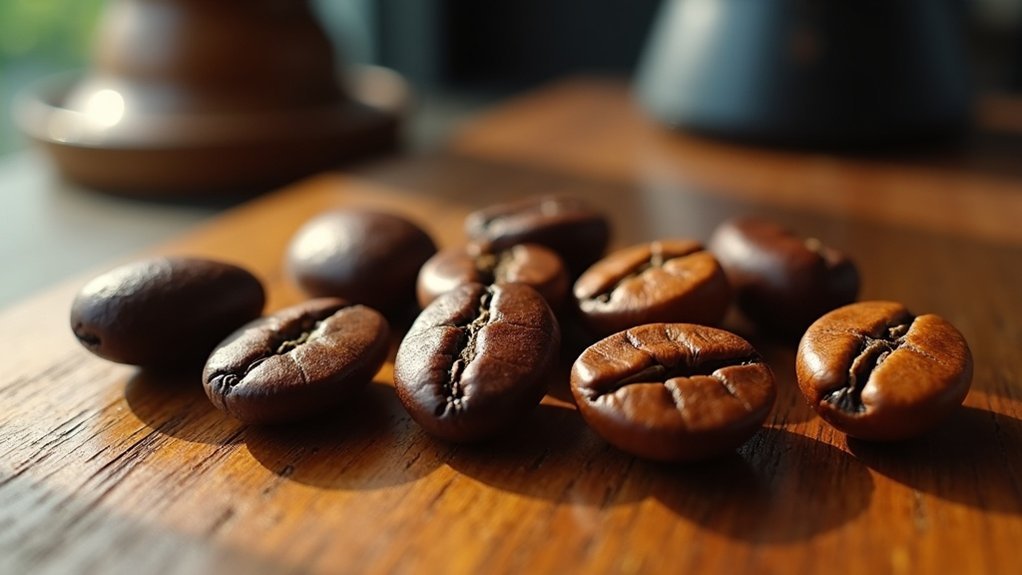
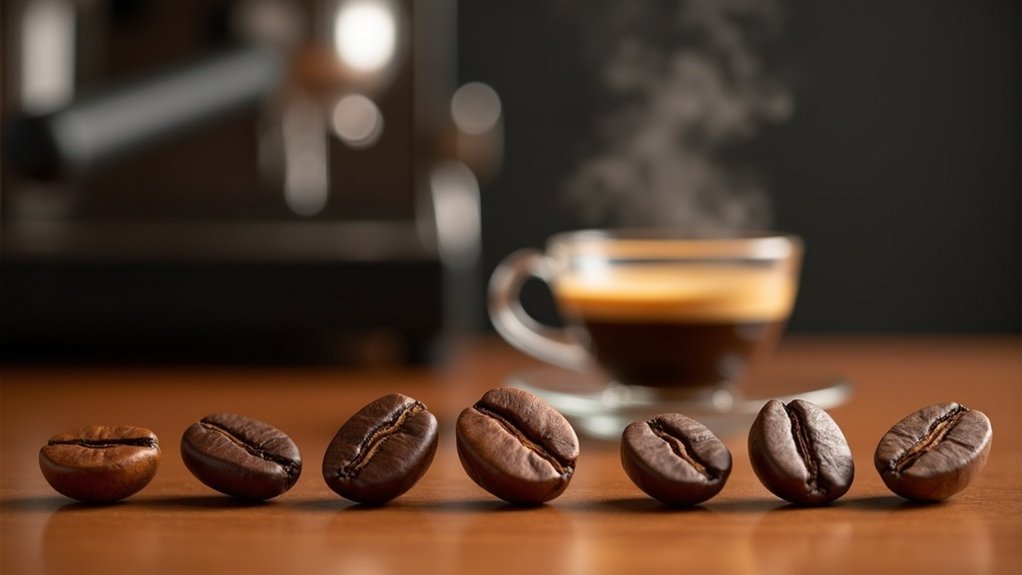
Espresso balance refers to the harmonious interplay of bitter and sour flavors that shapes your coffee experience. Personal preferences play a significant role in how individuals perceive this balance; some may prefer a more pronounced sourness, while others might gravitate towards a bolder bitterness. To achieve the ideal espresso balance, it’s essential to pay close attention to brewing techniques, grind size, and water quality. By mastering these elements, you can elevate your coffee enjoyment and minimize waste, resulting in a more satisfying cup. There’s a wealth of knowledge to uncover in the quest for that perfect brew.
Key Takeaways
- Espresso balance refers to the interplay between bitter and sour flavors in coffee, influencing the overall taste experience.
- Personal preferences vary, with some coffee enthusiasts favoring sourness while others lean towards bitterness in their espresso.
- Achieving balance involves careful brewing techniques, including grind size adjustment and monitoring extraction time between 25-30 seconds for optimal coffee flavor.
- Stirring post-extraction can enhance flavor harmony by blending bitter and sour notes for a more enjoyable cup of coffee.
- The quality of coffee beans and their freshness significantly impacts the flavor profile and overall balance of the espresso.
Understanding Espresso Balance
Understanding espresso balance is essential for crafting the perfect cup of coffee, as it hinges on the delicate interplay between bitter and sour flavors. This balance influences flavor extraction during the brewing process, determining what constitutes a great espresso.
Each coffee bean has a unique potential for these flavors, and personal preferences shape your perception of balance; some might relish bright, sour notes, while others favor a deeper bitterness.
Each coffee bean offers distinct flavor potentials, with personal tastes guiding our appreciation of balance between brightness and bitterness.
Techniques like stirring can enhance this balance, melding layers of flavor for a more harmonious coffee experience.
Ultimately, mastering espresso balance is akin to perfecting a coffee recipe, requiring attention to detail and a willingness to experiment.
The Role of Flavor Characteristics
Flavor characteristics play a pivotal role in shaping your coffee experience, as they influence how you perceive and enjoy each cup.
Achieving balance in coffee hinges on the interplay of bitter and sour flavors, where proper brewing techniques, such as adjusting grind size, enhance flavor extraction. A well-balanced coffee reveals sweetness behind sour notes, creating complexity.
Individual preferences also matter; you might prefer pronounced sour coffee flavors, reminiscent of unsweetened lemon juice, or a more harmonious profile.
Ultimately, understanding these flavor characteristics allows you to tailor your brewing approach to achieve your ideal coffee balance.
Brewing Techniques for Optimal Balance
How can you achieve the perfect balance in your espresso? Start by focusing on extraction time; aim for 25-30 seconds. Shorter times yield sour notes, while longer extractions can lead to bitterness.
Adjusting grind size is also essential; finer grinds enhance flavor extraction, but be mindful of maintaining sweetness and body through dose adjustments.
- Use high-quality water to improve overall flavor clarity and ensure a clean cup.
- Stir your espresso post-extraction to blend the bitter and sour layers effectively for a harmonious taste.
- Consider utilizing the Schectermatic cupping device for a deeper understanding of flavor stages, allowing you to refine your brewing technique.
The Importance of Coffee Bean Quality
The quality of your coffee beans is essential in shaping the espresso’s flavor and crema.
Factors like origin, freshness, and roast level greatly influence the final taste profile, each adding unique characteristics.
Understanding these elements helps you select the best beans for a balanced and satisfying cup of coffee.
Origin and Flavor Impact
While many factors contribute to the quality of espresso, the origin and characteristics of coffee beans play a pivotal role in shaping its flavor profile. Different regions impart unique notes; African beans often provide fruity flavors, while South American beans lean towards chocolatey undertones.
The roast level also greatly influences flavor extraction:
- Light roasts showcase the original taste of the beans
- Medium roasts balance the inherent and roasted flavors
- Dark roasts emphasize caramelization and bitterness
For the best flavor experience, it’s essential to ensure your coffee beans are fresh, ideally consumed within two to four weeks post-roasting, allowing their distinct characteristics to shine through.
Freshness and Storage Tips
To enjoy a truly exceptional espresso, understanding the importance of coffee bean freshness and proper storage is essential. Freshness significantly impacts the flavor and crema, so aim to consume your beans within two to four weeks post-roasting. Store them in an airtight container, away from light and heat, to maintain quality.
| Storage Tip | Impact |
|---|---|
| Airtight Container | Prevents oxygen exposure |
| Cool, Dark Place | Protects from light and heat |
| Consume Within 2-4 Weeks | Guarantees ideal flavor |
| Quality Beans | Enhances overall experience |
Prioritize these aspects for an outstanding espresso experience.
Roast Level Variations
Understanding roast level variations is essential for crafting the perfect coffee, as each level brings distinct flavor characteristics that can enhance or detract from your experience.
- Light roasts retain the original bean’s fruity notes, while dark roasts emphasize caramelization, adding bitterness.
- Freshness matters; use beans within two to four weeks post-roasting for ideal flavor.
- The roast level also influences crema quality, with lighter roasts yielding delicate crema and darker roasts producing thicker, robust crema.
Ultimately, the quality of beans, including their origin and roast level, is foundational for achieving a balanced cup of coffee that harmonizes bitter and sour components.
Grind Size and Its Impact on Extraction
Grind size plays a significant role in coffee extraction, impacting both flavor and consistency.
When you use a finer grind, you increase the surface area, allowing for faster extraction, while a coarser grind slows this process down.
Achieving the right balance is essential; unevenly ground coffee can lead to undesirable flavors, making precision in grind size critical for your perfect cup of coffee.
Grind Size Effects
While many factors contribute to brewing the perfect cup of coffee, the impact of grind size on extraction is crucial. The ideal grind size typically ranges from 200 to 800 microns, influencing both the speed and efficiency of flavor extraction.
Finer grinds increase surface area, promoting faster extraction, while coarser grinds can lead to unsatisfactory results. Consistent grind size is essential for quality control, as uneven grounds produce variable flavors.
Keep these key points in mind:
- Over-extraction can result in bitterness.
- Under-extraction may lead to sourness.
- Adjust grind size based on bean type and roast level.
Mastering grind size is vital for achieving coffee perfection.
Consistency and Extraction
Achieving a balanced espresso requires meticulous attention to consistency in grind size, as even minor variations can dramatically influence extraction quality. A consistent grind size guarantees uniform flavor extraction, avoiding the pitfalls of over-extraction or under-extraction.
| Grind Size | Extraction Quality | Flavor Profile |
|---|---|---|
| Too Coarse | Under-extracted | Sour, weak |
| Ideal (Table Salt) | Best | Rich, balanced |
| Too Fine | Over-extracted | Bitter, harsh |
Regular maintenance of your grinder is essential to ensure a consistent grind size, allowing your coffee grounds to interact perfectly for the best espresso experience. Enjoy the journey of crafting the perfect cup of coffee!
Measuring and Adjusting Dose
To ensure your espresso achieves the ideal balance of strength and flavor, precise measurement of the coffee dose is crucial. The standard dosage for a double shot usually ranges from 18 to 21 grams.
Precise measurement of your coffee dose is vital for achieving the perfect espresso balance, typically between 18 to 21 grams for a double shot.
Here are some important points to consider:
- Accurate measurement of the dose helps prevent weak or bitter espresso.
- Making adjustments based on the type of beans and their roast level can enhance flavor extraction.
- Utilizing a scale enables consistent results and minimizes waste.
Enjoy crafting the perfect cup of coffee!
Water Quality and Temperature Considerations
When it comes to brewing espresso, the quality and temperature of your water are essential to achieving the perfect cup. Water makes up 98% of your espresso, so its quality directly influences flavor extraction. The right mineral content can enhance balance, while hard water may introduce unwanted bitterness.
For optimal flavor extraction, aim for a water temperature between 195°F and 205°F (90°C to 96°C). This range helps prevent burning the coffee grounds and ensures consistency in water temperature, which leads to a well-balanced espresso shot.
Additionally, impurities in water can overshadow the coffee’s natural flavors, so it’s best to use filtered or specially formulated water for the finest results.
Personal Preferences and Taste Evolution
While many factors contribute to your coffee experience, personal preferences and evolving tastes play a pivotal role in how you perceive the balance of flavors.
As you explore various brewing techniques, your understanding of flavor extraction deepens, allowing you to appreciate nuances between bitter and sour notes.
Exploring brewing techniques enhances your flavor extraction skills, revealing the delicate balance between bitter and sour notes.
- Experiment with different coffee blends to discover your ideal flavor balance.
- Track your taste evolution to see how your preferences shift over time.
- Engage in conversations with fellow coffee enthusiasts to broaden your palate.
This journey shapes your unique appreciation of coffee, highlighting the interplay of flavors that define your coffee experience.