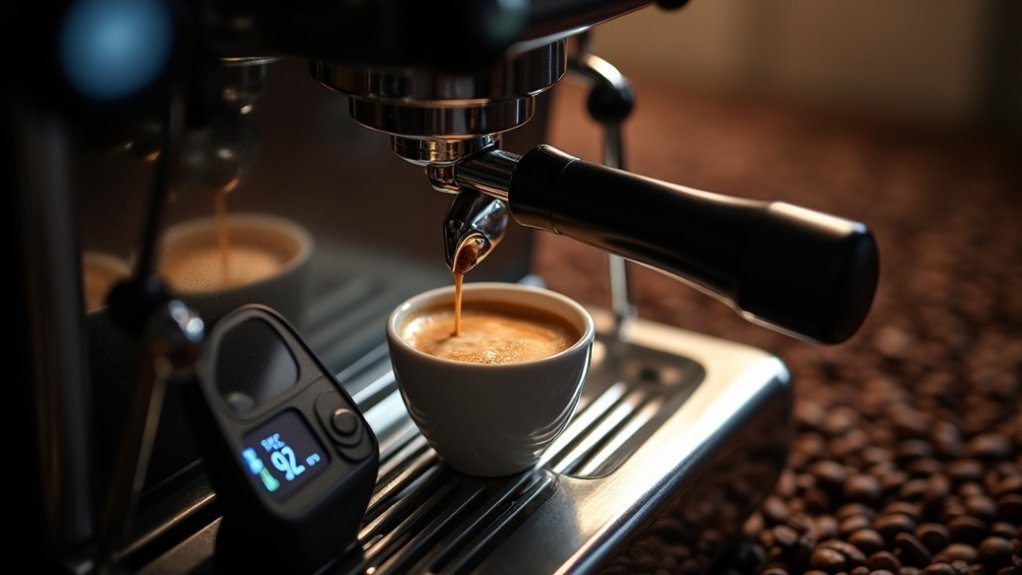
Espresso brewing temperature is critical for achieving the perfect cup of coffee, typically ranging from 90°C to 96°C (194°F to 205°F). At these temperatures, you can optimize extraction and enhance flavor profiles in your brew. Higher temps may add bitterness, while lower temps could lead to sourness, especially with light roasts. Mastering temperature control guarantees consistent quality, whether you’re brewing at home or in a café. There’s plenty more to explore about how temperature impacts your overall coffee experience!
Key Takeaways
- The ideal brewing temperature for espresso ranges from 90°C to 96°C (194°F to 205°F) for optimal extraction, ensuring you enjoy the full flavor profile of your coffee.
- While higher temperatures can enhance extraction, they may also introduce unwanted bitterness, affecting the overall taste of your espresso.
- Maintaining consistent temperature control is essential for preserving the quality and flavor of your espresso coffee.
- Preheating the portafilter and cups is a helpful practice to reduce heat loss during the brewing process, enhancing your coffee experience.
- Espresso machines equipped with PID technology provide stable temperature management, leading to perfect results every time you brew your coffee.
The Importance of Brewing Temperature in Espresso
When brewing espresso, it’s vital to understand how temperature affects flavor extraction, as even a slight variation can alter your cup dramatically.
The ideal brewing temperature typically ranges from 90°C to 96°C (194°F to 205°F). Higher brewing temperatures can enhance extraction but may result in bitterness, while lower temperatures risk a sour flavor.
The perfect brewing temperature for espresso is crucial, balancing extraction and flavor to avoid bitterness or sourness.
Dark roasts thrive at lower temperatures (195°F to 198°F), avoiding undesirable bitterness, whereas light roasts shine at higher temps (202°F to 205°F), emphasizing bright acidity.
Using precise temperature control in espresso machines, such as PID technology, is important for achieving consistently outstanding espresso from your coffee beans.
Ideal Temperature Ranges for Different Roast Levels
When brewing espresso, temperature plays a crucial role, particularly across various roast levels.
For dark roasts, it’s best to use lower temperatures to prevent bitterness, while lighter roasts benefit from higher temperatures that highlight their brightness.
Grasping these nuances allows you to create the perfect cup, customized to the distinct characteristics of each coffee blend.
Dark Roast Temperature Guidelines
Although dark roasts may seem intimidating due to their bold flavors, brewing them at the right temperature can make all the difference in your coffee experience.
Aim for lower temperatures, ideally between 195-198°F (90-92°C), to highlight the deep chocolate notes while avoiding bitterness. Brewing above 205°F (96°C) risks over-extraction, leading to a burnt taste that masks the roast’s richness.
Aiming for around 201°F (94°C) strikes a balance, enhancing sweetness and body. Consistently monitoring your brewing temperature is essential, as even slight fluctuations can greatly impact the extraction quality and overall flavor profile of your dark roasts.
Light Roast Temperature Recommendations
Brewing light roasts requires a different approach compared to their darker counterparts. These coffees thrive at higher brewing temperatures of 202-205°F (94-96°C). This range enhances their vibrant acidity and complex flavor profiles while avoiding under-extraction, which can lead to sour or weak flavors. It’s essential to monitor brewing temperatures closely, as even slight fluctuations can greatly affect your cup. Experimenting with temperature adjustments within this range can help tailor the extraction and highlight unique flavor nuances.
| Temperature Range | Flavor Outcome |
|---|---|
| 202°F (94°C) | Bright acidity, balanced |
| 203°F (95°C) | Enhanced sweetness |
| 204°F (96°C) | Rich body and complexity |
| 205°F (96°C) | Ideal extraction |
Optimal Temperatures for Blends
How can you ensure your coffee blends reach their full potential? Understanding the ideal brew temperature for various roasting levels is essential. Here’s a quick guide:
- Darker roasts: Brew at 195-198°F (90-92°C) to enhance chocolate notes and minimize bitterness.
- Medium roasts: Aim for around 201°F (94°C) for a balanced sweetness and acidity.
- Light roasts: Use higher temperatures of 202-205°F (94-96°C) to highlight bright acidity.
- Blends: Traditional espresso blends thrive at 199-201°F, while modern specialty blends excel at 201-203°F.
How Temperature Affects Extraction and Flavor
Understanding the ideal brewing temperature is vital for achieving the perfect espresso, as it directly influences both extraction and flavor.
The best brewing temperatures range from 90-96 °C (194-205 °F), significantly affecting the quality of extraction and the flavor profile of your coffee. Higher temperatures can enhance extraction yields, pulling more coffee solids, but can also introduce bitterness if they exceed 205 °F.
The ideal brewing temperature, 90-96 °C, crucially influences coffee extraction and flavor, balancing yield and bitterness.
Dark roasts thrive at lower temperatures (195-198 °F) to highlight delicate notes, while light roasts flourish at higher temperatures (202-205 °F) for bright acidity.
Even a one-degree shift can markedly alter taste, making precise temperature control essential for properly extracted shots and a delightful coffee experience.
Temperature Control in Home Espresso Machines
Achieving the perfect espresso at home requires effective temperature control, as even slight variations can significantly impact the flavor and quality of your brew.
To ensure ideal brewing temperatures for your coffee, consider these key points:
- Opt for home espresso machines featuring PID technology for stable temperature management.
- Regularly maintain and calibrate your machine to avoid fluctuations in temperature.
- Preheat your portafilter and cups to reduce heat loss during the brewing process.
- Aim for a brewing temperature between 90-96 °C (194-205 °F) for optimal extraction of flavors in your coffee.
Challenges of Temperature Management in Coffee Shops
Maintaining consistent brewing temperatures in coffee shops presents unique challenges that can significantly impact espresso quality.
Temperature is a crucial factor in crafting the perfect espresso, yet environmental changes such as weather fluctuations and sunlight exposure can disrupt the brewing process.
With multiple group heads in use, baristas often depend on technicians for adjustments, which can lead to inconsistencies in the final product.
Regular maintenance is vital to prevent temperature drift, particularly in high-volume settings.
While many coffee shops prioritize variables like coffee dosage and grind size, achieving exceptional espresso without stable temperature control becomes increasingly difficult.
Consistency is essential for delivering the perfect cup of coffee.
Techniques for Achieving Optimal Brewing Temperature
When it comes to brewing the perfect espresso, controlling the temperature is key to revealing the full flavor potential of your coffee.
Here are some techniques to achieve the ideal brewing temperature:
- Utilize dual boiler machines equipped with PID technology to ensure precise temperature control.
- Preheat the brew group, portafilter, and cups to reduce heat loss during the extraction process.
- Regularly check and calibrate your machine’s temperature settings, as even minor adjustments can significantly impact the flavor of your brew.
- Take into account the roast level of your fresh roasted beans; darker roasts are best brewed at around 195-198 °F, while lighter roasts excel at 202-205 °F, enhancing their sweetness and acidity.