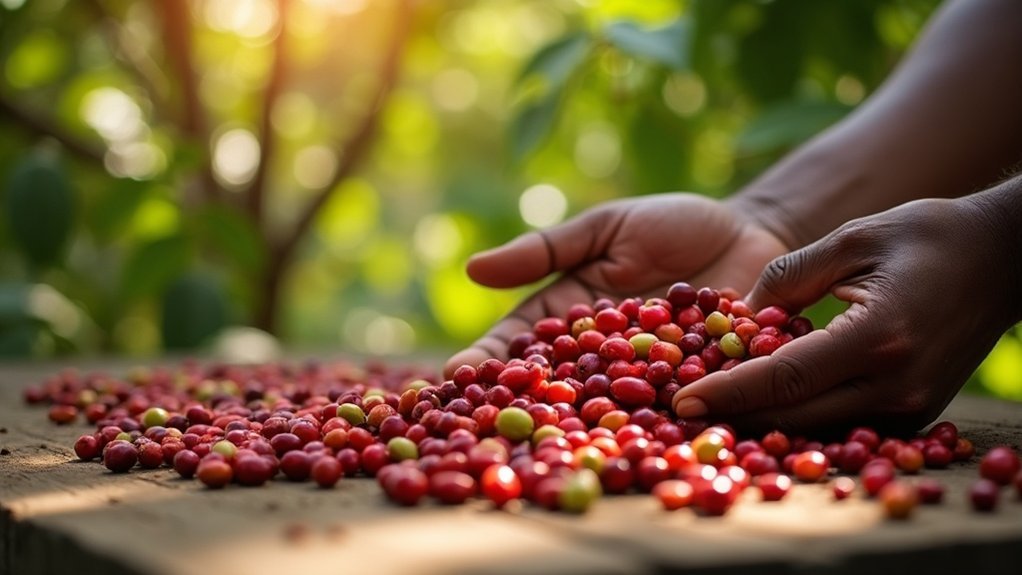
Hand sorting coffee involves meticulously inspecting each bean for imperfections, ensuring that only the highest quality beans reach consumers. This labor-intensive process is crucial for specialty coffee, significantly influencing its flavor and quality. Often, women lead this effort, preserving local traditions and supporting their communities. Although it is time-consuming and demands considerable labor, the careful attention to detail enhances the overall value of the product. Explore how hand sorting not only affects the culture but also the economics within the coffee industry.
Key Takeaways
- Hand sorting coffee is a meticulous technique where each bean is carefully examined for defects, ensuring high quality in every cup.
- This process is vital for specialty coffee, as it prevents defective beans from negatively impacting flavor profiles.
- In many coffee-producing regions, women often spearhead hand sorting efforts, highlighting local craftsmanship and cultural heritage.
- Hand sorting not only emphasizes quality but also supports local economies by creating job opportunities and fostering community connections through collaborative practices.
- This method underscores the importance of quality assurance in coffee production, linking generations and preserving time-honored traditions.
Definition of Hand Sorting
Hand sorting is a meticulous coffee processing technique that involves individuals inspecting each coffee bean to remove any defects. This labor-intensive method serves as an essential quality control measure, particularly in specialty coffee markets.
Often performed by women at coffee mills, hand sorting ensures that only the finest beans reach consumers. As you observe the process, you’ll see workers examining beans on conveyor belts or tables, meticulously eliminating small, broken, discolored, or otherwise unsatisfactory ones.
Purpose of Hand Sorting
The primary purpose of hand sorting in coffee production lies in maintaining the integrity of coffee quality by meticulously removing defective beans that could compromise flavor and the overall coffee experience.
This process ensures that only high-quality beans are included, which is particularly important for specialty coffee that demands higher standards than commercial varieties.
Even a few defective beans can greatly alter the coffee’s flavor profile, making this careful selection a critical final step before packaging.
Importance in Specialty Coffee
While many factors contribute to the exceptional quality of specialty coffee, hand sorting stands out as an essential process that directly influences the final product. This meticulous method ensures that only the highest quality beans are selected, preventing defective beans from adversely affecting flavor profiles. Hand sorting acts as a crucial quality control step, enhancing the perceived value of specialty coffee. As consumers become increasingly discerning about quality measures, hand sorting—often used alongside optical sorting—reinforces the premium nature of these products.
| Quality Control | Impact on Flavor | Market Value |
|---|---|---|
| Hand Sorting | Preserves purity | Higher prices |
| Defect Removal | Enhances taste | Consumer trust |
| Final Step | Maintains standards | Brand reputation |
Global Practices in Hand Sorting
When exploring global practices in hand sorting coffee, you’ll notice a variety of techniques that reflect local traditions and cultural significance.
Each region employs specific methods to ensure the removal of defective beans while maintaining quality standards.
Understanding these practices not only highlights the craftsmanship involved but also underscores the importance of cultural heritage in the specialty coffee industry.
Hand Sorting Techniques Worldwide
Hand sorting coffee beans is a critical practice employed worldwide, ensuring that only the highest quality beans reach coffee enthusiasts. This labor-intensive sorting technique involves meticulously examining each green coffee bean for defects, which is particularly essential for achieving the standards of specialty markets.
In countries like Burundi, women often lead this effort, gaining crucial economic support for their families. Although mechanized sorting exists, hand sorting maintains cultural significance and provides local workers with necessary employment.
Ultimately, this method enhances the quality of both wet-processed and dry-processed coffees, solidifying its importance in the coffee industry.
Cultural Significance in Sorting
Cultural significance in coffee sorting reflects the unique practices and values of coffee-growing regions around the world. Hand sorting coffee beans is more than just a quality control measure; it embodies local traditions and communal ties. In various regions, women mainly engage in this work, gaining financial independence and supporting their families.
| Country | Cultural Practice |
|---|---|
| Colombia | Family-led sorting |
| Ethiopia | Community gatherings |
| Brazil | Festival-oriented sorting |
| Guatemala | Traditional methods |
These diverse approaches highlight the essential role of hand sorting in preserving cultural identity and ensuring exceptional coffee quality. At the heart of each cup of coffee is a story shaped by the unique cultural practices of its origin.
Labor and Time Considerations
Hand sorting coffee is a time-intensive process that requires significant labor input, as each bean must be scrutinized for quality defects.
The economic implications are stark; with workers earning around 2,000 Burundian Franc per day, their compensation reflects the challenging conditions of this essential task.
While the labor costs are considerable, the meticulous nature of hand sorting is crucial for ensuring that only the highest quality coffee reaches the market, ultimately enhancing the overall coffee experience for consumers.
Time-Intensive Process
Although many coffee processing methods exist, the time-intensive nature of hand sorting stands out due to its meticulous attention to detail.
This labor-intensive process requires dedicated teams to carefully examine each coffee bean, removing damaged, unripe, and over-fermented ones to ensure a top-quality output. Workers sit at sorting tables for long hours, earning roughly 2,000 Burundian Franc daily—less than a dollar.
Their focus and precision are vital, as even a few defective beans can compromise the overall flavor profile of the coffee. While labor costs are significant, hand sorting is indispensable for achieving the high standards expected in specialty coffee markets.
Labor Cost Implications
While the meticulous nature of hand sorting coffee ensures exceptional quality, it also introduces significant labor cost implications that must be taken into account. With a workforce of 335 individuals at the Dry Mill, the labor-intensive process results in daily wages of approximately 2,000 Burundian Francs, presenting economic challenges for workers. The thorough inspection of each coffee bean for defects is a time-consuming task that directly influences labor costs. Ultimately, the economic viability of hand sorting coffee is contingent upon market demand and the sizes of the harvest.
| Factor | Impact |
|---|---|
| Labor Force Size | 335 individuals employed |
| Daily Wage | ~2,000 Burundian Francs |
| Time Requirement | High |
| Quality Assurance | Essential for premium quality |
Mechanization vs. Hand Sorting
When comparing mechanization to hand sorting in coffee processing, it becomes clear that each method has its distinct advantages and drawbacks. Consider these factors:
- Hand sorting guarantees high-quality standards by removing defective beans, ensuring only the best coffee reaches consumers.
- Mechanization can lead to job displacement in local communities, impacting livelihoods in coffee-growing regions.
- Specialty coffee markets, known for their emphasis on quality, often demand meticulous hand sorting to meet high standards.
- Hand sorting supports communal and traditional values in coffee-growing regions, preserving cultural practices and fostering community ties.
- While mechanization offers efficiency and speed in processing, hand sorting fosters social interaction among workers, creating a sense of camaraderie.
Ultimately, while mechanization can streamline processes and increase output, hand sorting remains essential for maintaining quality and supporting community sustainability in the coffee industry.
Economic and Cultural Impacts
Hand sorting coffee not only enhances the quality of the beans but also plays a significant role in the economic and cultural fabric of coffee-growing communities.
In Burundi, for instance, 320 out of 335 hand sorters are women, underscoring the vital employment opportunities that this practice provides. It supports families and communities in regions where jobs are scarce.
Moreover, the communal values in these areas prioritize hand sorting over mechanization, fostering social interaction and preserving local traditions. This labor-intensive process directly contributes to the local economy while ensuring the quality of specialty coffee.
Initiatives like the Coffee Heritage Project emphasize community involvement, reinforcing the cultural significance of hand sorting within the coffee supply chain.