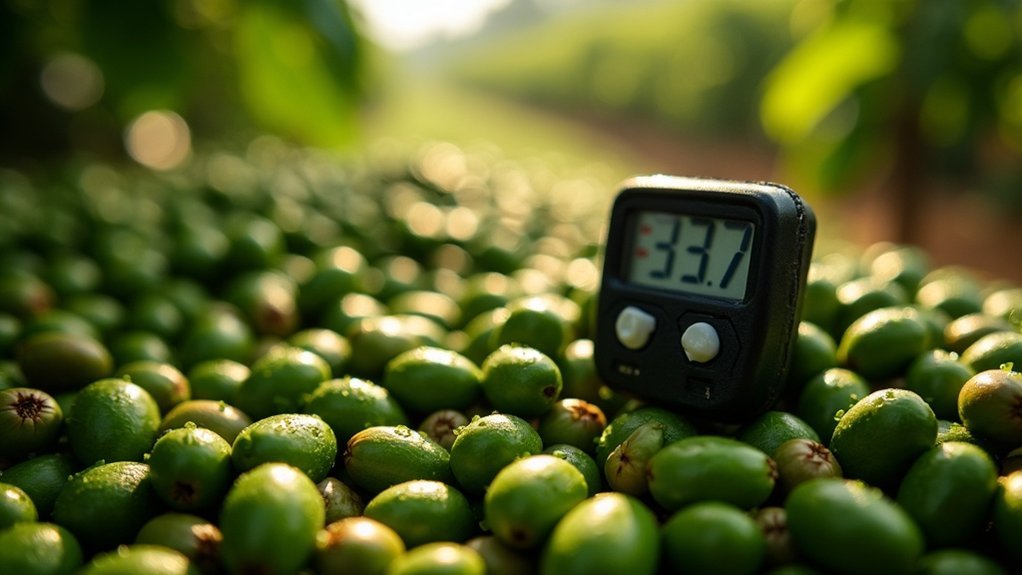
Moisture content in green coffee refers to the percentage of water in the beans, which directly impacts their flavor and quality. Ideally, moisture levels should be maintained between 10% to 12.5%. If levels exceed 13%, there is a risk of mold growth and off-flavors, while anything below 9% can result in flat-tasting coffee. Accurate measurement of moisture content is crucial, with methods ranging from traditional oven drying to advanced electric analyzers. Understanding these factors is essential for maintaining the integrity and flavor profile of your coffee beans.
Key Takeaways
Moisture content in green coffee refers to the percentage of water present in the beans, which significantly impacts flavor and quality. The ideal moisture levels for processed beans range from 8% to 12.5%, while freshly harvested beans can start with moisture levels between 45% and 55%. High moisture levels exceeding 13% can promote mold growth and lead to undesirable off-flavors, while low moisture levels below 9% can result in flat-tasting coffee.
Accurate measurement of moisture content is crucial for maintaining quality, and various methods such as oven drying, electric analyzers, or the Karl Fischer technique are commonly used for this purpose. Additionally, implementing proper storage practices, such as utilizing airtight containers, helps preserve optimal moisture levels and maintain the overall quality of green coffee.
What Is Moisture Content in Coffee?
Moisture content in coffee is crucial for determining the quality and flavor profile of your brew. It refers to the percentage of water in green coffee beans, which ideally ranges from 8% to 12.5% after processing.
Moisture content, ideally between 8% and 12.5%, is essential for the quality and flavor of your coffee brew.
Freshly harvested beans can have moisture levels starting at 45% to 55%, requiring drying to prevent excess moisture that can lead to mold growth and fermentation.
On the other hand, moisture levels below 10% can dull flavor characteristics, negatively impacting overall coffee quality.
Proper storage conditions are vital to maintaining this ideal moisture content, ensuring that your coffee retains its vibrant flavors and provides a safe, enjoyable drinking experience.
Importance of Measuring Moisture Content in Green Coffee
Understanding the significance of measuring moisture content in green coffee is crucial for everyone involved in the coffee supply chain.
Accurate moisture measurement greatly influences quality. Here are some key reasons to consider:
- Ensures optimal roasting conditions for rich flavor development.
- Maintains ideal moisture levels (8%-12.5%) to prevent defects in the beans.
- Detects defects in batches, thereby improving quality control.
- Employs both traditional oven drying and modern moisture analyzers for enhanced precision.
- Addresses the hygroscopic nature of coffee, ensuring consistent quality during transport and storage.
Ideal Moisture Levels for Green Coffee Beans
Maintaining the right moisture levels in green coffee beans is crucial for achieving the best quality during roasting. The ideal moisture levels range from 8% to 12.5%, with 10-12% being the sweet spot for preserving quality.
Freshly harvested beans typically start with a moisture content of 45%-55%, which should decrease to around 11% for optimal flavor development. Excess moisture above 13% can lead to mold growth and fermentation, while levels below 9% may result in a flat tasting coffee.
For specialty roasters, regular measurement of moisture content is vital to ensure consistent roasting profiles and high-quality results. Achieving these moisture levels is key to successful coffee production.
Methods for Measuring Green Coffee Moisture Content
Accurate measurement of moisture content in green coffee beans is essential for ensuring ideal roasting conditions. Here are several methods available for coffee enthusiasts and professionals:
- Traditional Oven Drying: This classic method involves baking beans at 105°C for 24 hours to measure weight loss, providing a reliable measure of moisture removal.
- Electric Moisture Analyzers: These modern devices automate the moisture measurement process, delivering quick and real-time results, making them convenient for busy coffee roasters.
- Capacitance Metering: A portable solution priced around $300, this method is perfect for on-site assessments, allowing coffee producers to gauge moisture levels directly at the source.
- Relative Humidity Assessment: A cost-effective approach that utilizes sealed bags to measure moisture, though it does require calibration to ensure accuracy.
- Karl Fischer Method: This laboratory technique offers the highest precision for measuring moisture content, making it crucial for quality control in coffee production.
Each of these methods has its unique advantages, allowing for effective measurement of moisture content in green coffee, which is vital for achieving the best roasting results.
Factors Influencing Coffee Moisture Content
When you consider the moisture content in green coffee, environmental conditions and processing techniques are pivotal.
The climate and altitude during harvest can greatly affect the initial moisture levels, while how the beans are processed—such as whether they’re natural or washed—further influences moisture retention.
Understanding these factors is essential for maintaining the quality of coffee and preventing issues like mold growth or flat flavors.
Environmental Conditions Impact
Environmental factors significantly influence the quality of green coffee beans, particularly through their effects on humidity, temperature, and rainfall. Understanding these impacts is crucial for maintaining optimal moisture content.
Here are some key influences:
- Humidity: Elevated humidity levels can increase the moisture content of coffee beans during storage.
- Temperature: Variations in temperature may enhance moisture absorption in the beans.
- Rainfall: Excessive rainfall during the growing season can lead to higher moisture retention in the beans.
- Processing Method: Natural processing tends to retain more moisture compared to washed processing methods.
- Storage Conditions: Poor storage conditions can result in mold growth if the moisture content exceeds 12%.
These factors highlight the necessity of managing moisture levels to ensure the best quality preservation of coffee beans.
Processing Techniques Variability
Processing techniques play an essential role in determining the moisture content of green coffee beans, as each method introduces unique variables that directly influence retention and evaporation rates.
For instance, washed processing yields lower moisture levels due to thorough washing, while natural processing often results in higher moisture retention.
The drying phase is vital; sun-drying can lead to greater moisture retention if not monitored properly.
Additionally, the honey method retains some mucilage, causing variable moisture levels.
Environmental factors like temperature and humidity further contribute to fluctuations in moisture, underscoring the complexity of achieving ideal moisture content in coffee processing.
This intricacy is crucial for coffee enthusiasts and professionals aiming to enhance the flavor and quality of their brews.
Risks Associated With Improper Moisture Levels
Improper moisture levels in green coffee can lead to significant risks, such as mold development and fermentation.
High moisture content encourages mold growth, which not only compromises the flavor but also introduces health hazards from mycotoxins.
Conversely, low moisture can make beans brittle, diminishing aroma and flavor complexity, ultimately affecting the quality of your brew.
Maintaining the right moisture levels is essential for preserving the integrity and quality of your coffee.
Mold and Fermentation Risks
When the moisture content of green coffee exceeds 12%, the risk of mold and fermentation significantly increases, jeopardizing both the flavor and safety of the beans.
Effective moisture management is essential to alleviate these risks. Keep in mind the following:
- Excessive mold growth can result in undesirable off-flavors.
- Fermentation can lead to sour or overly fruity taste profiles.
- Mycotoxins, produced under these conditions, pose serious health hazards.
- Quality deteriorates with higher moisture levels.
- Keeping moisture levels within the ideal range of 10-12% ensures optimal storage conditions for your coffee.
Flavor and Aroma Loss
Maintaining ideal moisture levels in green coffee is essential for preserving the intricate balance of flavors and aromas that define a high-quality brew.
High moisture content, exceeding 12%, can foster mold growth, which introduces off-flavors that detract from the coffee experience. Conversely, low moisture content below 10% results in flat coffee, stripping away essential volatile compounds that are critical for aroma and flavor complexity.
Proper moisture control, ideally maintained between 10-12.5%, is fundamental for enhancing coffee quality. During the roasting process, moisture loss facilitates flavor development; however, improper moisture levels can produce undesirable baked or grassy notes, greatly affecting your overall tasting experience.
Tips for Maintaining Optimal Moisture Content in Green Coffee
To preserve the quality and flavor of green coffee beans, it’s essential to manage their moisture content effectively. Here are some tips to maintain ideal levels:
To preserve the quality and flavor of green coffee beans, effectively managing moisture content is crucial.
- Store beans in airtight, hermetic bags or lined containers to prevent moisture ingress.
- Regularly monitor moisture content with a moisture meter, aiming for the optimal range of 10-12%.
- Maintain stable storage environments with controlled temperature and humidity levels to avoid fluctuations.
- Inspect and test moisture content before each roasting batch, making adjustments as needed for consistency.
- Invest in durable packaging materials that safeguard against humidity, enhancing shelf life.
Adhering to these practices ensures your green coffee retains its desirable qualities and flavor consistency.