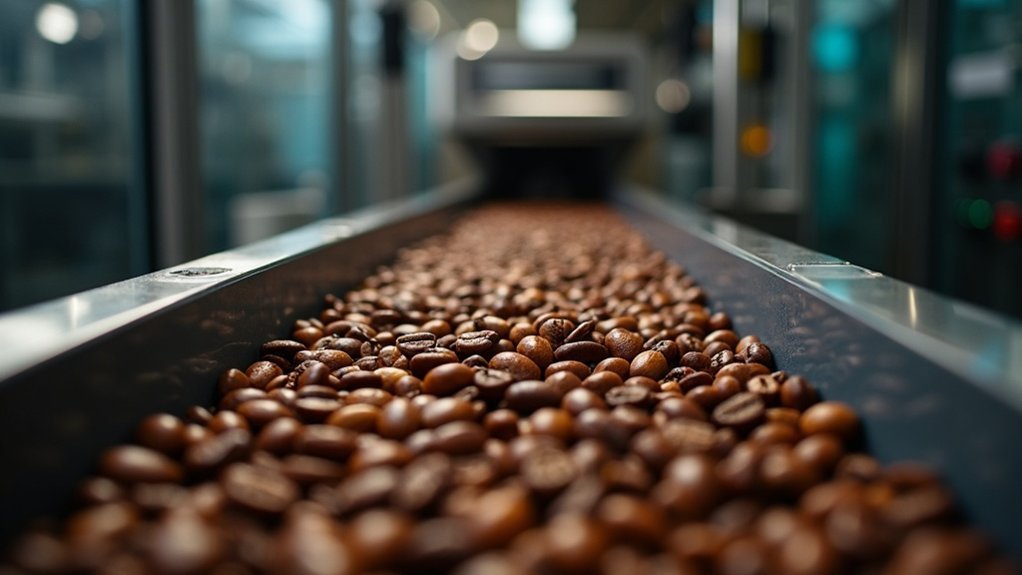
Optical sorting in coffee employs cutting-edge cameras and sensors to automate the evaluation and separation of beans based on their color, size, and shape. This innovative technology effectively removes undesirable beans, such as quakers, which can negatively influence flavor and overall quality. By utilizing pressurized air blasts, defective beans are swiftly eliminated, ensuring a consistent quality throughout the processing stage. Furthermore, the integration of machine learning enhances sorting efficiency and minimizes the risk of discarding good beans. Explore how this advanced technique is transforming coffee quality and influencing the practices of roasters.
Key Takeaways
- Optical sorting in coffee employs cutting-edge cameras and sensors to assess beans based on their color, size, and shape.
- This innovative technology automates the elimination of unwanted beans, significantly enhancing both the quality and flavor profiles of coffee.
- A key focus of optical sorting is the removal of quakers—immature beans that can detrimentally affect taste and visual appeal.
- By using optical sorters, the presence of quakers can be reduced by as much as 97%, leading to improved overall cup scores.
- This advanced sorting process boosts efficiency and consistency in coffee processing, offering a superior alternative to traditional manual sorting methods.
Overview of Optical Sorting Technology
Optical sorting technology is transforming the coffee industry by automating the sorting process with cutting-edge cameras and sensors. This technology carefully evaluates coffee beans based on their color, size, and shape, which ensures rigorous quality control.
By using optical sorters, coffee producers can effectively eliminate undesirable beans, such as quakers, that negatively impact flavor profiles. A significant milestone was reached in 2018 when Counter Culture Coffee introduced innovative post-roast sorting methods.
Leading systems like Bühler Sortex and Satake Optical Sorter play a crucial role in sorting both roasted and unroasted green coffee, improving the overall value and consistency of the final product while upholding the highest quality standards.
The Role of Optical Sorters in Coffee Processing
In the world of coffee processing, advanced sorting technology is crucial for maintaining high quality and consistency. Optical sorters employ sophisticated cameras and sensors to quickly identify and remove defective beans, including quakers. This innovative process significantly improves the overall quality of coffee by using pressurized air blasts to eliminate undesirable beans. A prime example of this technology in action is Counter Culture Coffee’s implementation of post-roast optical sorting. It’s important to properly tune the sorting machines, as incorrect settings can negatively affect the quality of the final product.
| Aspect | Impact |
|---|---|
| Speed | Rapid identification |
| Efficiency | 97% reduction in quakers |
| Quality Control | Enhanced flavor consistency |
Understanding Quakers and Their Impact on Quality
Defective beans, particularly quakers, present a notable challenge in the realm of coffee quality. These immature beans lack sufficient sugar, resulting in a yellow or tan appearance during roasting that adversely affects flavor.
The presence of even one yellow quaker can decrease cup scores by one point, while a higher proportion of pseudo-quakers may lower scores by as much as three-quarters of a point. To combat this issue, optical sorting technology is employed to specifically target these undesirable beans, with the goal of achieving a 97% reduction in quakers, thereby enhancing the consistency and flavor of roasted coffee.
However, care must be taken during the sorting process, as over-sorting could lead to the unintended removal of desirable beans. Striking the right balance is essential to preserve overall quality while minimizing defects in the final product.
Advantages of Optical Sorting for Coffee Roasters
Optical sorting technology significantly improves the quality of your coffee by effectively eliminating defective beans and quakers, resulting in enhanced flavor profiles and higher cup scores.
Additionally, integrating these systems increases processing efficiency, as automated sorting surpasses manual methods in both speed and accuracy.
With the potential to reduce undesirable beans by up to 97%, your roasting process becomes more precise, ensuring that only the finest quality coffee reaches your customers.
Enhanced Quality Assurance
While traditional sorting methods in coffee roasting often leave room for error, integrating advanced optical sorting technology can significantly enhance quality assurance in your coffee production.
These optical inspection systems effectively identify and remove defective beans, such as quakers and foreign objects, ensuring a more consistent and superior product. With a remarkable 97% reduction in quakers, you’ll experience improved consistency and flavor in every cup of coffee.
Specialty roasters have embraced this technology after the roasting process, further strengthening quality assurance. Additionally, the use of machine learning in these sorting systems optimizes performance, reducing the risk of discarding desirable beans and ultimately enhancing your coffee’s purity and market value.
Increased Processing Efficiency
As coffee roasters strive to enhance their operations, incorporating cutting-edge sorting technology can significantly boost processing efficiency. Automated optical sorting facilitates the rapid removal of defective beans, ultimately increasing your production capacity. This state-of-the-art technology can achieve a throughput of over 35 metric tons per hour without compromising product quality. The sophisticated AI algorithms utilized ensure precise sorting, leading to a 97% reduction in undesirable quakers, which improves both flavor and market pricing. By minimizing the reliance on extensive manual labor, you will also decrease labor costs, allowing you to concentrate on other vital aspects of your coffee roasting business.
| Benefit | Impact |
|---|---|
| High-speed sorting | Over 35 metric tons/hr |
| Reduced labor costs | Less manual sorting |
| Enhanced quality | 97% fewer quakers |
Sorting Techniques and Challenges in Coffee Quality
Sorting techniques in coffee quality involve a complex interplay of technology and manual labor, where the primary goal is to eliminate undesirable beans that can compromise flavor.
Effective sorting requires balancing several factors:
- Optical sorting maximizes control over quality, specifically targeting quakers.
- Manual methods complement technology, reducing human error during sorting.
- Continuous evaluation of techniques is essential, as over-sorting can inadvertently eliminate desirable beans.
Navigating these challenges ensures a high-quality product while managing costs.
Prioritizing the right combination of methods can significantly impact the final flavor profile of your coffee.
Community Engagement and Knowledge Sharing in Sorting Practices
In your coffee sorting practices, sharing experiences and techniques with fellow roasters can greatly enhance your methods.
Engaging in community discussions allows you to identify common challenges and collaboratively explore solutions, ultimately refining your sorting process.
Share Sorting Experiences
While immersing yourself in the coffee community, you can discover invaluable insights into sorting practices that enhance your understanding of optical sorting techniques. Sharing experiences can lead to improved processes and better outcomes for your coffee quality.
Here are three key benefits:
- Identify Best Practices: Collaborate with fellow coffee roasters to recognize effective sorting methods and tackle common challenges faced in the industry.
- Discuss Quakers: Gain a deeper understanding of quakers—those beans that negatively impact quality—and learn effective techniques for their removal.
- Evaluate Costs: Analyze the cost-effectiveness of various sorting techniques, balancing quality improvements with operational expenses in the coffee sector.
Engaging in these discussions fosters continuous improvement and elevates sorting standards within the coffee community.
Techniques and Best Practices
To enhance the quality of your coffee through effective sorting techniques, engaging with the coffee community is essential. Sharing experiences and feedback fosters a deeper understanding of the attributes that affect sorting practices.
Utilize hand-sorting sample roasts to establish reasonable quality standards for optical sorters, ensuring you remove only 2%-5% of undesirable beans without rejecting desirable ones. As quakers can drastically lower cup scores, precise sorting is vital.
Continuously evaluate and adapt your methods to maintain high quality and consistency, promoting innovation within the coffee industry. By collaborating, you can refine your sorting techniques and improve overall coffee excellence.