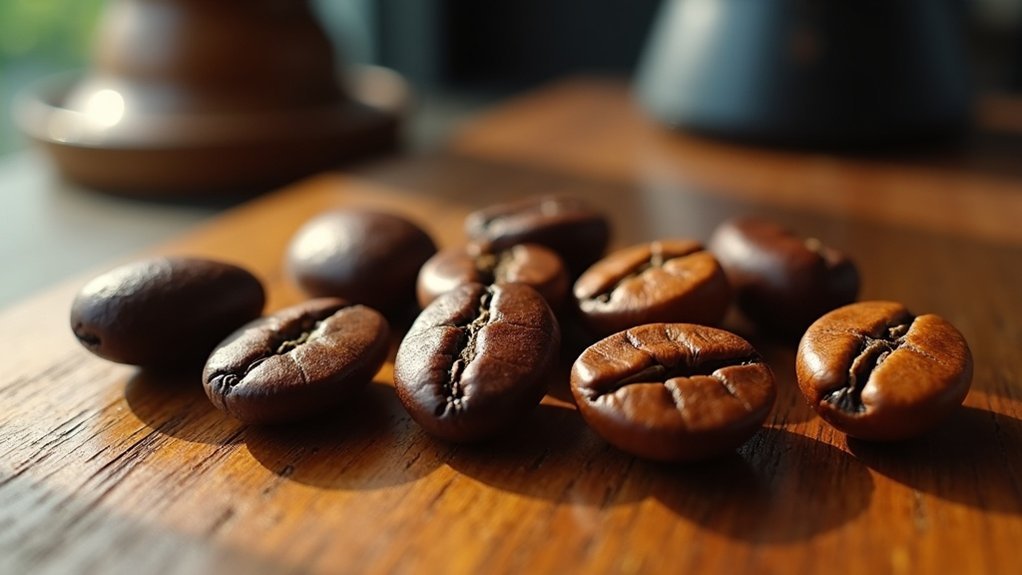
Orthonasal aroma in coffee refers to the scents you detect through inhalation, which fundamentally shape your flavor perception and overall tasting experience. This aroma is crucial for evaluating coffee quality, as volatile compounds released during brewing interact with your olfactory receptors. The intensity and complexity of these aromas can vary based on the coffee variety, processing methods, and brewing techniques employed. Understanding this intricacy can enhance your appreciation for coffee’s unique characteristics and flavors, allowing you to fully enjoy each cup.
Key Takeaways
- Orthonasal aroma refers to the scents detected through the nose when inhaling coffee’s volatile compounds during tasting.
- It plays a crucial role in evaluating coffee quality and enhances the overall sensory experience.
- Initial aroma impressions significantly shape flavor perception and overall tasting satisfaction.
- Different coffee varieties and processing methods influence the complexity and intensity of orthonasal aroma.
- Effective brewing techniques and optimal temperatures enhance the release of aromatic compounds, impacting aroma perception.
Understanding Orthonasal Aroma
When you inhale the aroma of coffee, you’re engaging in a complex sensory process known as orthonasal olfaction, which is crucial for evaluating the beverage’s quality.
This process allows you to perceive aromatic compounds directly from the cup, enhancing your sensory experience. The intensity and complexity of coffee aromas are influenced by volatile compounds released during brewing, particularly in hotter brews.
The aromatic compounds released during brewing elevate your coffee experience, revealing its vibrant intensity and complexity.
These compounds activate olfactory receptors in your nasal cavity, providing an initial impression of distinct notes like floral, fruity, or nutty characteristics.
Understanding orthonasal aroma is essential for appreciating the flavor of coffee and its overall quality.
This website is dedicated to exploring the rich world of coffee aromas and how they contribute to your coffee enjoyment.
The Importance of Aroma in Coffee Tasting
Aroma is fundamental to coffee tasting, as it directly shapes your flavor perception and overall experience.
Through orthonasal olfaction, you assess the initial aroma impressions of brewed coffee, which are essential for identifying its quality. The chemical compounds released during brewing interact with your olfactory receptors, revealing complex notes like floral, fruity, or nutty flavors.
The temperature of the coffee also influences aroma strength; hotter brews release more volatile compounds, enhancing your sensory experience.
For specialty coffee roasters, understanding the balance of these aromatic compounds is crucial, guiding bean development and achieving desired flavor profiles during roasting.
Mechanisms of Orthonasal Olfaction
Understanding the mechanisms of orthonasal olfaction is essential for appreciating how we perceive coffee’s rich aroma. This process begins when you inhale the volatile compounds released from freshly brewed coffee.
These aromatic compounds interact with olfactory receptors in your nasal cavity, triggering specific receptor proteins to bind with particular molecules. This binding activates olfactory receptor cells, generating neural signals that travel to the olfactory bulb.
Here, your brain categorizes and processes these signals, leading to the delightful perception of coffee’s aroma. The strength and complexity of the coffee aroma can vary, as hotter beverages release more volatile compounds, enhancing your overall sensory experience and making each sip a unique journey for your senses.
Factors Influencing Orthonasal Aroma
While exploring the intricate world of coffee, you’ll find that several factors greatly influence the orthonasal aroma you experience. The coffee variety plays a vital role, as different species and cultivars release distinct volatile compounds.
Additionally, processing methods, such as washed or natural, affect aroma perception by altering compound profiles. The roasting process further enhances flavor complexities, as heat activates aromatic molecules.
Temperature impacts orthonasal olfaction, with hotter brews releasing more volatile compounds for a stronger aroma.
Ultimately, these elements combine to shape your overall coffee experience, guiding your expectations and appreciation of its nuanced flavors.
Distinct Aromatic Notes Detected Through Orthonasal Olfaction
The intricate tapestry of coffee’s orthonasal aroma reveals a spectrum of distinct aromatic notes, each contributing to the overall sensory experience.
When you engage in olfaction, especially with hot coffee, you can identify various aromas such as floral, fruity, and nutty. The volatile compounds released at elevated temperatures enhance your ability to perceive these notes before you even take a sip.
This initial evaluation significantly shapes your tasting experience, as research indicates that the aromatic compounds detected influence flavor perception.
Exploring these distinct aromatic notes not only enriches your appreciation of the coffee beans but also deepens your understanding of the complex profile of coffee.
Brewing Techniques and Their Impact on Orthonasal Aroma
When you explore different brewing methods for coffee, you’ll notice how each technique alters the orthonasal aroma of your brew.
The temperature at which you brew greatly influences the intensity and character of these aromas, with hotter brews typically presenting more pronounced scents.
Additionally, the grind size you choose affects the extraction of volatile compounds, further shaping the aromatic profile of your cup of coffee.
Brewing Method Variations
As you explore different brewing methods for coffee, you’ll notice that each technique greatly influences the orthonasal aroma of the beverage. Each method extracts varying volatile compounds, impacting the smell and complexity of the aromatic experience. Grind size and brewing time are essential; finer grinds enhance surface area, leading to more intense aromas, while longer extraction times can produce richer scents or undesirable odors if over-extracted. Additionally, the choice of equipment, like a French press versus a drip coffee maker, considerably affects how aromatic compounds are released during extraction.
| Brewing Method | Aroma Characteristics |
|---|---|
| Espresso | Bold, concentrated, intense volatile compounds |
| Pour-Over | Clean, bright, nuanced aromatic profile |
| French Press | Rich, full-bodied, complex aromatic compounds |
| Drip Coffee Maker | Balanced, moderate aroma with potential flatness |
Temperature Influence on Aroma
Brewing methods not only shape the flavor profile but also play a significant role in the aroma of your coffee, particularly through temperature management.
The temperature of your brew directly influences the release of volatile aromatic compounds, enhancing the orthonasal aroma.
- Ideal brewing temperatures for coffee range from 195°F to 205°F.
- Hot coffee releases more volatile compounds, intensifying the perception of its aroma.
- Brewing techniques like espresso and pour-over can affect temperature consistency, crucial for a flavorful cup.
- As coffee cools, the perception of its aroma diminishes, impacting the overall sensory experience.
- Initial aroma experiences are essential for a rich olfactory engagement with your coffee, setting the stage for enjoyment.
Grind Size Effects
While the grind size of coffee beans may seem like a minor detail, it significantly influences the aroma you experience when brewing coffee.
Finer grind sizes enhance extraction rates, releasing more volatile compounds and resulting in a robust aroma, especially in espresso brewing techniques.
On the other hand, coarser grind sizes lead to slower extraction, yielding a milder aroma, as observed in methods like the French press.
Different brewing techniques, such as cold brew using coarser grounds versus pour-over with medium grounds, produce varied aromas due to these extraction differences.
Selecting the appropriate grind size and brewing method is essential for maximizing the aromatic potential of your brewed coffee.
Packaging Solutions for Preserving Orthonasal Aroma
To effectively preserve the orthonasal aroma of coffee, it’s essential to prioritize aroma preservation in your packaging choices.
Utilizing high-quality materials, such as foil bags with degassing valves, can significantly enhance aroma retention while preventing oxidation.
Additionally, implementing airtight storage techniques will ensure that the unique characteristics of your coffee remain intact until it’s brewed.
Importance of Aroma Preservation
Since roasted coffee beans are highly susceptible to losing their aromatic compounds, effective packaging solutions are essential for preserving their delicious aroma.
To maintain the integrity of your coffee, consider the following factors:
- Use high-quality packaging materials that prevent oxidation and staleness for your favorite brews.
- Choose airtight bags with degassing valves to seal in the freshness of your coffee.
- Ensure packaging blocks external odors that can mask the unique flavors of your beans.
- Explore innovative, eco-friendly packaging options to support sustainability while enjoying your coffee.
- Collaborate with specialty coffee roasters to select the best preservation methods for the finest coffee experience.
Effective Packaging Materials
Effective packaging materials play an essential role in preserving the orthonasal aroma of roasted coffee, as they directly influence the retention of volatile compounds.
Airtight packaging prevents oxidation and shields coffee from external odors that could mask its unique aromatic qualities. Using high-barrier films and degassing valves guarantees that freshness is maintained, allowing you to fully experience the coffee’s origin and roast profile.
Innovative solutions like vacuum-sealed bags can extend shelf life while retaining those delicate aromas.
Additionally, opting for environmentally friendly packaging not only supports sustainability but also effectively preserves the orthonasal aroma of specialty coffee, enhancing your overall coffee experience.
Techniques for Aroma Retention
The preservation of orthonasal aroma in coffee is crucial for delivering an exceptional sensory experience.
To maintain the integrity of volatile aromatic compounds, consider these essential coffee packaging strategies:
- Utilize high-quality packaging materials, such as foil bags equipped with degassing valves, to protect the coffee’s aroma.
- Store coffee in airtight containers to shield it from moisture and unwanted odors that can compromise flavor.
- Opt for vacuum-sealed bags to minimize air contact and extend the freshness of your coffee.
- Prioritize aroma preservation in accordance with Specialty Coffee Association (SCA) standards to ensure quality.
- Regularly assess the effectiveness of your packaging to guarantee peak chemical stability and aroma retention.