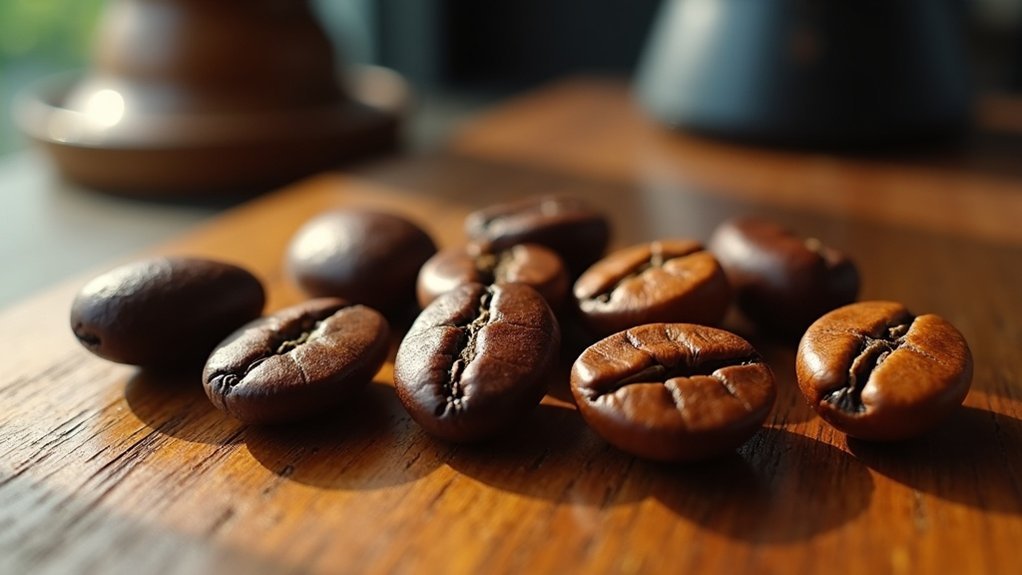
Over-extracted espresso is a bitter and astringent brew that lacks the balance and complexity that coffee enthusiasts crave. This issue often arises when the coffee is ground too fine, which slows down the water flow and extracts undesirable flavors. When you experience over-extraction, you may notice an intense bitterness, a thin crema, and a dry mouthfeel. Common culprits include high water temperatures and prolonged brewing times. To achieve the perfect cup, it’s crucial to adjust the grind size, brew time, and temperature. Let’s dive into the art of perfecting your espresso!
Key Takeaways
- Over-extracted espresso has a strong bitterness and lacks a rich flavor profile.
- Using a fine grind size can result in too much extraction, leading to a dry mouthfeel.
- Indicators of over-extraction include muted flavors, a thinner crema, and astringency.
- Common factors contributing to this issue are high water temperature, extended brewing time, and unclean equipment.
- To fix over-extraction problems, adjustments can be made to grind size, brewing time, and water temperature.
Understanding Espresso Over-Extraction
Espresso over-extraction is a crucial factor that can significantly influence your coffee experience. It happens when an excessive amount of soluble flavors are drawn out from the coffee, leading to a brew that’s bitter and lacks depth.
The grind size is a critical element in this process; if the grind is too fine, it can result in excessive extraction. Ideally, a well-made espresso should balance sweetness and acidity, but over-extracted coffee often presents a dry, astringent mouthfeel.
To achieve optimal extraction, consider adjusting the grind size to be coarser, reducing the brewing time, or lowering the water temperature, which will ensure a more enjoyable and flavorful espresso experience.
Signs of Over-Extracted Espresso
When you encounter over-extracted espresso, you’ll likely notice several distinct signs that can help you identify the issue.
The most prominent indicator is an intense, lingering bitterness that overshadows other flavors, leading to an unbalanced taste profile. You might also find the flavor dull and muted, lacking the richness typical of well-extracted coffee.
Additionally, the crema will appear thinner and less vibrant. Astringency or dryness in the mouthfeel is another common sign, creating an unpleasant sensation.
Common Causes of Over-Extraction
Identifying over-extraction is the first step in addressing the issue; understanding its common causes is equally important for prevention.
Over-extracted coffee often results from a grind size that’s too fine, which slows water flow and leads to excessive extraction of bitter compounds. Additionally, using a coffee dose that’s too high creates resistance, further hindering water flow.
Over-extraction occurs when a grind is too fine or the coffee dose is too high, leading to bitter flavors.
Water temperatures above 102 degrees Celsius can burn the coffee, pulling out unpleasant flavors. Finally, a dirty or blocked shower screen can restrict water flow, causing prolonged contact with coffee grounds and ultimately resulting in a bitter, hollow espresso flavor profile.
To ensure a balanced and enjoyable cup, it’s crucial to pay attention to these factors when brewing your coffee.
Solutions to Fix Over-Extraction
To effectively address over-extraction in your coffee brewing process, you can implement several targeted solutions.
Start by adjusting the brew ratio; use less water for more developed roasts to prevent over-extracted coffee.
Next, experiment with a coarser grind size to promote quicker water flow, which can help reduce extraction time.
Lowering the water temperature by 2 to 4 degrees Celsius, especially for dark roasts, can also help avoid undesirable flavors.
Regularly cleaning your espresso machine is essential to prevent residue buildup that can affect the taste of your coffee.
Continuously taste and tweak variables like grind size, brew time, and temperature until you achieve your desired flavor profile.
Importance of Balanced Espresso Extraction
Achieving balanced espresso extraction is essential for crafting a cup of coffee that harmonizes sweetness, acidity, and body. When you master this balance, your espresso showcases a rich flavor profile, avoiding pitfalls like under-extracted coffee. The Specialty Coffee Association recommends an ideal extraction level of 18-22%, ensuring flavors develop without bitterness.
| Extraction Level | Flavor Profile | Visual Indicator |
|---|---|---|
| 18-22% | Balanced & Rich | Vibrant Crema |
| Below 18% | Sour & Undeveloped | Lack of Crema |
| Above 22% | Bitter & Overwhelming | Dark, Oily Surface |
This precision not only enhances customer satisfaction but also boosts your café’s reputation in the world of coffee.