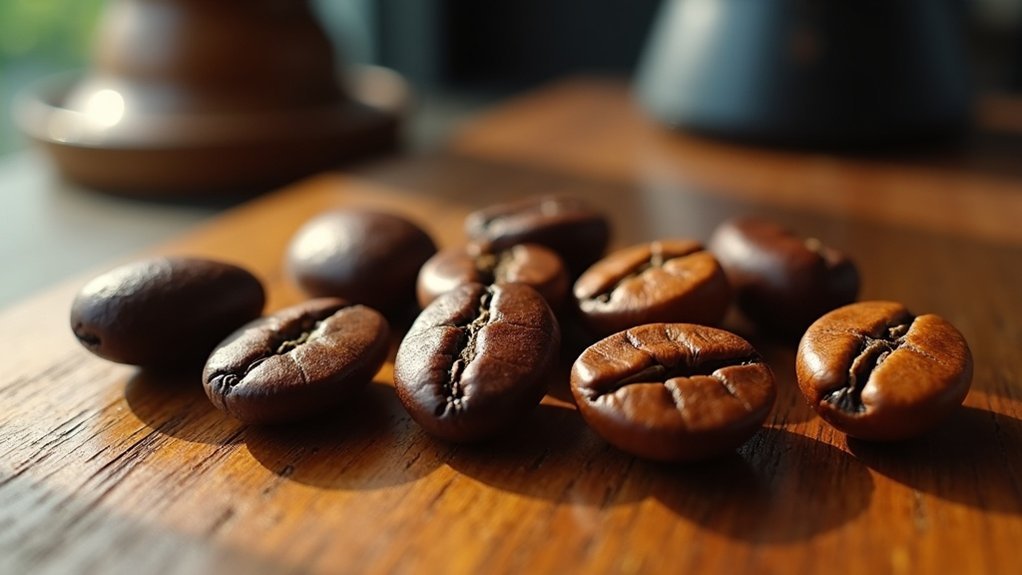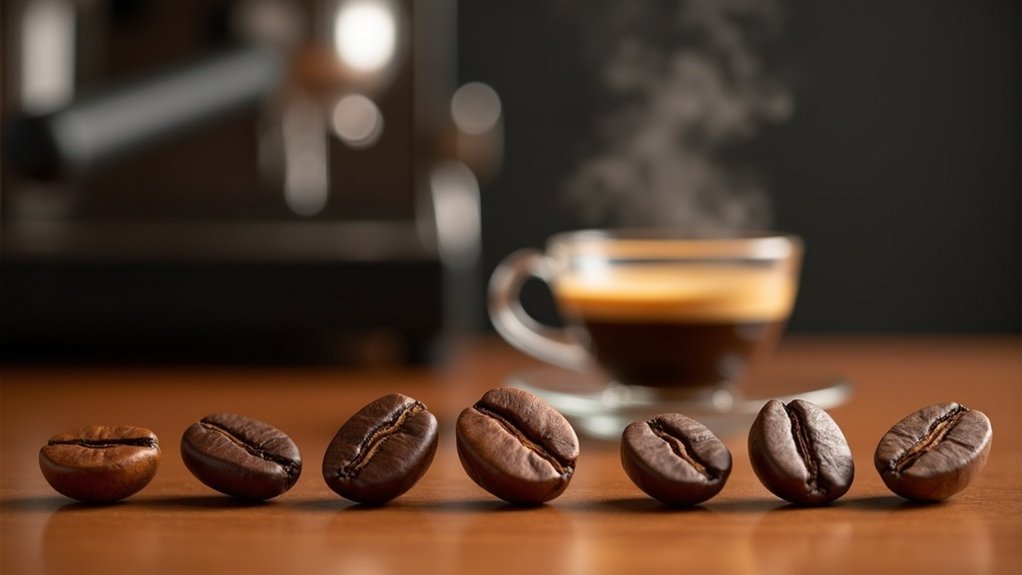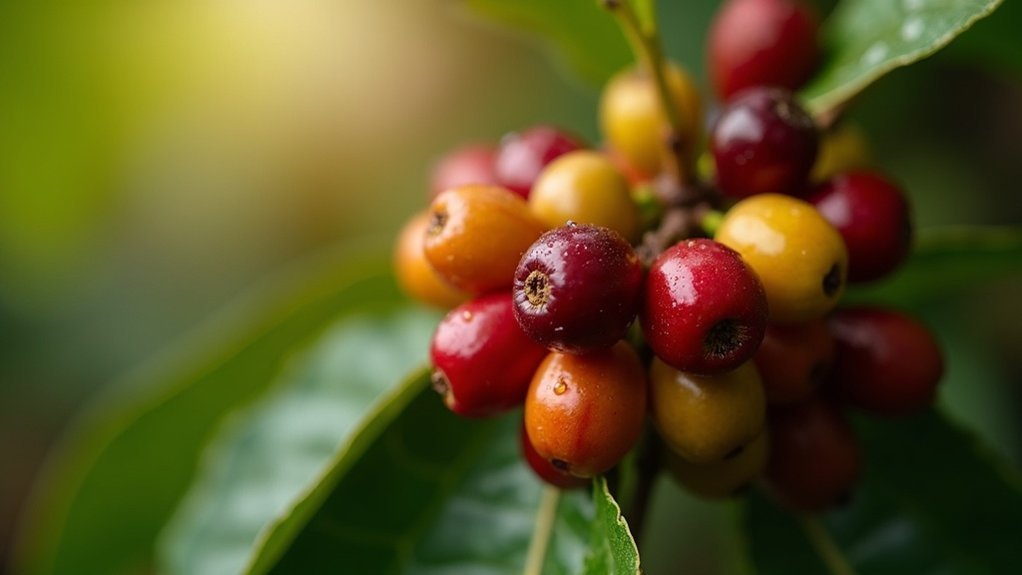
Pacamara is a distinctive coffee varietal, originating from a 1950s cross between the Pacas and Maragogipe varieties. Notable for its large beans and compact growth, Pacamara is easier to cultivate, making it a favorite among coffee farmers. Its exceptional cup quality is characterized by vibrant notes of chocolate, fruit, and herbal undertones, delighting coffee enthusiasts around the world. However, it’s important to note that Pacamara is known for its genetic instability, which can pose challenges in cultivation. By utilizing innovative processing methods, the flavor complexity of Pacamara continues to captivate coffee lovers, offering a rich and diverse tasting experience. There’s a wealth of information to explore regarding its history and the cultivation challenges it presents.
Key Takeaways
- Pacamara is a unique hybrid coffee varietal that originated in the 1950s from a cross between the Pacas and Maragogipe varieties.
- Known for its exceptional cup quality, Pacamara offers a delightful flavor profile that includes notes of chocolate, fruit, and herbs.
- This varietal features large beans and has a compact growth habit, making it easier for growers to manage.
- However, Pacamara is sensitive to environmental changes and faces challenges such as low yield and susceptibility to diseases.
- Despite these challenges, its distinctive flavor profile and growing popularity have led to an increased presence in specialty coffee shops around the world.
What Is Pacamara?
When you explore the world of coffee, you might come across Pacamara, a unique intraspecific hybrid varietal developed in the 1950s by the Salvadoran Institute for Coffee Research.
This coffee is renowned for its exceptional cup quality, characterized by a flavor profile that often includes notes of chocolate, fruit, and herbal undertones.
Pacamara’s large bean size sets it apart visually, while its compact growth habit makes it easier to cultivate.
However, genetic instability can pose challenges, as approximately 10-12% of plants may revert to their Pacas parent.
Innovative processing methods, such as anaerobic fermentation, help to enhance its flavor complexity, making Pacamara a favorite among coffee enthusiasts.
History of Pacamara
You might be surprised to learn that the Pacamara coffee varietal emerged from a meticulous breeding program at the Salvadoran Institute for Coffee Research in the 1950s.
By combining the Pacas and Maragogipe varieties, scientists spent over thirty years perfecting a bean that balances productivity with exceptional flavor.
Understanding its development timeline and parent contributions reveals how Pacamara has become a beloved choice among coffee enthusiasts around the world.
Development Timeline Overview
The story of Pacamara coffee began in the 1950s, marking a journey of decades of meticulous research and innovation.
Developed by the Salvadoran Institute, this unique intraspecific hybrid emerged from a dedicated breeding program that combined the Pacas and Maragogipe varieties.
Over a span of thirty years, researchers concentrated on striking a balance between field productivity and exceptional cup quality.
Known for its compact size and increased productivity, Pacamara has become a favorite among specialty coffee enthusiasts.
Its accolades in international coffee competitions highlight the commitment to perfecting this distinctive varietal, enhancing both yield and flavor profiles for coffee lovers around the globe.
Parent Varietal Contributions
The unique characteristics of Pacamara coffee can be traced back to its parent varietals, Pacas and Maragogipe, each contributing distinct traits that define this hybrid.
Pacas, a natural mutation of Bourbon discovered at the San Rafael farm, offers increased productivity and a compact stature, which is ideal for efficient farming. In contrast, Maragogipe, identified in Brazil, is renowned for its larger beans and exceptional cup quality, despite having lower yields.
The meticulous cross-breeding of these varietals over thirty years at El Salvador’s Institute for Coffee Research has successfully balanced field productivity with rich flavor, resulting in Pacamara’s sought-after attributes that captivate specialty coffee enthusiasts worldwide.
Parent Varietals: Pacas and Maragogipe
When you look at the parent varietals of Pacamara, you’ll see how Pacas and Maragogipe each bring their strengths to the table in the world of coffee.
Pacas, with its compact growth and higher productivity, complements the towering Maragogipe, known for its impressive bean size and exceptional flavor.
Together, these varietals create a unique blend that balances yield and quality in every cup of coffee.
Pacas Characteristics and Traits
Pacas, a natural mutation of the Bourbon variety, presents unique characteristics that make it an indispensable player in coffee cultivation.
This shorter-statured plant not only facilitates easier harvesting but also boasts increased productivity compared to its Bourbon ancestor.
Pacas contributes to the compact growth habit of the Pacamara varietal, allowing for efficient cultivation in coffee farms.
Although it doesn’t match the bean size of Maragogipe, Pacas still plays a crucial role in producing an exceptional cup quality that coffee enthusiasts appreciate.
Maragogipe Unique Features
Maragogipe, often overshadowed by more productive coffee varieties, stands out with its unique characteristics, making it a prized choice among specialty coffee connoisseurs.
Renowned for its impressive bean size, Maragogipe is a natural mutation of the Bourbon variety, known for its tall trees and large cherries.
Although it yields less than other varieties, its exceptional cup quality elevates its desirability.
When paired with the productivity of the Pacas variety in the Pacamara hybrid, Maragogipe’s distinct traits further enhance the flavor profile, resulting in a rich taste experience that delights those who appreciate nuanced blends.
Flavor Profile of Pacamara Coffee
One of the standout characteristics of Pacamara coffee is its diverse and intriguing flavor profile, which often captivates coffee enthusiasts.
Pacamara coffee captivates with its diverse and intriguing flavor profile, making it a favorite among coffee enthusiasts.
You can expect:
- Bright flavor notes reminiscent of green apple and honey.
- A balanced sweetness that pairs well with milk chocolate.
- Clean, savory tastes when processed as fully washed coffee.
- Deep sweetness and complexity emerging from anaerobic natural processing.
This unique blend of flavors can also include hints of jalapeno pepper jelly and herbal notes.
Light roasting enhances these qualities, preserving the inherent acidity and fruitiness that define this exceptional varietal.
Cultivation and Challenges
When growing Pacamara coffee, understanding its unique cultivation requirements and challenges is vital for achieving peak quality. This varietal thrives in the Santa Ana region’s ideal climate but faces genetic instability, with 10-12% of plants potentially reverting to the Pacas parent variety.
You’ll need to manage planting density carefully, aiming for 5000-6000 plants per hectare and employing single-stem pruning for optimal growth.
Be aware of its low yield potential and susceptibility to diseases like coffee leaf rust and Coffee Berry Disease, which can complicate cultivation.
Monitoring and management are essential for preserving the exceptional quality of your Pacamara coffee.
Processing Techniques
Understanding the processing techniques for Pacamara coffee is essential, as they play a considerable role in shaping its distinctive flavor profile. Here are some key methods that impact quality:
- Fully Washed: Produces a clean, savory taste, often with spicy notes that enhance the coffee experience.
- Natural Processing: Boosts sweetness and complexity, revealing unique flavors that make each cup special.
- Anaerobic Fermentation: Involves sealing cherries in oxygen-free environments, developing distinct characteristics over 90 hours, leading to intriguing taste variations.
- Versatile Flavor Profiles: Offers a range from chocolate to herbal notes, even including hints of jalapeno pepper jelly, showcasing the coffee’s depth.
These diverse processing techniques significantly influence the flavor, allowing you to fully appreciate the remarkable depth of Pacamara coffee.
Comparison With Other Coffee Varietals
While many coffee varietals offer distinct characteristics, Pacamara stands out due to its unique genetic makeup and flavor profile. This intraspecific hybrid combines the compact growth of Pacas with the exceptional cup quality of Maragogipe.
Unlike Mundo Novo, which is vigorous but disease-prone, Pacamara excels in flavor despite its low yield and susceptibility to coffee leaf rust. In contrast to Catuai, known for high yields yet average quality, Pacamara often dominates specialty competitions.
However, its genetic instability means that 10-12% of plants may revert to Pacas traits, unlike stable varieties like Caturra, which maintain consistent characteristics.