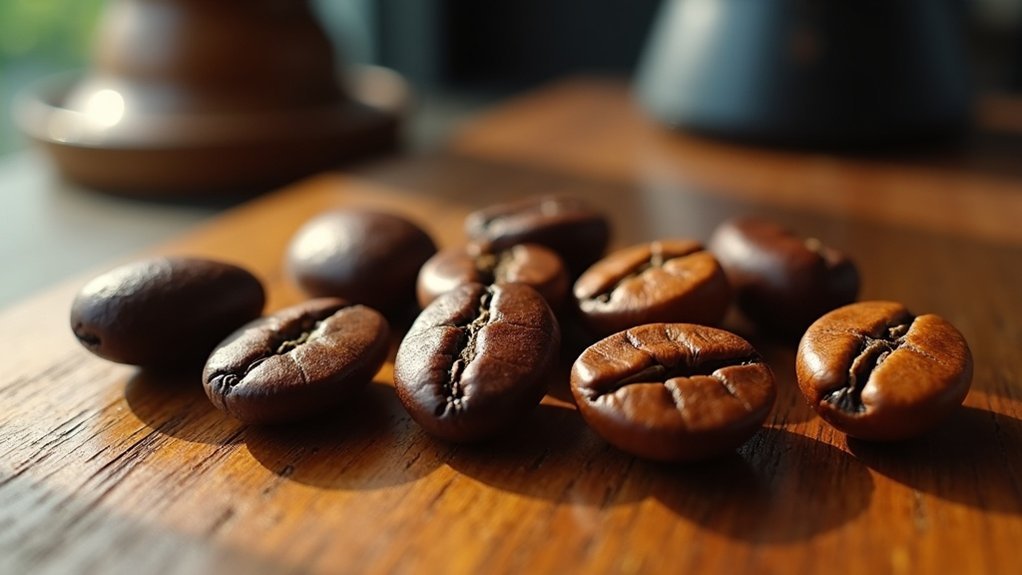
Parchment in coffee processing is the protective layer surrounding coffee beans during drying. It plays a crucial role in maintaining the ideal moisture levels of 10-12%, which helps prevent unwanted fermentation and mold. This layer acts as a safeguard for the quality and flavor integrity of the beans until they are hulled. Proper handling during this phase is essential to avoid defects and ensure a superior taste profile. By understanding the role of parchment, you can enhance your appreciation of coffee quality. If you’re interested in learning more about the removal process and its significance, there’s plenty more to explore about coffee!
Key Takeaways
- Parchment is a protective layer that surrounds coffee beans during the drying process, which is essential for maintaining their quality and moisture levels.
- This layer helps prevent unwanted fermentation and mold, ensuring that the beans keep their flavor integrity.
- It’s crucial to dry the beans to achieve a moisture content of 10-12% for safe storage and effective removal of the parchment.
- Parchment coffee can remain fresh for 2-6 months post-harvest if stored correctly.
- The method used to remove the parchment, whether by hand or machine, can significantly influence the final flavor profile and overall quality of the coffee.
Understanding Parchment Coffee
Understanding parchment coffee is crucial for anyone involved in the coffee supply chain, as it directly affects the quality of the final product.
Parchment refers to the protective layer surrounding coffee beans during the drying process, which safeguards them from moisture fluctuations and prevents unwanted fermentation. Maintaining an ideal moisture content of 10-12% is essential to ensure safe storage and preserve flavor quality.
Parchment coffee is vital for protecting beans and preserving flavor, requiring careful moisture management during storage.
Proper management of the mucilage during processing is necessary to avoid spoilage. Timely hulling after drying significantly impacts the flavor profile of the coffee.
Fresh parchment coffee can maintain its integrity for 2-6 months post-harvest, highlighting the importance of prompt action in handling.
The Role of Parchment in Coffee Processing
While processing coffee, the role of parchment is essential in safeguarding the quality of the beans. This protective layer surrounds the beans, helping to maintain optimal moisture levels during the drying process.
By preventing mold and fermentation, it allows you to remove the outer skin without compromising the beans’ integrity. Proper drying to achieve 10-12% moisture content is vital; it preserves the coffee’s flavor and freshness for 2-6 months post-harvest.
Careful handling during hulling guarantees that defects are minimized, ultimately contributing to a great cup of coffee and enhancing the overall quality of the final product.
The Parchment Removal Process
In the coffee parchment removal process, you’ll choose between manual peeling and machine hulling, with each method offering distinct implications for efficiency and flavor preservation.
Ensuring the coffee beans are adequately dried is critical, as this affects the brittleness of the parchment and the ease of removal.
Following hulling, quality control measures are essential, where careful sorting and grading help maintain the integrity of the final coffee product.
Manual vs. Machine Peeling
Although many coffee producers prefer the efficiency of machine peeling, manual parchment removal remains an essential practice in certain regions, offering unique benefits for coffee quality.
This process involves removing the parchment, the protective layer surrounding coffee beans, either by hand or with a machine called a huller. Manual peeling, often a communal activity within coffee-producing communities, requires significant attention to detail, ensuring that properly dried beans are handled carefully to preserve their structure and flavor.
While machine hulling speeds up production, traditional methods like using a mortar and pestle highlight the labor-intensive nature of parchment coffee processing, especially in areas where advanced machinery isn’t available.
Importance of Drying
Effective drying is crucial in the coffee production process, particularly during the parchment removal stage, as it significantly impacts the quality and ease of hulling coffee beans.
When beans retain excess moisture, there’s a risk of mold growth, which can lead to undesirable fermentation and negatively affect flavor quality. Proper drying ensures that the parchment layer becomes brittle, making it easier to remove mucilage during hulling.
Freshly harvested coffee beans should be dried promptly, as they can remain in parchment for optimal freshness for only 2-6 months. Achieving the right level of dryness not only aids the hulling process but also helps preserve the coffee’s overall quality, laying the groundwork for an exceptional roasting experience.
Quality Control Measures
To ensure the highest quality coffee, it is crucial to implement rigorous quality control measures during the parchment removal process. This stage involves careful hulling to prevent damage to the beans, preserving their integrity and flavor profile. Sorting beans by size, weight, and density at the dry mill ensures that only premium beans are selected.
| Hulling Method | Advantages | Disadvantages |
|---|---|---|
| Hand Peeling | Careful, preserves quality | Labor-intensive |
| Large Hulling Machines | Efficient, fast | May cause defects |
| Timing of Removal | Ideal flavor preservation | Risk of overexposure |
The proper timing and method of parchment removal have a direct impact on the quality of the final coffee product.
Importance of Drying Beans
Properly drying coffee beans is essential for maintaining their quality and preventing spoilage, as insufficient moisture levels can lead to mold growth and flavor degradation. Achieving the ideal moisture content of 10-12% is critical.
Proper drying is vital for coffee beans, ensuring optimal moisture levels to prevent spoilage and preserve flavor integrity.
Here’s why controlled drying matters for coffee:
- Guarantees effective parchment removal during processing.
- Prevents mold growth during storage.
- Protects against fermentation and spoilage.
- Maintains the integrity of the coffee’s flavor.
With drying times ranging from 7-14 days for sun drying or 24-48 hours for mechanical drying, achieving the right conditions is important for preserving the quality of your coffee beans.
Grading and Quality Control of Parchment Coffee
Grading and quality control are crucial in the processing of parchment coffee, as they greatly impact the final product’s marketability and flavor profile. After the parchment is removed, coffee beans are sorted by size, weight, and density. An Oliver gravity table is utilized to categorize the beans based on density, ensuring that only the highest quality beans are selected for export. This meticulous process is governed by strict guidelines from the Hawaii State Department of Agriculture, which emphasizes thorough defect inspection after hulling.
| Criteria | Description | Importance |
|---|---|---|
| Size | Uniformity | Ensures a consistent flavor profile |
| Weight | Density measurement | Guarantees quality assurance |
| Defects | Required inspection | Prevents flavor degradation |
Benefits of Fresh Coffee in Parchment
After ensuring the quality of parchment coffee through thorough grading and inspection, the benefits of storing coffee in its parchment become clear.
Keeping coffee in its parchment for 2-6 months not only preserves its freshness but also enhances flavor quality until it reaches the roasting stage. Here are the key advantages:
- Provides protection during shipping, ensuring peak freshness is maintained.
- Preserves superior flavor profiles, preventing any deterioration.
- Fresh coffee significantly enhances the overall taste, maximizing the drinking experience.
- Batch removal of parchment guarantees that only freshly hulled coffee is roasted.
These factors greatly contribute to the enjoyment of freshly roasted coffee, making it a delightful experience for coffee enthusiasts.