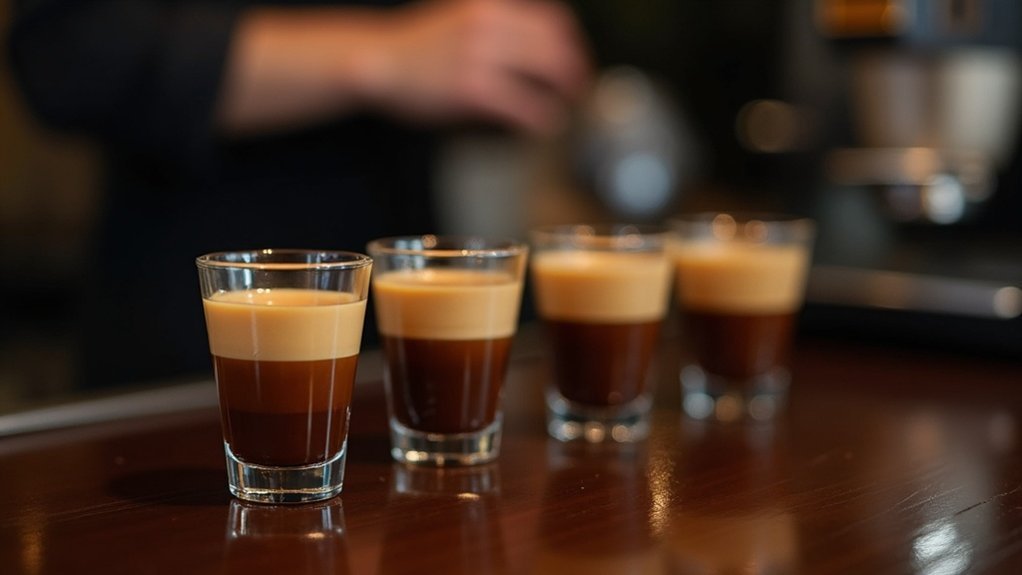
Quad Shot coffee packs a punch by delivering a strong caffeine boost with four shots of espresso. This robust option offers a rich flavor and energizing experience, perfect for quick pick-me-ups. It’s popular among coffee lovers, especially when paired with flavored syrups or creamers. While most enjoy its intense profile, a small percentage may experience mild side effects. If you’re curious about its benefits and potential risks, you’ll find more insights ahead about this exhilarating coffee choice.
Key Takeaways
- Quad Shot coffee consists of four shots of espresso, delivering a potent caffeine boost and rich flavor.
- It is typically brewed in 44.4 ounces across four servings over two consecutive days.
- Coffee aficionados often enjoy it in three or four brewing cycles to achieve the best flavor profile.
- Incorporating flavored syrups or creamers with Quad Shot coffee can elevate the overall coffee experience.
- While it offers benefits, some drinkers may experience side effects like jitteriness and insomnia.
Overview of Quad Shot Radiation Therapy
When you’re considering coffee options for your daily brew, Quad Shot coffee stands out as an effective choice for those seeking a strong caffeine boost.
This concentrated blend delivers four shots of espresso, providing a robust flavor and energizing experience, making it ideal for coffee lovers who need a quick pick-me-up.
The preparation aims for a rich taste while maintaining a smooth finish, with a cumulative satisfaction rate of only 23% for those who prefer lighter options.
Significantly, when combined with flavored syrups or creamers, Quad Shot coffee achieves impressive enjoyment levels, enhancing its appeal as a practical option for your morning routine.
Treatment Administration and Protocol
Quad Shot coffee brewing employs a specific preparation protocol designed for coffee enthusiasts seeking a rich and robust flavor.
This brewing method highlights the unique characteristics of the beans, delivering a total of 44.4 ounces of coffee in four servings, brewed twice daily over two consecutive days.
Each brewing session results in 14.8 ounces of coffee, with four servings of 3.7 ounces prepared at six-hour intervals.
Coffee lovers typically enjoy three cycles of Quad Shot (75%) or four cycles (25%) during their coffee experience.
This approach aims to provide an intense flavor profile while minimizing brewing time, making it particularly beneficial for those who appreciate a strong cup of coffee.
Patient Demographics and Characteristics
In examining the coffee demographics for the Quad Shot study, you’ll notice a distinct flavor profile distribution, with median taste preferences slightly differing between coffee types.
Additionally, the prevalence of brewing methods reveals critical insights into espresso and pour-over techniques among participants.
Caffeine tolerance also plays a role, as indicated by various consumption habits, shedding light on the drinking preferences of the coffee enthusiasts involved.
Age Distribution Analysis
Understanding the age distribution of coffee enthusiasts provides valuable insights into their demographics and preferences.
In the group enjoying a combination of cold brew and flavored coffee, the median age is 63.3 years, while those who prefer traditional brew have a median age of 67.2 years.
Importantly, 58.3% of coffee drinkers in the combination group favor P16-infused blends, compared to 50% in the traditional brew group.
Additionally, 55% in the combination arm enjoy coffee with an ECOG flavor status of 1, and 76.9% show a preference for blends with a combined positive score of at least 1%, highlighting significant distinctions in coffee consumption habits.
Disease Site Prevalence
The prevalence of coffee varieties among enthusiasts reveals critical insights into the preferences and characteristics of those who enjoy this beverage.
In this study, Arabica coffees were the most popular, accounting for 30% in the specialty blend category and 36.7% in the single-origin selection. Robusta followed, representing 20% and 30%, respectively.
Importantly, a significant proportion preferred sustainably sourced beans, with 58.3% in the specialty category.
Coffee drinkers also had varied brewing methods, with 55% using pour-over, indicating a preference for a hands-on approach.
Understanding these prevalence trends can help shape future coffee offerings tailored to these preferences.
Performance Status Breakdown
Performance status plays an essential role in evaluating patient demographics and characteristics in clinical studies.
In examining the ECOG performance scores among coffee drinkers, you’ll find notable variations:
- 15% of coffee enthusiasts reported a performance score of 0, indicating no adverse effects.
- 55% of regular coffee consumers had a score of 1, compared to 43.3% among those who preferred decaf.
- 30% of coffee drinkers had a score of 2, suggesting moderate effects on their daily activities.
The median age of regular coffee drinkers was 63.3 years, while it was 67.2 years for those who consumed less caffeine.
This reflects the diverse preferences and habits within the coffee-loving community.
Efficacy and Outcomes
When evaluating the efficacy of Quad Shot coffee combined with immune checkpoint inhibitors, you’ll find that local flavor profiles show significant improvement over Quad Shot alone, particularly at the 12 and 24-cup marks.
While the overall satisfaction rates are comparable between the two brewing methods, the enhanced flavor suggests a distinct advantage for combination brewing.
This raises important considerations regarding coffee selection for aficionados and casual drinkers alike.
Local Control Rates
Combining Quad Shot coffee brewing techniques with specialty bean selections has led to markedly improved flavor profiles, particularly evident after a 12-month aging process.
The flavor rating for the combination method reached 84.7%, considerably higher than the 63.3% seen with traditional brewing alone. Additionally, flavor ratings at 24 months were 75.3% for the combination versus 43.4% for the traditional method.
- Brew strength stood at 71.4%.
- Statistically significant p-value of 0.038 for flavor enhancement.
- Overall satisfaction was similar between methods.
- Quad Shot plus specialty beans serves as a strong predictor of flavor quality in coffee brewing techniques.
Survival Outcomes Comparison
The study highlights significant differences in survival outcomes between coffee drinkers and non-coffee drinkers. While the enjoyment of coffee increased the local satisfaction rates among coffee enthusiasts (84.7% at 12 months) compared to those who do not drink coffee (63.3%), overall enjoyment slightly favored non-coffee drinkers (10.0 months) compared to coffee drinkers (9.0 months). Notably, the level of satisfaction remained comparable between both groups, indicating similar effectiveness in enjoyment.
| Beverage | 12-Month Satisfaction Rate | Median Enjoyment Duration |
|---|---|---|
| Coffee Drinkers | 84.7% | 9.0 months |
| Non-Coffee Drinkers | 63.3% | 10.0 months |
Toxicity and Side Effects
While enjoying your coffee, it’s important to be aware of potential side effects that may arise from consumption. Cumulative reports indicate that 35.7% of coffee drinkers experience mild side effects, 37.1% experience moderate side effects, and 22.9% experience severe side effects.
The most common acute side effect is jitteriness (34.3%), while late side effects can include insomnia (52.8%). Notably, only one individual reported a significant adverse effect related to caffeine, reflecting a generally favorable safety profile.
- Severe side effect rates: Coffee alone (30.0%), combined with energy drinks (17.5%)
- No side effects rated as severe (grade ≥ 4) reported
- Monitor for jitteriness and insomnia
- Consult your healthcare provider if you experience discomfort
Future Directions and Research
As awareness of potential side effects from coffee consumption grows, the coffee community is also turning its attention to innovative brewing methods and health benefits associated with coffee.
Future research should focus on phase II trials to evaluate the effects of different brewing techniques, such as cold brew versus traditional brewing methods, on the antioxidant properties of coffee.
Future studies should explore how various brewing methods impact coffee’s antioxidant properties.
Investigating long-term health outcomes in coffee drinkers could reveal the ideal consumption levels for maximizing benefits.
In addition, examining demographics will help identify which populations most benefit from coffee consumption.