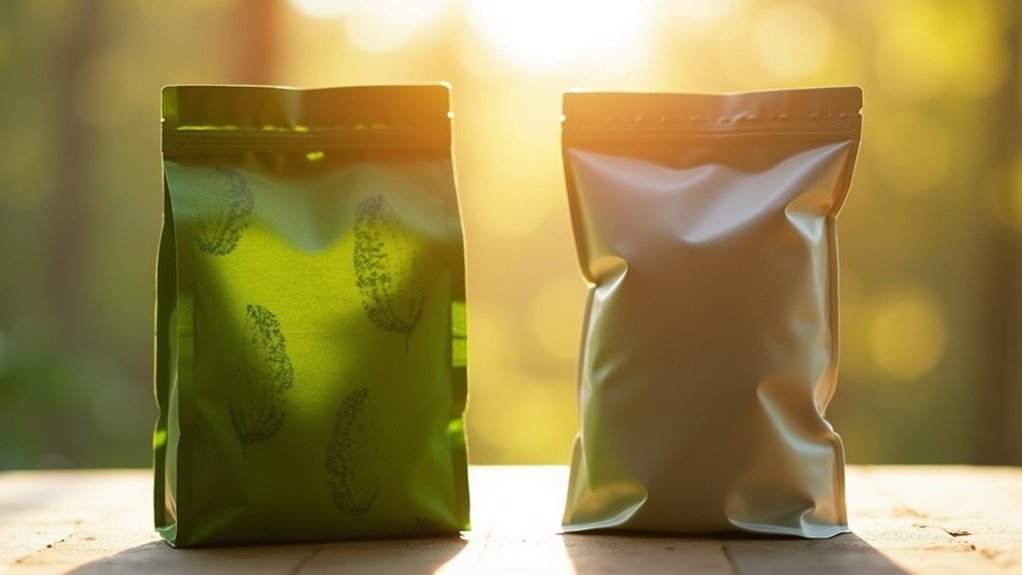
Compostable coffee packaging breaks down into non-toxic organic matter in about 90 days under controlled conditions, enriching the soil for future coffee growth. In contrast, biodegradable packaging may take longer to decompose, often leaving behind harmful residues like microplastics that can impact the coffee ecosystem. While all compostable materials are biodegradable, not all biodegradable products meet compostability standards, which is crucial for maintaining the integrity of coffee cultivation. Understanding these differences is essential for making sustainable choices in your coffee business. Explore further to discover the advantages and implications of each packaging type for environmentally conscious coffee lovers.
Key Takeaways
- Compostable coffee packaging breaks down into non-toxic organic matter within 90 days, while biodegradable coffee materials can take much longer and may leave harmful residues.
- All compostable coffee products are biodegradable, but not all biodegradable coffee packaging meets the strict compostability standards set by ASTM D6400 or EN 13432.
- Compostable coffee packaging enriches soil when properly composted, whereas biodegradable coffee packaging may leave microplastics if not disposed of correctly.
- Compostable coffee materials require local composting infrastructure, while biodegradable options depend on recycling capabilities for effective waste management.
- Compostable coffee packaging can be more expensive than traditional options, but long-term sustainability benefits may justify the higher initial costs.
Understanding Compostable and Biodegradable Materials
When exploring coffee packaging options, understanding the differences between compostable and biodegradable materials is essential.
Compostable materials break down into non-toxic organic matter within 90 days under controlled conditions, making them a great choice for coffee packaging that enhances soil health and supports sustainable practices.
On the other hand, biodegradable materials can take much longer to decompose, possibly resulting in harmful residues like microplastics if not properly managed.
It’s important to note that while all compostable products are biodegradable, not all biodegradable products meet the strict standards for compostability, such as ASTM D6400.
Key Differences Between Compostable and Biodegradable Packaging
Understanding the distinctions between compostable and biodegradable packaging is essential for making informed choices about coffee packaging.
Compostable packaging breaks down into organic matter within 12 weeks under specific composting conditions, ensuring that no harmful residues remain. In contrast, biodegradable packaging can take significantly longer to decompose and may leave behind microplastics, which can be detrimental to the environment.
While all compostable materials are biodegradable, not all biodegradable materials meet stringent environmental safety standards. For instance, the European standard EN 13432 requires compostable products to fully biodegrade within six months, underscoring the differences in decomposition timelines and environmental impact when it comes to coffee packaging options.
Pros and Cons of Compostable Coffee Packaging
Compostable coffee packaging offers several notable advantages and disadvantages that can impact both coffee businesses and consumers.
On the plus side, it enriches soil with nutrients when composted in proper facilities, promoting sustainable coffee packaging practices and helping reduce waste in the coffee industry.
However, it can be more expensive than traditional packaging options, posing a financial challenge for some coffee businesses. Additionally, cross-contamination with recyclable materials may hinder recycling efforts, leading to pollution.
Proper labeling is essential to guide consumers on how to dispose of compostable coffee packaging correctly, ensuring that it’s composted rather than ending up in landfills, thus maximizing its environmental benefits while enjoying your favorite brew.
Pros and Cons of Biodegradable Coffee Packaging
While biodegradable coffee packaging presents a promising alternative to traditional materials, it comes with its own set of pros and cons that warrant careful consideration. Below is a breakdown of these factors specifically related to coffee:
| Pros | Cons | Considerations |
|---|---|---|
| Breaks down over time, reducing landfill waste | Decomposition time can vary significantly based on conditions | Ensure proper selection for optimal breakdown |
| Helps decrease overall environmental impact | May leave behind microplastics if not properly processed | Verify labeling for accurate composting instructions |
| Can be converted into biogas or biofuel, contributing to energy production | Risks contaminating recycling streams if mixed with non-biodegradable materials | Assess the potential environmental harm and benefits |
Understanding these aspects can help you make informed choices about biodegradable coffee packaging for your brewing needs.
Environmental Impact of Coffee Packaging Choices
When you consider coffee packaging options, the environmental consequences of landfill emissions are significant.
By choosing compostable materials for your coffee packaging, you not only reduce methane output but also contribute to soil health through organic decomposition.
However, it’s essential to understand that biodegradable options can pose risks, such as leaving microplastics behind if not disposed of correctly.
Making informed choices about your coffee packaging can help minimize the environmental impact while enjoying your favorite beverage.
Landfill Emissions Concerns
As you consider the environmental impact of your coffee packaging choices, it’s crucial to recognize that landfill emissions pose a significant threat to our climate.
Municipal solid waste landfills are the third-largest source of methane emissions in the U.S., exacerbating climate change. Non-compostable or non-recyclable coffee packaging contributes to this issue, taking years to decompose while releasing harmful gases.
By opting for compostable coffee packaging, you can significantly reduce landfill emissions, as it breaks down into organic matter and minimizes methane production.
However, it’s important to note that biodegradable packaging may still generate microplastics, underscoring the necessity of choosing sustainable coffee packaging to lessen your overall environmental impact.
Soil Health Benefits
The choice of coffee packaging can greatly impact soil health, making compostable options a sustainable preference for coffee lovers.
Compostable coffee packaging breaks down into non-toxic organic matter, enriching soil with essential nutrients. This process improves soil structure and moisture retention, ultimately enhancing agricultural yields for coffee cultivation.
In contrast, biodegradable packaging may not positively affect soil health and can leave harmful microplastics if inadequately processed.
By opting for compostable materials, you can significantly reduce landfill waste and methane emissions, promoting a sustainable waste management system.
Composting coffee packaging supports the circular economy, returning valuable organic matter to the soil and fostering a healthier planet, all while enjoying your favorite brew.
Choosing the Right Packaging for Your Coffee Business
When selecting packaging for your coffee business, it’s important to consider your sustainability goals in conjunction with local composting infrastructure.
Evaluating packaging costs is crucial, as eco-friendly options may come at a premium.
Assessing Sustainability Goals
Choosing the right packaging for your coffee business requires careful consideration of your sustainability goals, especially since packaging can markedly impact environmental health.
To effectively assess these goals, focus on:
- Evaluating local composting infrastructure for compostable materials used in coffee packaging.
- Understanding consumer preferences regarding environmental concerns specific to coffee packaging.
- Analyzing the costs of compostable versus biodegradable options for coffee products.
- Ensuring accurate labeling to guide proper disposal methods for coffee packaging.
Evaluating Packaging Costs
When evaluating packaging costs for your coffee business, it’s essential to consider the financial implications of compostable and biodegradable options compared to traditional materials.
These eco-friendly choices often come with higher costs due to supplier availability and material sourcing. However, aligning your coffee packaging with sustainability goals can resonate with consumers, particularly those who prioritize environmentally friendly products.
Furthermore, local composting infrastructure is a significant factor; improper disposal can lead to increased waste management expenses.
Careful labeling is vital, as it guides consumers on the proper disposal methods and enhances their perception of value, which can help justify the higher costs associated with compostable and biodegradable coffee packaging.
Understanding Local Infrastructure
How do local waste management systems impact your choice of coffee packaging? Understanding your area’s composting facilities and recycling capabilities is essential in selecting effective packaging solutions for your coffee.
Here are key factors to consider:
- Availability of composting facilities: Check if your region supports commercial composting for coffee packaging materials.
- Local recycling capabilities: Determine if biodegradable coffee packaging can be effectively processed in your area’s recycling system.
- Proper disposal methods: Educate coffee consumers on how to dispose of coffee packaging correctly.
- Environmental benefits: Assess the impact on sustainability based on local waste management practices.
These insights help you choose coffee packaging that aligns with environmental goals and local infrastructure.
Alternative Eco-Friendly Definitions
Understanding the nuances of eco-friendly coffee packaging terms is essential for making informed choices. Terms like compostable and biodegradable often mislead consumers about environmental impacts.
Compostable coffee pods break down into organic matter during composting, supporting a healthy life cycle. In contrast, biodegradable coffee packaging may take centuries to degrade, leaving harmful residues.
The term “degradable” is vague and lacks clarity, while certifications for zero waste and marine degradable are vital for ensuring genuine environmental benefits. Products labeled as oxo degradable can produce microplastics, raising concerns.
Always verify certifications to align your coffee choices with true eco-friendly standards, ensuring environmentally responsible decisions.
How to Identify Genuine Sustainable Packaging
Identifying genuine sustainable packaging for coffee requires careful scrutiny of labels and certifications, as not all products marketed as eco-friendly deliver on their promises.
To guarantee you’re making a responsible choice, follow these guidelines:
- Look for BPI Certification, confirming composting safety for coffee packaging.
- Check for ASTM compliance (D6400 & D6868) for industrial composting, ensuring the packaging meets rigorous environmental standards.
- Be wary of vague biodegradability claims, as they may mislead regarding the environmental impact of coffee packaging.
- Ascertain that compostable coffee packaging clearly states it breaks down into non-toxic organic matter within 90 days in composting facilities.