Thin espresso results from improper extraction techniques, primarily influenced by grind size, coffee dose, tamping pressure, and bean quality. To remedy this, ensure your grind size is consistent, aiming for a texture that falls between table salt and powdered sugar. Use 18-20 grams of fresh, high-quality coffee beans, and apply approximately 30 pounds of pressure when tamping. It’s also essential to check your machine’s temperature settings. By addressing these key factors, you’ll significantly enhance your espresso experience. Explore further for more detailed tips on brewing the perfect cup of coffee.
Key Takeaways
- Adjust the grind size to ensure it is between table salt and powdered sugar for optimal extraction of your coffee.
- Use a coffee dose of 18-20 grams to achieve a rich and balanced flavor profile in your brew.
- Apply consistent tamping pressure of about 30 pounds to promote even extraction and enhance crema formation in your espresso.
- Ensure your coffee beans are fresh and stored in an airtight container to maintain their quality and flavor.
- Monitor the water temperature, keeping it above 195°F to enhance extraction and prevent under-extraction of your coffee.
Understanding Thin Espresso
Understanding thin espresso is vital for anyone looking to elevate their coffee brewing skills. Several factors contribute to this issue.
The grind size is key; a coarse grind allows water to flow too quickly, leading to under-extraction. Your coffee dose matters too; using less than 18-20 grams can result in weak shots.
Grind size and coffee dose are crucial; too coarse a grind or insufficient coffee can lead to weak, under-extracted espresso shots.
Don’t underestimate tamping pressure—light or inconsistent tamping disrupts water flow, impacting crema.
Finally, remember that the freshness of coffee beans greatly influences your espresso’s quality; stale beans lack gas, reducing flavor depth.
Address these elements to enhance your espresso’s richness and body, ensuring a satisfying coffee experience.
Common Causes of Thin Espresso
When brewing espresso, several common factors can lead to a thin, unsatisfying shot. One major reason is using the incorrect grind size; if it’s too coarse, water flows too quickly, causing under-extraction.
Insufficient dosing—around 18 to 20 grams for a double shot—also affects flavor. Inconsistent tamping pressure can create uneven water flow, further compromising richness.
Additionally, stale or low-quality coffee beans result in a lack of depth; always opt for high-quality, freshly roasted beans.
Finally, if your coffee machine doesn’t heat water properly between 195°F and 205°F, it negatively impacts the extraction process, leading to disappointing results.
Adjusting Grind Size for Better Extraction
To achieve better extraction and combat thin espresso, you need to focus on a consistent grind size.
Uneven grinds can lead to channeling, resulting in under-extraction and a lackluster shot of coffee.
Importance of Consistent Grind
A consistent grind size is essential for achieving the perfect coffee extraction, as it directly influences the flavor and quality of your brew. When your coffee grounds are uniform, water flows evenly, allowing for optimal extraction time.
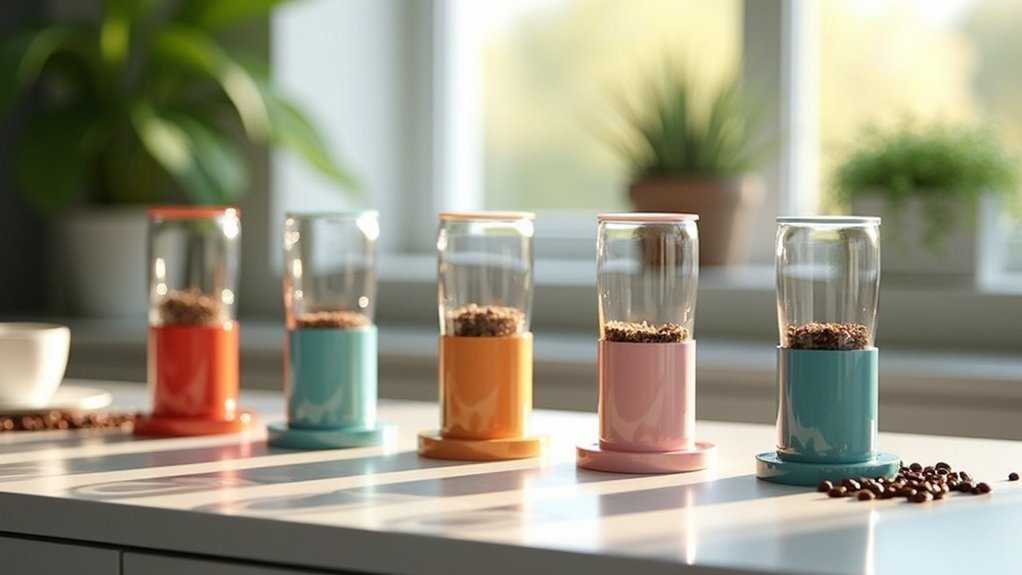
A fine grind slows down the brewing process, intensifying the flavor, while a coarse grind can result in a thin, weak cup. For espresso, the ideal grind size falls somewhere between table salt and powdered sugar.
Investing in a quality burr grinder ensures consistent particle sizes, which enhances the quality of your coffee. Regularly monitoring and adjusting your grind based on the type of beans and roast level can significantly improve the texture and crema of your espresso.
Experimenting With Grind Settings
Adjusting grind settings is essential for mastering your coffee extraction, as even minor changes can dramatically influence the flavor and overall quality of your brew.
A finer grind size slows the water flow, resulting in a richer cup of coffee. However, consistency is key; variations can lead to uneven extraction, producing a thin, watery beverage.
Experiment with grind size in small increments, like 0.1mm, to fine-tune flavors and textures. Using a bottomless portafilter allows you to assess the extraction flow effectively.
Aim for a brewing time of 25-30 seconds for a double shot to guarantee ideal extraction during your brewing process.
Importance of Coffee Dose
When it comes to brewing a great espresso, the coffee dose is crucial.
Using the recommended 18 to 20 grams ensures that you extract the full range of flavors and aromas that coffee has to offer.
Coffee Dose Recommendations
For achieving the perfect espresso shot, understanding the importance of coffee dose is essential. A recommended amount of coffee for a double espresso shot typically ranges from 18 to 20 grams. This precise dosing is vital for balanced extraction, ensuring you get a good espresso with a rich flavor profile.
Insufficient dosing can lead to under-extraction, resulting in thin, weak espresso shots. To enhance consistency and quality, weigh your coffee doses with a digital scale. Additionally, develop a routine for leveling the grounds before tamping to avoid channeling, which further elevates your espresso experience with thicker crema and complexity.
Measuring for Consistency
Measuring your coffee dose accurately is essential for achieving consistent espresso quality. For a double shot, aim for 18 to 20 grams to ensure ideal extraction and flavor balance.
Using a digital scale enhances your coffee dosing accuracy, allowing you to maintain consistency across brewing sessions. Insufficient dosing can lead to under-extraction, resulting in thin, watery espresso.
Develop a routine for leveling coffee grounds before tamping to promote uniform density and even extraction during brewing. Regularly calibrate your dosing technique while experimenting with grind size and extraction time to identify your ideal dose for the best results in your coffee brewing endeavors.
Impact on Flavor Quality
Achieving the right coffee dose is crucial for enhancing the flavor quality of your espresso. For a perfect espresso, aim for 18 to 20 grams of coffee to ensure optimal extraction. Under-dosing can lead to a thin, watery brew that lacks the essential oils and flavors that make espresso enjoyable.
To maintain consistency in your brewing, using a digital scale for precise dosing is essential, as it helps reduce shot variability. Additionally, tamping your coffee puck evenly ensures uniform water flow, which further improves flavor extraction.
Aim for a coffee-to-water ratio of about 1:2 to create a full-bodied espresso with a rich crema. By fine-tuning these elements, you can significantly elevate your espresso experience.
Tamping Techniques for Optimal Results
While selecting the right coffee beans and perfecting brewing time is crucial, tamping plays a vital role in achieving the ideal espresso shot. Strive for a consistent tamping pressure of approximately 30 pounds to ensure even extraction and prevent channeling in the coffee puck.
Choose a tamper that fits snugly in your portafilter basket to avoid uneven surfaces that can disrupt water flow. Before tamping, make sure to level the coffee grounds for optimal water distribution.
Practice applying steady pressure with a slight twist at the end to create a polished surface. You might also consider using a calibrated tamper to ensure uniform pressure application, which can greatly enhance the consistency and quality of your espresso shots.
Machine Temperature and Maintenance
To brew a rich and full-bodied espresso, it’s vital to maintain your machine at the right temperature and verify it’s functioning properly.
Confirm your espresso machine heats water to the ideal extraction temperature range of 195°F to 205°F; low temperatures can lead to thin shots.
Regular maintenance is essential—clean the group head and portafilter after each use to prevent buildup that restricts water flow.
Check the Over Pressure Valve (OPV) settings, confirming it opens at 9-10 bars for proper pressure during extraction.
Allow adequate warm-up time and consider servicing for any heating issues to maintain consistent temperature for the perfect coffee experience.
Evaluating Bean Freshness and Quality
The freshness and quality of your coffee beans play a crucial role in determining the richness of your espresso.
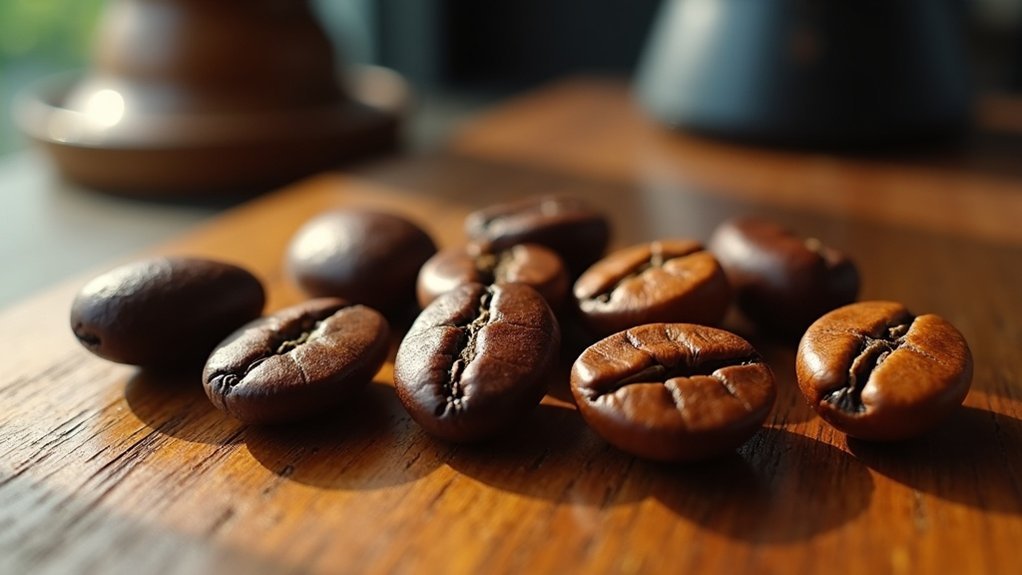
Ideally, you should use beans within two weeks of roasting to capture maximum flavor and crema. Stale beans lead to a thin, watery shot of espresso, as they lose essential oils and gases.
Always opt for whole beans, grinding them just before brewing to maintain freshness and aromatic compounds. Source your beans from reputable local roasters who prioritize quality.
Finally, ensure proper storage in an airtight container, away from light and moisture, to avoid suboptimal extraction and flavor loss.