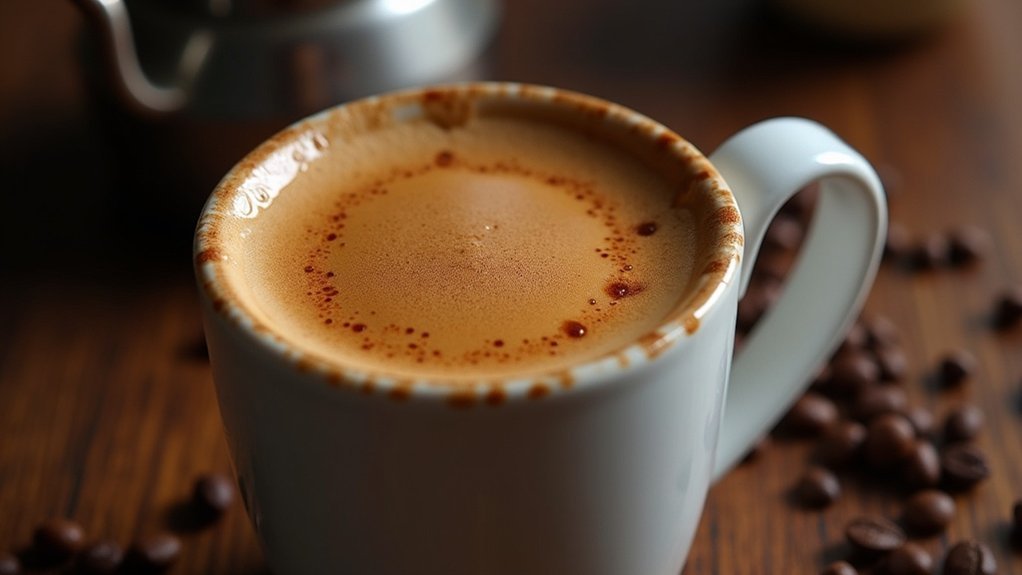
Under-extracted espresso occurs when not enough soluble compounds are extracted from the coffee grounds, resulting in a brew that is overly acidic and lacks balance. This leads to sharp, sour flavors and a thin, hollow body. The crema is light and dissipates quickly. Factors such as a coarse grind size, low brewing temperature, and insufficient water can contribute to this issue. To improve your espresso, it’s important to explore the various variables that affect extraction.
Key Takeaways
- Under-extracted espresso presents a sharp and overpowering sourness, accompanied by excessive acidity and a notable lack of sweetness.
- Its flavor profile is thin and unbalanced, culminating in a brief and hollow aftertaste.
- The crema of under-extracted espresso appears light-colored and tends to dissipate quickly.
- Common causes of under-extraction include a coarse grind size, low brewing temperature, and insufficient water usage.
- Adjusting the grind size, water-to-coffee ratio, and brewing temperature can effectively address issues of under-extraction.
Understanding Espresso Extraction
Espresso extraction is a complex process that transforms finely ground coffee into a concentrated shot of flavor.
It’s crucial to understand how variables like water temperature, grind size, and brew ratio influence coffee extraction. Ideally, you want to extract 18-22% of soluble compounds, balancing acidity, sweetness, and body.
If your grind size is too coarse, or the water temperature too low, you risk under-extracted espresso, resulting in a sour and thin taste.
Staying mindful of these elements guarantees you capture the full spectrum of flavors, preventing under-extraction and achieving a rich, satisfying espresso experience.
This website is dedicated to exploring the art and science of coffee, helping you master the perfect brew.
Characteristics of Under-Extracted Espresso
A shot of under-extracted espresso often reveals distinct characteristics that can greatly affect your tasting experience.
You’ll notice a sharp, overpowering sourness due to excessive acidity in the coffee, while the lack of sweetness leaves the flavor profile thin and unbalanced. The experience feels hollow, with a quick and abrupt aftertaste that fades immediately, unlike the lingering notes of well-extracted shots.
Additionally, the crema appears light-colored and thin, contrasting sharply with the rich, golden crema of properly extracted espresso. This combination of elements can result in an unpleasant mouthfeel, highlighting the importance of achieving ideal extraction for your coffee.
Signs of Under-Extraction
How can you tell if your espresso is under-extracted? Look for a sharp sourness that overwhelms your cup, a result of excessive acidity and insufficient sweetness.
This imbalance leads to a thin flavor profile, lacking the depth and complexity you anticipate. The aftertaste will be brief and hollow, fading away without any lingering sensations.
Additionally, the crema will be light-colored and thin, dissipating quickly instead of showcasing the rich, golden hue indicative of a well-extracted shot.
If your espresso shows these signs, it’s likely under-extracted, failing to provide the full spectrum of flavors that enhance the espresso experience.
Common Causes of Under-Extraction
When brewing espresso, several factors can lead to under-extraction, negatively affecting the overall flavor profile of your coffee.
If your grind size is too coarse, the coffee won’t have enough surface area for optimal extraction. Additionally, using insufficient water can interrupt the brewing process prematurely.
Furthermore, brewing at a low temperature can inhibit the development of essential flavors, resulting in a sour and unbalanced shot of espresso.
Insufficient Water Usage
While you might think that a quick shot of espresso requires minimal water, insufficient usage can greatly hinder the extraction process.
Using less water often results in overly concentrated flavors and a pronounced sourness due to excessive acidity. For ideal extraction, aim for a brew ratio of 1:2—using 18 grams of coffee to yield 36 grams of espresso.
Increasing water usage enhances the extraction of soluble compounds, particularly in lighter roasts, and helps achieve a balanced flavor profile. Without enough water, your espresso may taste hollow, lacking the complexity and sweetness derived from fully extracting the rich flavors in the coffee grounds.
Coarse Grind Size
Insufficient water usage is just one factor that can lead to under-extraction in espresso; another significant culprit is the grind size of your coffee. A coarse grind size reduces the surface area of the grounds, leading to insufficient contact time with water. This often results in under-extracted espresso that tastes sour, lacking the sweetness and complexity of well-extracted coffee.
To avoid this, consider the following:
- Adjust grind size to a finer consistency for optimal extraction.
- Ensure a consistent grind size throughout to promote even extraction.
- Monitor extraction time, aiming for a duration of 25-30 seconds.
- Focus on achieving the ideal surface area to enhance flavor extraction and overall coffee quality.
Low Water Temperature
Low water temperature can significantly hinder the espresso brewing process, resulting in a cup that doesn’t fully express the coffee’s rich flavors.
When brewing temperatures drop below the ideal range of 90 to 96 degrees Celsius, the extraction of essential flavors, sugars, and oils is compromised. This is especially crucial for lighter roasts, which require higher temperatures for optimal extraction.
If your espresso machine isn’t adequately heated or you don’t allow sufficient time for preheating, you may end up with a sour and thin cup.
Therefore, consistently monitoring water temperature is vital for achieving balanced and flavorful espresso.
How to Fix Under-Extracted Espresso
To fix under-extracted espresso, start by adjusting your water ratio to about 1:2, which helps ensure you’re using enough water for optimal flavor extraction.
Next, refine your grind size; a finer grind increases surface area and improves contact time with water, enhancing flavor release.
Additionally, make sure your brew temperature is set between 90 to 96 degrees Celsius, as this range maximizes the extraction of soluble compounds from your coffee grounds, ensuring a rich and flavorful espresso experience.
Adjust Water Ratio
One key factor in achieving a well-balanced espresso is adjusting the water ratio, which can greatly influence the extraction process.
Here are some points to consider for brewing the perfect cup of coffee:
- Aim for a brew ratio of 1:2—1 gram of coffee to 2 grams of espresso.
- Use 18 grams of coffee to yield about 36 grams of espresso for better flavor extraction.
- Monitor your water usage; insufficient water can lead to concentrated flavors and excessive acidity in your coffee.
- Light roasts require a higher water ratio for complete flavor extraction, enhancing their rich flavor profile.
Adjusting the brew ratio ensures you get enough water for optimal extraction, resulting in a delightful coffee experience.
Refine Grind Size
While you may think that brewing espresso is solely about the coffee bean and water ratio, the grind size plays an equally critical role in the extraction process. A finer grind increases the surface area, allowing water to extract flavors, sugars, and oils more effectively. Here’s a quick guide to help you refine your grind size for the perfect cup of coffee:
| Grind Size | Extraction Impact |
|---|---|
| Coarse | Thin, sour coffee |
| Medium | Balanced flavor |
| Fine | Rich, full-bodied cup |
| Extra Fine | Over-extracted, bitter taste |
Adjusting grind size in small increments and monitoring brew time will lead to a more flavorful coffee experience.
Increase Brew Temperature
Refining your grind size is just one step in perfecting your espresso; increasing the brew temperature can greatly enhance extraction as well. Aim for a brew temperature between 90 to 96 degrees Celsius (194 to 205 Fahrenheit) to optimize flavor balance and avoid under-extraction.
Here are four key practices:
- Adjust temperature based on roast type: lighter roasts need hotter water.
- Preheat your espresso machine, portafilter, and filter basket with hot water.
- Regularly check your brewing temperature for consistency.
- Monitor extraction time to guarantee balanced flavors.
These steps can elevate your coffee experience considerably.
Brewing Techniques to Avoid Under-Extraction
How can you guarantee your espresso isn’t under-extracted? Start by verifying your grind size is fine enough; a coarse grind reduces water contact, leading to a sour taste.
Maintain a brew ratio of 1:2, using 18 grams of coffee to yield 36 grams of espresso, which provides adequate water for extraction.
Achieve optimal extraction by maintaining a 1:2 brew ratio—18 grams of coffee for 36 grams of espresso.
Keep the ideal water temperature between 90 to 96 degrees Celsius (194 to 205 degrees Fahrenheit) to effectively extract soluble compounds.
Finally, monitor the extraction time—aim for 25-30 seconds. Regularly purge and preheat your machine to maintain a consistently hot environment for proper extraction.
Following these techniques will help you brew a rich and flavorful espresso every time.
Creative Uses for Under-Extracted Coffee
Under-extracted coffee might seem like a setback, but it can actually be transformed into a valuable ingredient in various creative ways.
Here are some ideas to make the most of the flavor left in your brew:
- Coffee Ice Cubes: Freeze under-extracted coffee to create ice cubes that chill your drinks without diluting their flavor.
- Blend with Stronger Brews: Combine under-extracted coffee with a more robust brew to balance out its sour notes and enhance the overall taste.
- Smoothies and Frappés: Incorporate under-extracted coffee into blended beverages like smoothies and frappés for a unique and interesting flavor profile.
- Baking: Use under-extracted coffee in baking recipes, such as coffee-flavored cakes or muffins, to add a distinctive taste and aroma.
These creative uses allow you to salvage under-extracted coffee and give it a second life in your culinary adventures!