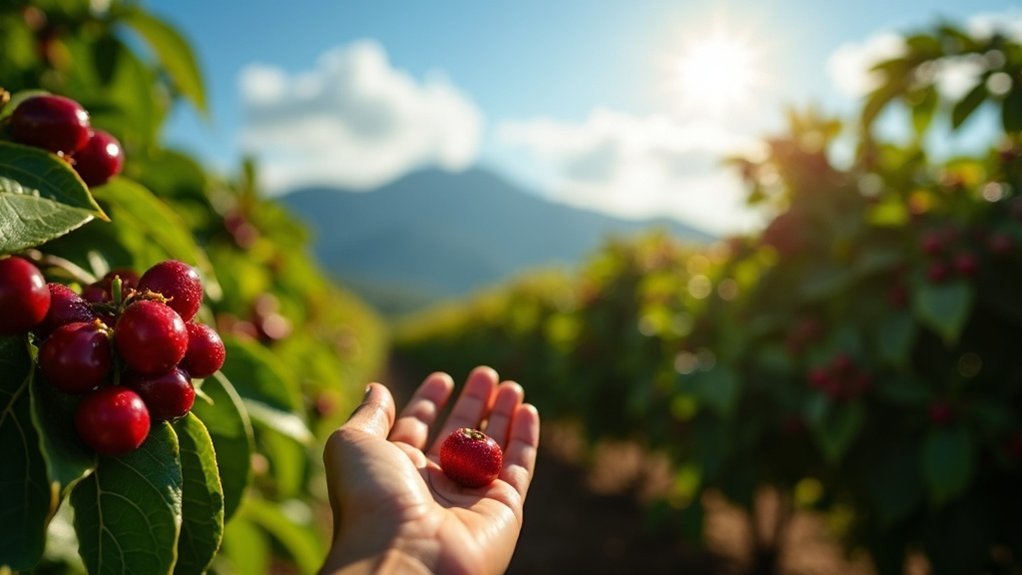
USDA Organic coffee is a premium product grown without synthetic pesticides or fertilizers, ensuring a healthier cup for you. To earn the USDA Organic seal, it must meet strict certification standards, including rigorous inspections and separation from non-organic beans. By choosing organic coffee, you’re not only reducing chemical exposure but also supporting sustainable farming practices that benefit the environment and enhance the rich flavors of your brew. Want to explore more about its benefits and impact on your coffee experience? There’s much more to discover!
Key Takeaways
- USDA Organic coffee is cultivated without the use of synthetic pesticides, herbicides, or fertilizers, promoting sustainable farming practices that benefit the environment.
- To earn the USDA Organic Seal, at least 95% of the coffee’s ingredients must be organic, ensuring high standards for quality and sustainability.
- The certification process involves thorough inspections to prevent any contamination with non-organic coffee, maintaining the integrity of organic products.
- Organic coffee contributes to healthier ecosystems and promotes biodiversity by employing sustainable agricultural methods that protect the land and its resources.
- When shopping for coffee, look for the USDA Organic seal to guarantee authenticity; a label of “100% Certified Organic” indicates that all ingredients comply with organic standards.
Definition of USDA Organic Coffee
When you sip a cup of USDA Organic coffee, you’re not just enjoying a flavorful brew; you’re also supporting sustainable farming practices.
This coffee is defined by its strict adherence to organic standards, meaning it’s grown without synthetic pesticides, herbicides, or fertilizers. To earn the USDA Organic Seal, at least 95% of the coffee’s ingredients must be organic, verified through rigorous inspections.
USDA Organic coffee is grown without synthetic chemicals, ensuring a pure, sustainable brew you can feel good about.
You might even see “100% Certified Organic” on some labels, indicating all ingredients meet these criteria. This certification, managed by third-party organizations, ensures that no cross-contamination occurs, giving you peace of mind with every delightful sip.
Enjoy your coffee knowing you’re making a choice that benefits both your palate and the planet.
Requirements for Certification
To truly appreciate the benefits of USDA Organic coffee, it’s important to understand the rigorous requirements for certification. Coffee must be grown without synthetic pesticides, herbicides, or GMOs, adhering to the USDA’s National Organic Program guidelines. Producers must keep certified organic coffee beans separate throughout the supply chain to prevent cross-contamination. The certification process can take up to three years, involving thorough inspections and audits. Additionally, processing facilities must follow strict cleaning protocols to maintain the organic certification during roasting and packaging.
| Requirement | Description | Duration |
|---|---|---|
| No synthetic chemicals | Coffee must be grown without synthetic pesticides | Ongoing |
| Separate handling | Organic beans must be kept separate from non-organic | Throughout process |
| Inspections | Regular audits and inspections are required | Every year |
| Soil health management | Producers must follow ecological practices | Ongoing |
| Processing standards | Strict cleaning protocols must be maintained during processing | Ongoing |
Benefits of Drinking Organic Coffee
When you choose organic coffee, you’re not just indulging your taste buds; you’re also making a healthier choice by enjoying a beverage that’s free from harmful chemicals.
This decision often results in deeper and more complex flavor profiles while supporting sustainable farming practices that are beneficial for our planet.
Sipping on organic coffee means you’re making a thoughtful commitment to both your health and the environment.
Healthier for Consumers
Choosing organic coffee not only elevates your daily brew but also enhances your overall well-being. By opting for organic, you reduce exposure to harmful chemicals, as it’s grown without synthetic pesticides or fertilizers. This healthier choice often means higher antioxidant levels, promoting better health and potentially lowering the risk of diseases like type 2 diabetes. Plus, regular consumption can boost your cognitive function and mood. Supporting organic coffee also means backing sustainable farming practices, fostering healthier ecosystems. Here’s a quick glance at the benefits of organic coffee:
| Benefit | Description | Impact |
|---|---|---|
| Reduced Chemicals | No harmful pesticides or fertilizers | Safer consumption |
| Higher Antioxidants | More antioxidants than conventional coffee | Better health outcomes |
| Improved Mood | Linked to enhanced cognitive function | Positive mental health |
| Diabetes Risk Reduction | Lower risk due to natural composition | Healthier lifestyle |
Embrace the goodness of organic coffee for a more nutritious and sustainable choice in your daily routine.
Environmental Sustainability
Opting for USDA organic coffee not only benefits your health but also significantly contributes to environmental sustainability.
By choosing certified organic coffee, you support sustainable agricultural practices that avoid synthetic pesticides and fertilizers, helping to reduce soil degradation and water pollution.
Organic farming enhances biodiversity, promoting native plant growth and creating healthier ecosystems that are essential for carbon sequestration.
Moreover, the USDA certification guarantees that your coffee is free from GMOs, fostering genetic diversity and resilience in coffee crops.
With shade-grown methods, organic coffee also protects wildlife habitats, lessening the environmental impact associated with conventional farming that relies on harmful chemicals.
Enjoy your coffee with the knowledge that you’re making a positive difference for both your health and the planet!
Enhanced Flavor Profiles
Although many factors influence the taste of your morning brew, organic coffee stands out for its remarkable flavor profiles. Grown without synthetic fertilizers and pesticides, these beans allow their unique characteristics to shine.
The farming methods used, such as crop rotation and promoting biodiversity, enhance soil health, resulting in richer and more complex flavors. Many coffee lovers appreciate that organic coffees tend to have a cleaner taste, free from bitter or chemical notes.
Additionally, they often originate from regions that celebrate traditional cultivation practices, emphasizing distinct regional flavors. With rigorous organic certifications, you can trust that each cup of organic coffee maintains its integrity and enhances your coffee experience.
Environmental Impact of Organic Coffee
When you choose organic coffee, you’re supporting sustainable farming practices that protect ecosystems and enhance soil health.
However, it’s essential to recognize that not all organic coffee farms are created equal; some may still contribute to deforestation and other environmental challenges.
Sustainable Farming Practices
Sustainable farming practices are vital for the environmental impact of USDA Organic coffee, as they emphasize methods that benefit both the planet and the coffee itself.
By choosing organically grown coffee, you support farming techniques that enhance soil health and promote biodiversity. Practices like crop rotation and natural pest management reduce environmental degradation compared to conventional methods.
Shade-grown coffee not only preserves wildlife habitats but also helps prevent deforestation. Additionally, the prohibition of genetically modified organisms (GMOs) maintains genetic diversity within coffee plants.
Furthermore, organic farming encourages carbon sequestration, effectively storing carbon in soil and playing a role in combating climate change.
Deforestation and Soil Health
While many coffee farming practices can contribute to deforestation and soil degradation, USDA Organic coffee stands out for its commitment to environmental health.
Here’s how organic coffee farming supports soil health and combats deforestation:
- No synthetic fertilizers or pesticides – This method protects the integrity of the soil where coffee grows and reduces harmful chemical runoff into surrounding ecosystems.
- Crop rotation and biodiversity – These practices enhance the soil structure and nutrient content, benefiting coffee plants and promoting a healthier ecosystem.
- Shade-grown techniques – By allowing coffee to be cultivated under a canopy of native trees, these methods help preserve local flora and prevent further deforestation.
- Carbon sequestration – Healthier soils associated with organic coffee farming can store more carbon, which helps mitigate the impacts of climate change on coffee production and the environment.
Quality Considerations
Understanding the quality of USDA Organic coffee involves more than just knowing it’s certified organic; it requires an appreciation of the unique farming practices and environmental factors that influence its flavor profile.
While the organic label ensures compliance with stringent organic standards, it doesn’t inherently guarantee a superior taste experience. Elements such as soil health, climate conditions, and processing methods play a significant role in determining coffee quality.
Certifying agencies perform rigorous inspections, which enhance transparency and build consumer confidence in the beans you select.
Furthermore, gaining knowledge about the specific farm or farmers behind your coffee can provide valuable insights into its sustainability and overall quality, enhancing your coffee journey.
How to Identify Certified Organic Coffee
How can you be sure that the coffee you’re about to enjoy is truly certified organic? Here are a few tips to help you identify USDA Organic coffee:
- Look for the USDA Organic seal, which guarantees that the coffee meets strict organic standards.
- Check for labels like “100% Certified Organic” (indicating all ingredients are organic) or “Certified Organic” (meaning at least 95% of the ingredients are organic).
- Be cautious of “Made With Organic” labels, as they may contain only 70% organic ingredients.
- Verify third-party certifications to ensure compliance with organic farming practices, confirming that no synthetic pesticides or GMOs are used.
Enjoy your organic coffee with confidence!