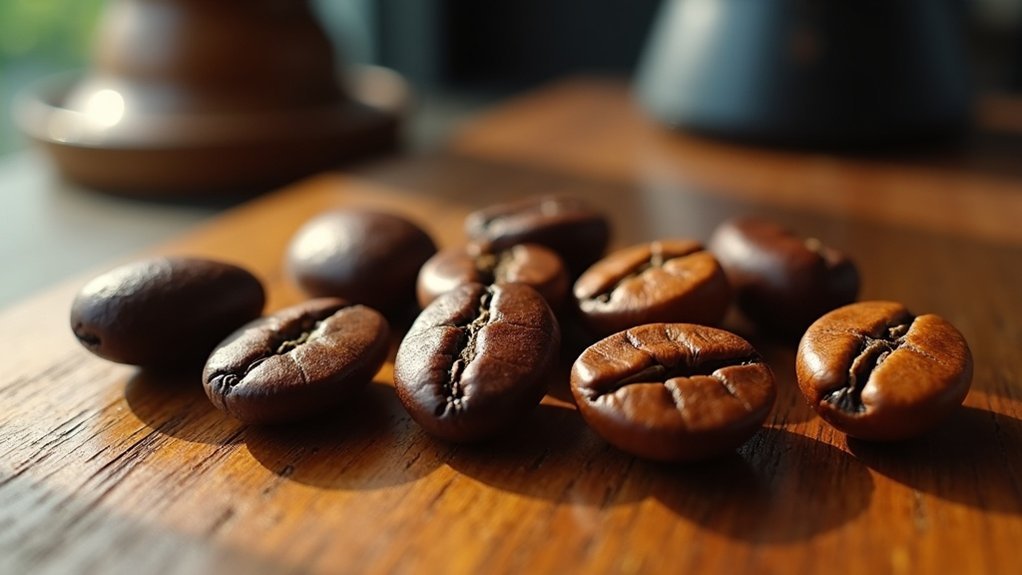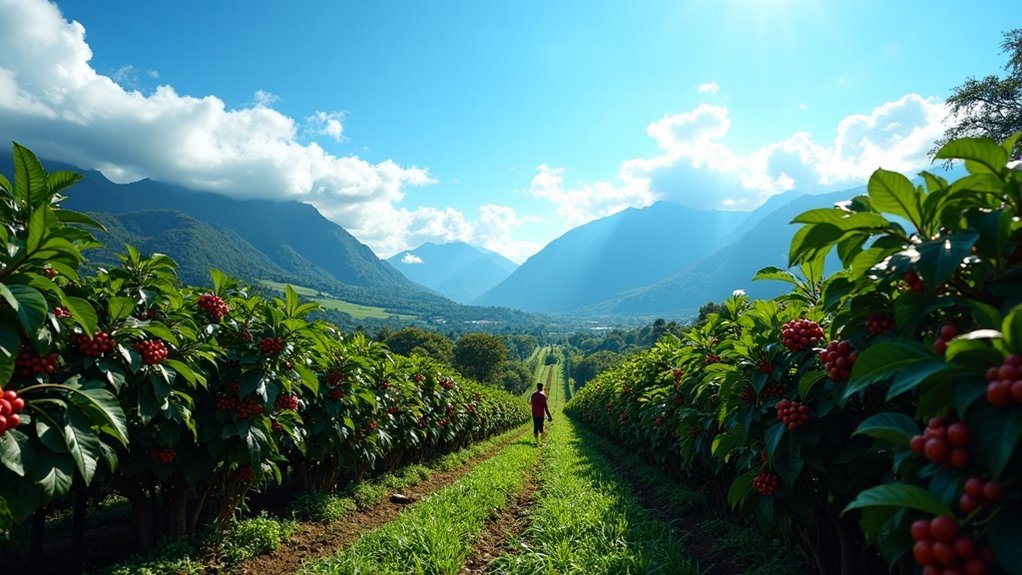
Mexican coffee primarily grows in high-elevation regions like Chiapas, Veracruz, and Oaxaca. Chiapas, the crown jewel, produces smooth arabica beans with chocolatey aromas and accounts for over 40% of the country’s coffee production. Veracruz showcases bold flavors, while Oaxaca offers a diverse range of spices and floral notes that enhance the coffee experience. Puebla is emerging with its unique profiles featuring fruits and chocolate, adding to the rich variety available. Each area contributes distinct characteristics to the coffee, revealing the rich tapestry of Mexican coffee culture waiting to be discovered by enthusiasts.
Key Takeaways
- Mexican coffee is primarily cultivated in 15 of the 32 states, with Chiapas, Veracruz, and Oaxaca being the leading regions for coffee production.
- Chiapas accounts for over 40% of Mexico’s coffee output, known for its smooth, chocolatey arabica beans that are highly sought after.
- Veracruz is celebrated for producing sweet and fruity coffees, characterized by medium to intense acidity, thanks to its fertile volcanic soil.
- Oaxaca is renowned for its diverse flavor profiles, particularly Café Pluma, which features a delightful blend of spices and floral notes.
- Puebla is an emerging coffee region, showcasing medium intensity flavors that harmoniously combine fruit, chocolate, and spices, contributing to the rich tapestry of Mexican coffee.
A Snapshot of Mexican Coffee Production
When you explore the vibrant world of coffee production, you’ll find that Mexico is a significant contributor, thanks to its diverse landscape and dedicated growers.
With over 300,000 small farmers cultivating coffee across 15 of Mexico’s 32 states, the focus is predominantly on high-elevation arabica coffee. This approach not only enhances the quality of the beans but also promotes sustainable farming practices, as a large portion of the coffee is shade-grown.
The leading coffee-growing regions—Chiapas, Veracruz, and Oaxaca—account for 73% of the country’s coffee production land. As production is projected to rise to 3.9 million bags, Mexico’s coffee industry remains a vital aspect of its agricultural landscape.
Key Coffee-Growing Regions
Mexico’s coffee-growing regions are as diverse as the flavors they produce, each offering unique characteristics shaped by their specific environmental conditions.
- Chiapas: Known for its smooth, medium-bodied arabica with delightful chocolatey aromas, this region is a favorite among coffee aficionados.
- Veracruz: This region boasts sweet and fruity notes with a medium to intense acidity, making it a vibrant choice for those who enjoy a lively cup.
- Oaxaca: Famous for its Café Pluma, Oaxaca’s coffee features an intriguing blend of spices, floral notes, and rich chocolate undertones, offering a complex tasting experience.
- Puebla: With medium intensity coffees that showcase fruity, chocolate, and spicy notes, Puebla adds another layer of depth to Mexico’s coffee offerings.
These regions not only contribute distinct taste profiles but also represent the rich agricultural landscape of Mexico.
Chiapas: The Crown Jewel of Coffee
Nestled in the southern part of Mexico, Chiapas is renowned as the crown jewel of coffee cultivation, celebrated for its ideal growing conditions and rich biodiversity. This vibrant region is responsible for producing over 40% of Mexico’s coffee, primarily specializing in arabica coffees that are praised for their smoothness and bright acidity.
| Characteristic | Detail |
|---|---|
| Rainfall | High rainfall enhances flavor |
| Soil Type | Volcanic soils yield rich profiles |
| Aroma | Strong, chocolatey aroma |
| Palate | Creamy with cacao hints |
| Farming Practices | Sustainable and traditional |
Chiapas encapsulates the essence of high-quality coffee cultivation, making it a standout choice for coffee enthusiasts around the world.
Veracruz: Bold Flavors From Volcanic Soil
In Veracruz, the volcanic soil plays a crucial role in shaping the bold flavors of its coffee. Here, you can uncover a diverse range of flavor profiles, from sweet and fruity to intricate and complex, all influenced by the region’s distinct altitude and climate.
As you delve into these coffees, you’ll recognize how traditional farming methods not only elevate the quality but also promote sustainability, ensuring that each cup is a genuine reflection of its origin.
Volcanic Soil Benefits
Veracruz’s volcanic soil is a game changer for coffee enthusiasts, offering a unique blend of nutrients that elevate the bold flavors and complexity of its beans.
This nutrient-rich environment supports coffee growing, producing aromatic coffee with distinct profiles.
- Sweet and fruity notes that dance on your palate
- Medium to intense acidity for a lively experience
- A full to medium-bodied cup with rich taste characteristics
- Sustainable farming practices that enhance quality
The high elevation and volcanic origins of Veracruz contribute greatly to the allure of Veracruz coffee, making it a highly sought-after choice for those who appreciate exceptional brews.
Enjoy a cup of Veracruz coffee and experience its remarkable qualities firsthand.
Flavor Profiles Explored
While exploring the vibrant world of Mexican coffee, you’ll discover that Veracruz stands out with its bold and complex flavor profiles.
The region’s volcanic soils and high altitudes contribute to a unique taste experience. Veracruz coffees often feature sweet and fruity notes, balanced by medium to intense acidity and a full to medium body.
This diversity stems from varying cultivation practices across different elevations, mainly managed by smallholder farmers. Their traditional methods enhance the quality of the arabica beans, making Veracruz a significant contributor to Mexico’s high-quality coffee reputation, cherished in both domestic and international markets.
Unique Growing Conditions
Rich volcanic soils and diverse microclimates make Veracruz a standout region for coffee cultivation. Here, Mexican coffee is grown under unique conditions that yield bold and distinct flavors.
You’ll experience:
- Sweet, fruity notes that dance on your palate
- Medium to intense acidity that invigorates
- Full to medium body that satisfies
- Flavor profiles that vary with altitude
These elements combine to create a coffee experience unlike any other region in Mexico.
Smallholder farms utilize traditional methods, enhancing both flavor and sustainability, ensuring that every cup of Veracruz coffee tells a story of its rich origins.
Oaxaca: A Diverse Flavor Profile
Oaxaca stands out as a vibrant coffee-growing region, offering an extraordinary diversity of flavors that captivate coffee enthusiasts.
The coffee from this region, particularly Café Pluma, is renowned for its complex flavor profile, featuring notes of spices, floral aromas, fruity undertones, and rich chocolate.
The unique terroir, characterized by varying altitudes and climates, plays a key role in developing these distinct flavors.
Furthermore, Oaxaca’s dedication to sustainable and organic production methods aligns with the growing global demand for environmentally friendly coffee.
Puebla: The Emerging Coffee Region
As you delve into the rich landscapes of Mexican coffee, be sure to discover Puebla, an emerging region that’s carving out its niche in the coffee world.
Renowned for municipalities such as Xicotepec and Cuetzalan, Puebla’s coffee offers:
- Medium intensity flavors with delightful notes of spices, fruit, and chocolate
- Unique microclimates and altitudes that enhance its distinct taste profiles
- Traditional farming methods that prioritize sustainable practices
- A growing reputation in the specialty coffee sector
While it may not yet compete with the established regions of Chiapas or Veracruz, Puebla is steadily gaining recognition, contributing to the rise of quality Mexican specialty coffee that captivates enthusiasts around the globe.
Sustainability and Shade-Grown Practices
While exploring the vibrant world of Mexican coffee, you’ll discover that sustainability and shade-grown practices are pivotal in its cultivation. Over 97% of coffee in Mexico, particularly in Chiapas, flourishes under the canopy of trees, which enhances biodiversity and safeguards soil health. This cultivation method not only elevates flavor profiles but also resonates with traditional farming philosophies. Furthermore, it strengthens Mexico’s position as a premier producer of certified organic coffee.
| Benefit | Description |
|---|---|
| Biodiversity | Supports a diverse range of animal and plant species |
| Soil Protection | Prevents nutrient depletion and deforestation |
| Flavor Enhancement | Encourages slower maturation, leading to superior taste |