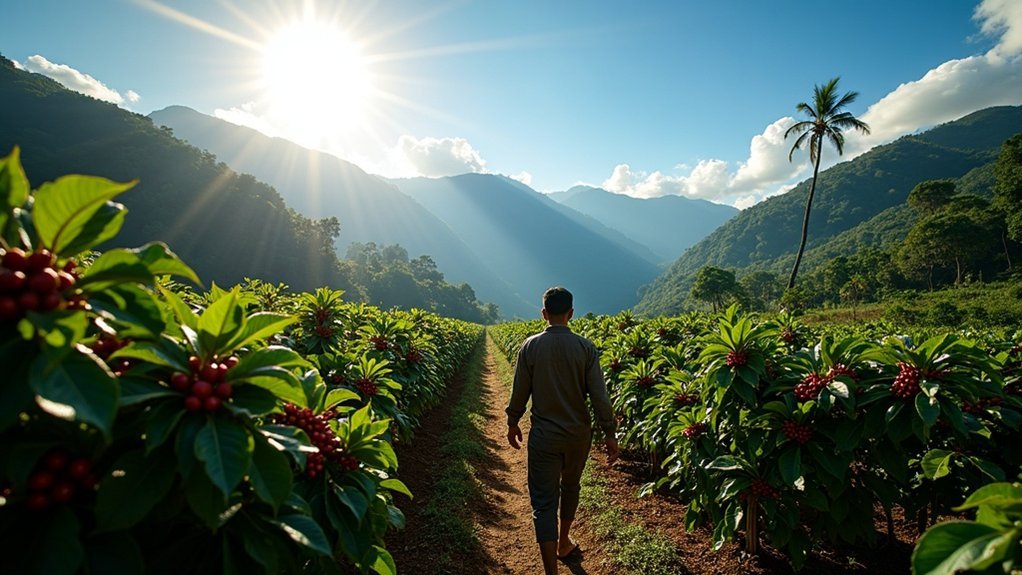
Panamanian coffee primarily grows in the high-altitude regions of Chiriquí province, especially around Boquete. This area boasts elevations of 1,200 to 2,200 meters, with nutrient-rich volcanic soils that foster exceptional coffee varieties, particularly the prized Geisha. The unique climate, featuring a lengthy dry season and abundant rainfall, enhances flavor complexity. High elevations support Arabica cultivation, essential for superior taste. If you’re interested in coffee, you’ll discover more about the specific conditions and challenges that impact the success of this industry.
Key Takeaways
- Panamanian coffee primarily thrives in the highlands of the Chiriquí province, specifically within the renowned Boquete region.
- The optimal elevations for cultivating coffee range from 1,200 to 2,200 meters above sea level, contributing to the exceptional quality of the beans.
- The volcanic soil in this region is rich in nutrients, which enhances the flavor profile of the coffee produced.
- Boquete is particularly famous for its specialty coffee, especially the Geisha variety, known for its unique and complex flavor notes.
- The area’s distinctive microclimates, marked by cool temperatures and mist, play a crucial role in supporting the production of high-quality Arabica coffee.
Geography of Panama
Panama’s unique geography, situated between Costa Rica and Colombia, plays an essential role in its coffee cultivation.
The country features high elevations, particularly in the Chiriquí province, where you’ll find regions like Boquete known for their volcanic soil. This nutrient-rich soil, combined with altitudes ranging from 1,350 to nearly 6,000 feet, creates ideal conditions for producing exceptional coffee.
Arabica coffee thrives here, especially at elevations between 2,300 and 3,500 feet, where the microclimates foster distinct and diverse flavor profiles.
Additionally, the region’s unique climate, characterized by a lengthy dry season and abundant rainfall, significantly contributes to the cultivation of high-quality coffee beans.
Boquete Coffee Region
Nestled in the Chiriquí Province, the Boquete coffee region is renowned for its exceptional specialty coffee production, thriving at elevations between 1,200 and 2,200 meters above sea level.
This high altitude, combined with volcanic soil rich in minerals, creates ideal conditions for cultivating exquisite Panamanian coffee. Notably, the region is celebrated for its Geisha variety, which is distinguished by its complex floral and fruity notes.
The high altitude and mineral-rich volcanic soil of Boquete create perfect conditions for exquisite Geisha coffee, known for its floral and fruity notes.
Farms such as Las Brujas and the Lamastus Family Estates utilize meticulous practices to enhance these flavor profiles. The unique microclimate of Boquete, characterized by cool temperatures and abundant rainfall, further contributes to the vibrant and distinctive characteristics of its coffee.
This makes Boquete a must-visit destination for coffee enthusiasts seeking to explore one of the finest coffee regions in the world.
Unique Growing Conditions
While many factors influence coffee quality, the unique growing conditions in the highlands of Chiriquí Province play a crucial role in shaping the characteristics of Panamanian coffee.
Elevations between 1,350 and 2,200 meters in the highlands of Boquete provide optimal conditions for coffee plants. The region’s rich volcanic soils supply essential nutrients, fostering unique flavor profiles that coffee lovers appreciate.
Cool, moist microclimates and regular rainfall create an ideal environment for cultivating high-quality Arabica varieties. Additionally, the lengthy dry season aids in cherry maturation, while mist on certain slopes enhances growth, resulting in denser beans that are prized by specialty coffee enthusiasts.
Notable Coffee Plantations
Several notable coffee plantations in the Chiriquí highlands exemplify the region’s commitment to quality and sustainability. These estates produce exceptional Panamanian coffee beans, showcasing unique flavor profiles that coffee enthusiasts will appreciate.
| Plantation Name | Special Features |
|---|---|
| Café Ruiz | One of the oldest estates, specializing in high-quality Arabica coffee. |
| Café Kotowa | A boutique coffee producer located in the scenic town of Boquete, known for its artisanal approach. |
| La Torcaza Estate | Utilizes natural microorganisms for organic cultivation, emphasizing eco-friendly practices. |
| Lamastus Family Estates | Recognized for its award-winning specialty coffee, operates as ecological reserves to promote biodiversity. |
| Elida Estate | Offers unique flavor profiles with spicy, floral, and fruity notes, grown at high elevations. |
These plantations not only highlight the rich coffee heritage of the region but also demonstrate a strong dedication to environmental stewardship and sustainable practices. Whether you’re a casual drinker or a connoisseur, the diverse offerings from these estates are sure to enrich your coffee experience.
Impact of Altitude on Flavor
As you delve into the world of Panamanian coffee, you’ll find that altitude significantly influences the flavor profiles of the beans.
Coffee cultivated between 1,700 to 2,200 meters in regions like Boquete showcases unique flavors, with spicy, floral, and fruity notes.
Coffee grown at 1,700 to 2,200 meters in Boquete reveals captivating flavors, brimming with spicy, floral, and fruity notes.
Elevations ranging from 2,300 to 3,500 feet are particularly favorable for Arabica varieties like Geisha, which enhance complexity and quality.
The cooler temperatures at these heights slow down bean maturation, while the volcanic soils enrich the coffee with essential minerals.
This combination results in distinctive tasting notes such as citrus or berry, making Panama a premier destination for exceptional coffee flavor development.
Challenges in Coffee Cultivation
Given the unique geographical and climatic conditions in Panama, coffee farmers face numerous challenges that can greatly impact their harvests.
High humidity levels create an environment ripe for diseases, while cold winds from the Atlantic can damage coffee trees. Additionally, the wet season’s heavy rains often lead to fungal outbreaks, complicating cultivation.
During the dry season, fierce winds strip leaves, hindering growth and productivity. As farmers prioritize quality over quantity, these environmental factors can severely affect the yield and quality of prized varieties like Panama Geisha coffee.
Therefore, maneuvering through these challenges remains critical for successful coffee cultivation.
Future of Panamanian Coffee Production
While challenges persist in coffee cultivation, the future of Panamanian coffee production appears promising due to the adoption of innovative farming practices and advanced pest management strategies.
Key developments include:
- Focusing on disease-resistant coffee varieties, particularly the esteemed Geisha varietal, known for its unique flavor profile.
- Enhancing quality and sustainability in Arabica production, ensuring a rich taste and environmentally friendly practices.
- Implementing adaptive practices to mitigate climate change effects, securing the future of coffee cultivation in Panama.
- Investing in research for improved cultivation techniques, aiming to enhance yield and quality.
- Promoting specialty coffee through initiatives by the Specialty Coffee Association of Panama (SCAP), which helps elevate the global standing of Panamanian coffee.
These concerted efforts ensure that Panamanian coffees maintain their esteemed reputation in the international specialty coffee market, despite the evolving challenges.