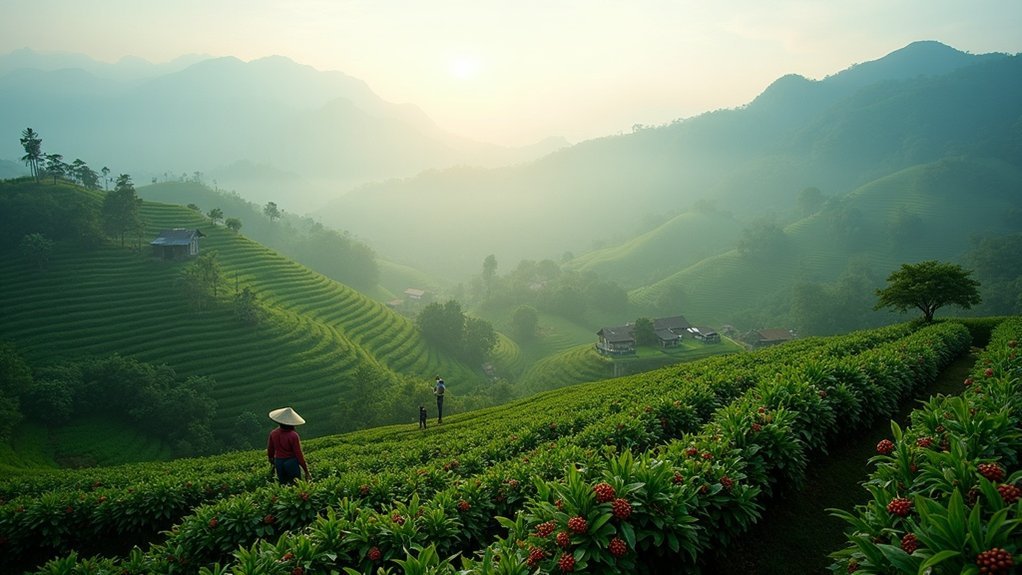
If you’re curious about where Vietnamese coffee grows, look no further than the Central Highlands. This region flourishes due to its rich volcanic soil and favorable climate conditions, particularly in Đắk Lắk province. Here, approximately 2.6 million smallholder farmers predominantly cultivate Robusta coffee, which constitutes about 97% of the country’s coffee production. Although they face challenges such as fluctuating prices and environmental concerns, there are also prospects for sustainable farming practices. Explore how these factors influence local communities and the quality of the coffee produced.
Key Takeaways
- Vietnamese coffee primarily grows in the Central Highlands region, which contributes about 80% of the nation’s coffee production.
- Đắk Lắk province is the leading area for coffee cultivation, focusing mainly on Robusta coffee.
- Other key provinces for coffee growth include Gia Lai and Lam Đồng, known for their high-quality Arabica beans.
- The ideal climate and rich volcanic soil in Đắk Lắk significantly enhance the success of coffee cultivation.
- The coffee harvest season for Robusta occurs from November to January each year, making it a crucial time for coffee enthusiasts and producers alike.
Overview of Coffee Growing Regions in Vietnam
When you explore the coffee growing regions of Vietnam, you’ll find that the Central Highlands stands out as the heart of the country’s coffee production.
This region, particularly Đắk Lắk, dominates coffee cultivation, primarily of Robusta coffee, which thrives in rich volcanic soil and a favorable climate.
Key provinces including Gia Lai and Lam Đồng contribute significantly to the Vietnamese coffee industry.
Coffee harvest seasons vary, with Robusta typically picked from November to January.
Remarkably, around 2.6 million smallholder farmers rely on coffee cultivation, highlighting its essential role in local economies and livelihoods throughout these growing regions.
The Central Highlands: Heart of Vietnamese Coffee Production
The Central Highlands is the heart of Vietnam’s coffee industry, contributing around 80% of the nation’s coffee production. In Dak Lak, coffee cultivation flourishes due to the region’s rich volcanic soil and ideal climate conditions.
This area predominantly produces Robusta coffee, accounting for approximately 97% of Vietnam’s output. The harvest season typically spans from November to January, offering a vibrant display of coffee cherries.
Additionally, Lam Dong Province is renowned for its high-quality Arabica beans, cultivated in a unique micro-climate that enhances their flavor.
The elevation and diverse ecosystems in the Central Highlands play a crucial role in shaping the distinct taste profiles of Vietnamese coffee, securing its reputation in both domestic and global markets.
Coffee Varieties and Their Cultivation
Vietnam’s coffee landscape is dominated by two main varieties: Robusta and Arabica, each thriving in different conditions and contributing uniquely to the country’s coffee culture.
Vietnam’s coffee culture is shaped by Robusta and Arabica, each flourishing in distinct conditions across the country.
Robusta accounts for about 95% of Vietnam’s coffee production, primarily cultivated in the Central Highlands, particularly in Dak Lak and Lam Dong. Arabica, although only 5%, flourishes in high elevations with rich basalt soil.
Key aspects include:
- Harvest season for Robusta: November to January
- Common Robusta varieties: TR4, TR9, Xanh Lun
- Arabica variety: Catimor, known for its disease resistance
- Major growing provinces: Dak Lak, Gia Lai, Lam Dong
- Ideal conditions for coffee cultivation: highland elevations, fertile soil
This website is dedicated to exploring the intricacies of coffee, including its varieties and cultivation practices.
Economic Impact of Coffee Farming on Local Communities
Coffee cultivation not only shapes Vietnam’s agricultural landscape but also plays a significant role in the economic well-being of local communities. The coffee industry generates around $2.24 billion, providing livelihoods for 2.6 million families. It’s essential in reducing poverty, with figures dropping from over 50% in the 1990s to 14.5% by 2008. Fairtrade initiatives further enhance community welfare by funding education and infrastructure. However, fluctuations in coffee prices affect smallholder farmers, leading to increased reliance on food donations. Here’s a quick overview of the economic impact of coffee:
| Economic Aspect | Impact |
|---|---|
| Revenue Generated | $2.24 billion |
| Families Supported | 2.6 million |
| Poverty Rate Reduction | From 50% to 14.5% |
| Fairtrade Benefits | Education funding |
This website is dedicated to exploring the multifaceted impact of coffee cultivation on local communities, highlighting its significance in economic development, poverty alleviation, and community welfare.
Challenges and Opportunities in Coffee Production
While challenges abound in coffee production, particularly in the Central Highlands, opportunities for growth also emerge amid the difficulties.
Farmers in Vietnam face issues like environmental degradation and fluctuating global prices; however, the government’s economic reforms and focus on sustainable coffee production present pathways forward.
You can explore:
- Crop diversification to enhance resilience against climate impacts
- Investments in coffee quality and specialty markets to meet consumer demand
- Innovative processing methods for higher-value exports, boosting profitability
- Strategies for sustainable practices to protect natural resources and ecosystems
- Community support initiatives to uplift smallholder coffee producers and improve their livelihoods
These opportunities not only promise better livelihoods for farmers but also enhance Vietnam’s reputation and competitiveness in global coffee production and trade.