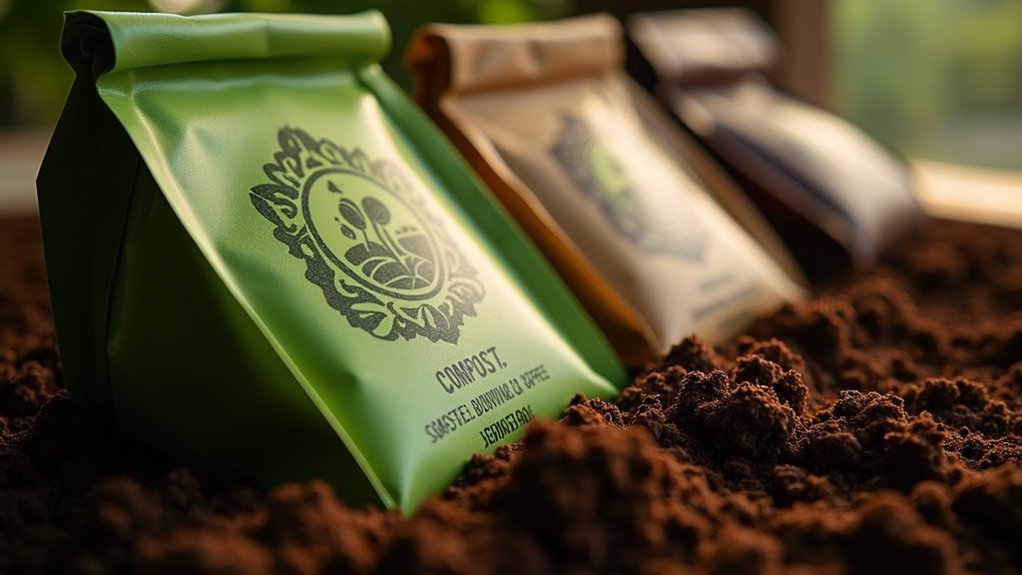
To identify coffee packaging that’s suitable for industrial composting, look for the BPI Certified label, which meets ASTM D6400 or D6868 standards. These certifications ensure that the packaging will effectively break down in commercial composting facilities, helping to reduce landfill waste from your coffee consumption. Additionally, check for eco-friendly stickers that confirm all components of the packaging are compostable. By understanding these labels and standards, you can make informed choices that support sustainable coffee practices and contribute to a healthier environment as you enjoy your favorite brew.
Key Takeaways
- Look for the BPI Certified label on coffee packaging, which signifies compliance with ASTM D6400 or D6868 standards for industrial composting suitability.
- Packaging labeled as compostable indicates that it meets specific standards for breaking down in industrial composting facilities, making it a better choice for environmentally conscious coffee consumers.
- Certifications like Rainforest Alliance, Fair Trade, and USDA Organic support sustainable coffee farming practices but do not guarantee that the packaging is compostable.
- Check for clear disposal instructions on coffee packaging to confirm it uses compostable inks and adhesives, ensuring environmentally friendly disposal.
- Understanding certification logos helps coffee consumers identify compostable options and reduce landfill waste effectively.
Understanding Industrial Composting Labels
How can you guarantee that your coffee packaging is truly compostable?
Look for labels indicating industrial composting, such as BPI Certified, which confirms compliance with ASTM D6400 or D6868 standards. These certifications assure your coffee packaging will decompose in commercial composting facilities.
Remember to check for clear instructions on disposal, as industrial composting availability varies by region.
Also, consider eco-friendly stickers that meet compostability standards to ensure all components of your coffee packaging break down effectively.
Key Certifications for Compostable Packaging
Navigating the world of coffee can be overwhelming, but understanding key certifications helps clarify your options. Look for the Rainforest Alliance Certified logo, which indicates that coffee is produced in a sustainable manner, supporting environmental and social standards. The Fair Trade Certified label ensures that farmers receive fair wages and work under safe conditions. Additionally, USDA Organic certification guarantees that the coffee is grown without synthetic pesticides or fertilizers, promoting organic farming practices. These certifications guide you toward sustainable coffee choices and help distinguish ethically produced products in a crowded market.
| Certification | Description | Key Focus |
|---|---|---|
| Rainforest Alliance Certified | Ensures sustainable farming practices | Environmental and social standards |
| Fair Trade Certified | Guarantees fair wages and safe working conditions | Ethical treatment of farmers |
| USDA Organic Certification | Confirms no synthetic pesticides or fertilizers used | Organic farming practices |
The Importance of Composting Logos
When selecting coffee packaging, it’s crucial to understand the importance of composting logos for making environmentally responsible choices.
Logos such as the BPI Certified logo signify that the packaging is suitable for industrial composting, ensuring it decomposes properly. Clear labeling enables you to identify compostable coffee packaging that won’t end up in landfills, encouraging better disposal practices.
Keep in mind that not all regions have industrial composting facilities available. By opting for coffee products with composting logos, you enhance brand credibility and resonate with eco-conscious consumers, ultimately contributing to the reduction of plastic pollution and the promotion of sustainable practices within the coffee industry.
Common Misconceptions About Compostable Claims
You might think all coffee-related items, such as cups and pods, break down easily at home, but many actually require industrial facilities to decompose properly.
The terms “compostable” and “biodegradable” are often confused in relation to coffee packaging, leading to misconceptions about what happens when these items are disposed of.
Additionally, certification logos for coffee products can vary by region, causing further misunderstandings about what these labels truly mean.
Compostable vs. Biodegradable Confusion
While both compostable and biodegradable coffee packaging is often marketed as eco-friendly, significant differences can lead to confusion about their true environmental impact.
- Compostable coffee packaging meets strict standards like ASTM D6400 or D6868 for industrial composting.
- Biodegradable coffee products may not break down effectively in landfills, potentially leaving behind harmful microplastics.
- Labels like “BPI Certified” indicate compostable coffee packaging designed for commercial composting.
- Clarity in labeling is essential to guarantee proper disposal and avoid contaminating recyclables and compostables.
Understanding these distinctions can help you make more informed choices with your coffee packaging and contribute positively to the environment.
Certification Misunderstandings Explained
Misunderstandings surrounding coffee packaging certifications often stem from a lack of clarity in labeling and consumer knowledge. Many believe all coffee packaging is recyclable or compostable, but only specific materials meet those standards.
Certifications like BPI indicate that a product is compostable in commercial settings, not necessarily at home. This confusion extends to biodegradable claims, as some coffee packaging materials might leave behind microplastics.
Additionally, some compostable coffee bags can contain incompatible additives, complicating disposal. Understanding these distinctions is essential for making informed choices about sustainable coffee packaging and reducing contamination in composting processes.
Evaluating Composting Facilities and Capabilities
When evaluating composting facilities for coffee-related materials, it’s crucial to focus on their certification standards to ensure they meet ASTM D6400 or D6868 requirements for compostable coffee packaging.
Additionally, understanding your local composting infrastructure is vital, as availability and capabilities can vary greatly by region.
Facility Certification Standards
To ensure that compostable coffee packaging breaks down effectively, it’s essential to understand the certification standards of industrial composting facilities. Here are four key points to consider:
- ASTM D6400 and D6868: These standards confirm that materials decompose properly in commercial composting environments, making them suitable for coffee packaging.
- BPI Certification: Look for the BPI label on your coffee packaging to verify that it meets recognized compostability criteria.
- Environmental Conditions: Composting facilities require specific temperatures and moisture levels for efficient breakdown of materials, including coffee packaging.
- Clear Disposal Instructions: Proper labeling on coffee packaging guides consumers on how to dispose of compostable materials correctly.
Understanding these standards is crucial for selecting coffee packaging that aligns with industrial composting capabilities and promotes sustainability.
Local Composting Infrastructure
While many coffee roasters are eager to adopt compostable packaging, assessing local composting infrastructure is crucial to ensure that these materials are processed properly.
Local facilities differ in their ability to handle compostable coffee packaging, as some may not meet the specific conditions necessary for effective decomposition.
Industrial composting operates at higher temperatures that accelerate breakdown, making it essential for coffee roasters to verify that their packaging meets local acceptance criteria.
Without adequate local composting infrastructure, these materials risk ending up in landfills, which undermines efforts for sustainable coffee packaging.
Evaluating these facilities can significantly impact achieving sustainability goals within the coffee industry.
The Role of Environmental Groups in Certification
Environmental groups play a significant role in the certification of compostable coffee packaging, establishing rigorous standards that ensure these products decompose effectively in industrial composting facilities.
Their efforts include:
- Setting certification benchmarks like BPI, ensuring coffee packaging meets ASTM D6400 or D6868.
- Promoting best practices through organizations like the Composting Council to support sustainable coffee packaging solutions.
- Enhancing consumer trust by partnering with coffee manufacturers for clear guidelines on compostability.
- Differentiating truly compostable coffee packaging from vague claims, empowering consumers to make informed choices for environmentally-friendly options.
Consumer Awareness and Education on Composting
Understanding the importance of certification in compostable coffee packaging is just the beginning; consumer awareness and education are key to maximizing the benefits of these eco-friendly products.
Knowing the difference between BPI Certified and other biodegradable labels helps you make informed choices about your coffee consumption. It’s essential to understand that compostable coffee items break down effectively only in designated composting facilities.
Check if such facilities are available locally to ensure responsible disposal of your coffee grounds and packaging. By educating yourself on these aspects, you can enhance waste management outcomes and contribute to a healthier planet.
Stay informed, and you’ll play a significant role in promoting sustainable coffee practices.
Best Practices for Selecting Compostable Packaging
When selecting compostable packaging for your coffee, prioritize labels that clearly demonstrate compliance with industrial composting standards, such as those certified by the Biodegradable Products Institute (BPI).
Consider these best practices:
- Look for the compostable logo, which indicates that the packaging will break down effectively in commercial composting facilities.
- Confirm that the packaging uses compostable inks and adhesives to prevent contamination of the composting process.
- Check for symbols indicating 100% recycled content, as this can enhance your overall sustainability profile.
- Seek clear disposal instructions on the packaging to promote responsible end-of-life management for your coffee packaging.